The War Ended, The Ballot Box Did Not Return
Only after the foreign enemy retreated did Parliament realise: a door closed during wartime does not reopen by itself
"The Confrontation is over. Where are the local elections?"
In January 1967, D. R. Seenivasagam tossed this question at the government in Parliament.1,2
The question was short.
As short as a key.
Because two years earlier, when the government suspended local elections, the reason given was the emergency and the Indonesian Confrontation. Now that the gunfire had stopped, the key was turned in the lock, but the door did not open.3,4,1,2
The government's answer was: wait.
The Royal Commission was still investigating local governments.
Thus, Malaysia learned its first lesson after the war ended:
What is taken away for emergency reasons does not necessarily automatically return when the emergency ends.

Three Different "Endings"#
This history is easily misled by a single date.
On 11 August 1966, Malaysia and Indonesia formally signed an agreement to end hostilities. Even earlier, Tun Razak and Adam Malik had agreed on a framework in Bangkok; but full diplomatic relations were only restored later. The negotiation, the signing, and the restoration of relations were three different points in time.3,4
The diplomatic war was over.
But the emergency, the regulations formulated under emergency powers, and the already suspended local elections operated on different tracks. The ceasefire agreement did not come with an official who would personally return every local ballot box to the municipal councils.1,5,2
Therefore, Seenivasagam pressed his question.
The government did not answer "no elections forever".
It said it had to wait for the Athi Nahappan Royal Commission to complete its work. The commission later indeed supported local democracy and elected councils; but that report would not be finished until December 1968.1,5
So, in 1967, the story cannot yet be written as the government publicly announcing the permanent abolition of local elections.
A more accurate picture of the time is a ballot box placed on a high shelf.
Every time someone reached for it, the government said:
The report is not done yet.
The War Stopped, The Debate Did Not#
After the external enemy retreated, voices in Parliament actually grew louder.
The country had just weathered Singapore's exit, the Indonesian Confrontation, and the suspension of local elections. Now, another issue that had a timetable buried in the independence constitution arrived at the table:
Ten years after independence, what language should official business use?
On 2 March 1967, the National Language Bill was debated in Parliament. The original act was Act No. 7 of 1967; the commonly cited Act 32 today is the later consolidated revision of the 1963 and 1967 laws.6,7
The bill placed the national language at the centre of official use.
But it did not, as some later slogans claimed, ban English, Mandarin, or Tamil overnight. The bill simultaneously retained certain translation arrangements and allowed English to continue to be used in some administrative, parliamentary, and court settings. The shift in school medium of instruction was certainly not completed by this single piece of legislation.6,7,8
This is exactly where the arguments were fiercest.
Both Sides Said Too Much Was Given Up#
Seenivasagam of the PPP attacked the bill from one direction.
He argued that the bill did not genuinely grant Mandarin and Tamil speakers the right to correspond with the government; what was termed "free use" was too narrow when written into the provisions. The DAP and some other non-Malay opposition MPs also questioned the language space to varying degrees.6,7,8
The PMIP, which later became PAS, attacked from another direction.
Its MPs believed that the space left for English and other languages was too large, thereby weakening the status of Malay as the sole official language.6,7,8
Think about it.
The same bill—one side said the door was closing too fast; the other side said the door wasn't closed tightly at all.
The Alliance government stood in the middle, attempting to implement the constitutional status of the Malay language while avoiding a situation where public offices, Parliament, and courts suddenly lost a usable working language during the transition.6,7
This was not a neat "Malay vs Chinese" story.
Specific parties, societies, and MPs each had their own demands. Some fought for status, some fought for usage space, some worried about administrative paralysis, and some feared the promises made a decade ago would be reinterpreted.6,7,8
The Same Parliament, Two Locks#
Looking back today, the two debates of 1967 were actually asking the same question:
How should state power be constrained?
The local election issue asked: Who has the right to sit in the government closest to the residents?
The language bill issue asked: Between the people and the government, what language can be officially heard?
A ballot box determines who gets in.
A language act determines what voice is used after getting in.
Neither debate was purely a technical matter. They touched upon representation, identity, administrative efficiency, and the most sensitive compromises within the Alliance and among opposition parties.1,5,6,7
The Evidence for This Piece, Explained to You#
The end of the Confrontation is cross-referenced with contemporary US and Australian diplomatic archives. The text distinguishes between the Bangkok negotiations, the formal signing on 11 August, and the subsequent restoration of relations, instead of compressing them into the same day.3,4
The pending question of the local ballot box comes from the 1967 Hansard. The government was still using the wait for the Royal Commission as its public reason; the Athi Nahappan report later supported an elected direction. Therefore, this article does not portray 1967 as the year the government had publicly declared a permanent abolition of elections.1,5,2
The Language Bill is grounded in original parliamentary debates and UM academic research. This article only describes the official languages and transitional arrangements supported by the clauses; it does not squeeze school medium policies, later administrative changes, or all the demands of any single community into one piece of law.6,7,8
This piece is marked sensitive: true. Sentences involving language, ethnic representation, and party motives must be reviewed line by line by Jay before publication.
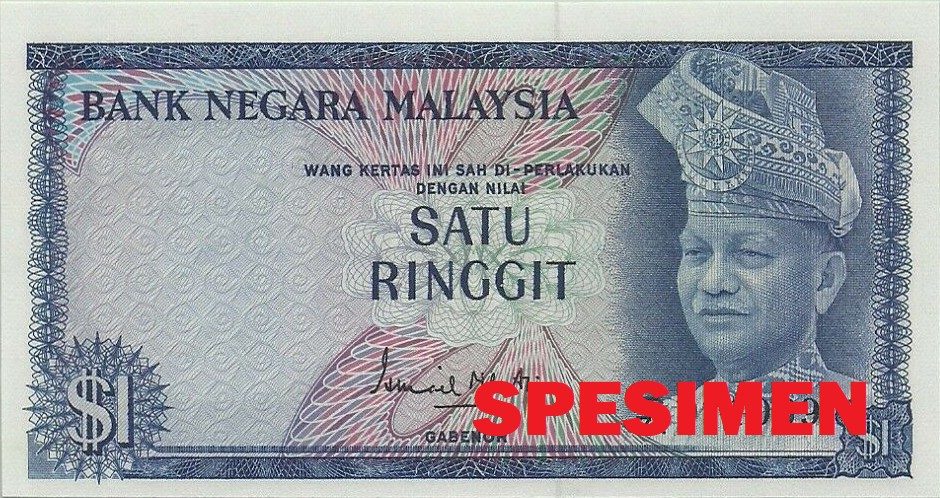
Next up: Before the language debate even cooled down, an old banknote kept in a pocket caused trouble. The paper still read "one dollar", but at the counter it was only worth a little over eighty-five cents. Six days later, shop doors in Penang slammed shut.
Sources 8 Every important claim here can be checked. Open it and see.
Do not trust this site. Check it — every source below is clickable.
This site is written with AI assistance. Please check us.
AI can invent citations that look completely convincing — a real author's name, a plausible title, a sensible year, for a work that does not exist. This is not a theoretical risk; it is a known failure mode. That is why every source on this site is clickable. If a reference cannot be found anywhere, it may well not exist — and we want to know.
How to check us →
Reader Comments
Be the first to share your thoughts.