Why Is Malaysia Day on 16 September?
July 22, August 31, and September 16 Are Not Three Competing Birthdays, But Three Different Transfers of Power
On August 31, 1963, the calendar had already saved a space for a new nation.1,2,3
The flags could be prepared, the ceremonies could be rehearsed, and the speeches could be written down to the very last page.
But when that day arrived, Malaysia was not yet born.
It had originally intended to borrow the date of Malaya's sixth independence anniversary, letting two historical moments overlap. In the end, everyone had to stop and wait another sixteen days.1,2,3
Why would a nation miss its own birthday?
The answer is hidden in three dates.
July 22.
August 31.
September 16.
They are often later placed on the same table, as if only one can remain. In truth, they speak of three different things.
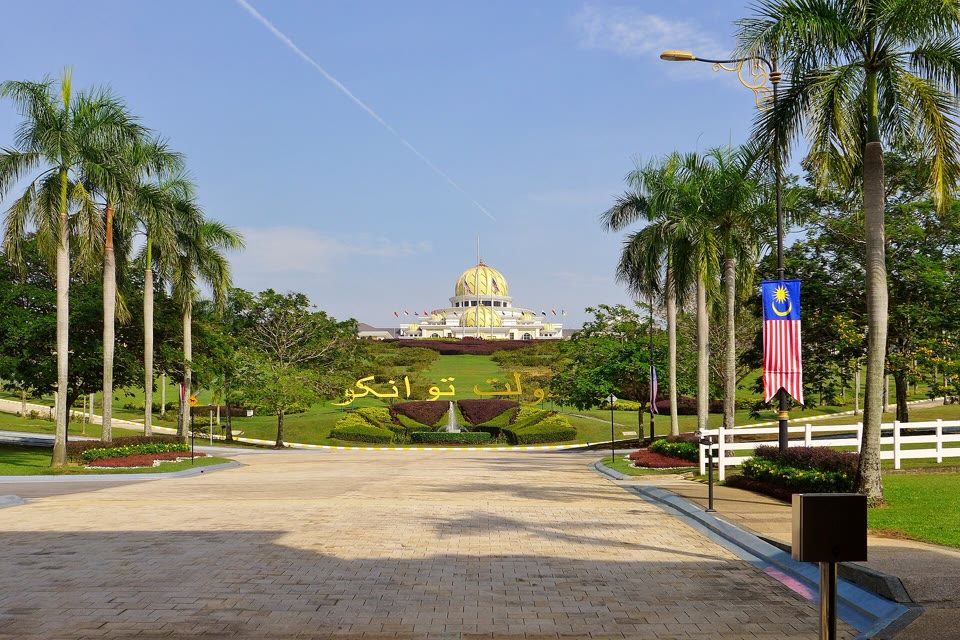
July 22: Kuching Handed Over the Keys First#
On July 22, 1963, the Governor of Sarawak, Alexander Waddell, appointed Stephen Kalong Ningkan as the first Chief Minister, and local ministers formed the Supreme Council. The state government today commemorates this day as a vital milestone when Sarawak shook off colonial rule and began self-government.5,6
To the people on the streets of Kuching, the change was not abstract.
The seats formerly occupied by colonial officials were now filled by local political leaders. The steering wheel of the state's daily administration began to pass into the hands of a government made up of Sarawakians.
But British sovereignty still flew over the harbor.
London remained responsible for the colony's international status, and Sarawak had not yet entered the international system as a fully independent sovereign state. The more accurate legal description is that the local self-government began functioning, while British sovereignty did not end until September 16.1,5,3
This distinction might sound like lawyers splitting hairs.
But it determines how we understand the building of the nation.
If we say nothing happened on July 22, we erase the crucial step of the local government taking over power; if we write it as the completion of full international independence, we hide the colonial legal relationship that still existed.
History does not ask us to choose one or the other.
On that day, a portion of the keys had been handed over.
But the main door was not yet fully detached from Britain.
August 31: Jesselton Also Starts to Steer#
North Borneo's pace was about a month slower.
On August 31, 1963, local self-government began operating, and North Borneo increasingly used the name "Sabah" publicly. Donald Stephens became the first Chief Minister, and the daily powers of the colonial government were further transferred to local leaders.1,5,3
This day is, of course, worth commemorating.
It symbolizes the people of Sabah beginning to steer their own government, and it coincidentally aligns with Malaya's independence day from six years prior.
But the same legal line must be preserved: the complete transfer of Sabah's international sovereignty was not accomplished solely on August 31; it occurred alongside the formation of Malaysia and the termination of British sovereignty on September 16.1,5
Thus emerged a picture easily flattened by political slogans:
Sarawak already had its local Chief Minister.
Sabah had also begun self-government.
The originally scheduled birthday for the new federation had passed.
And Malaysia was still waiting for an answer to arrive from the United Nations.
Why They Had to Wait for the UN#
Indonesia opposed Malaysia, while the Philippines challenged the arrangement with its claim over North Borneo. The disputes did not just happen at press conferences; they also entered regional diplomacy and United Nations procedures.2,4,3
After the 1963 Manila meetings, all parties agreed to let the UN Secretary-General verify whether the people of North Borneo and Sarawak supported joining Malaysia. Thus, a UN assessment team rushed to the two territories.2,4,3
Time was already extremely tight.
The scheduled August 31 formation could not proceed before the conclusions were out, and so it had to be postponed.1,2,3
But this was not a secret supplementary public referendum.
The UN mission did not hand a "yes/no" ballot to every adult resident. The assessment team met with government representatives, political parties, organizations, and individuals willing to express their views; they reviewed previous elections, the Cobbold survey, and political conditions, and then judged whether the people's will was being freely expressed.2,4
This methodology was more rigorous than simply declaring "everyone agrees."
Nor was it so rigorous that one could pretend it was a vote-by-vote universal plebiscite.
September 14: The Answer Finally Arrives#
On September 14, the UN Secretary-General published his conclusions.
The report concluded that a "sizable majority" in North Borneo and Sarawak wished to join Malaysia, while also acknowledging that the opposing forces, the conditions, and the survey environment could not be entirely brushed aside.2,4,3
Only two days remained until the new date.
The political leaders could finally turn the wait into a ceremony, and the documents into a nation.
On September 16, the arrangements of the Malaysia Agreement came into effect. Britain's sovereignty and governing responsibilities over North Borneo, Sarawak, and Singapore ended; the existing states of Malaya and these three territories, under a new constitutional arrangement, formed Malaysia.1,5,3
On that day, the name on the map finally caught up to the plan that had been negotiated for years.
"Joining" or "Forming Together"?#
Later, people would argue endlessly over a verb.
Some say Sabah and Sarawak merely "joined" Malaya.
Others insist they "formed together" an entirely new nation with Malaya, and therefore should not be treated as ordinary states.
The wording of the Malaysia Agreement provides a solid floor: Britain, the Federation of Malaya, North Borneo, Sarawak, and Singapore were the signatories; the agreement stated that North Borneo, Sarawak, and Singapore would be federated with the existing States of the Federation of Malaya, and the Federation would be called Malaysia.1,5
This was not a simple change of a signboard for Malaya on September 16.
New territories, new citizens, new parliamentary seats, new state power arrangements, and new international borders appeared simultaneously.
But "forming together" does not mean the negotiating parties held the exact same international legal status prior to formation. Malaya had been an independent nation since 1957; North Borneo, Sarawak, and Singapore remained under British sovereignty until 1963, which is why Britain had to be a party to the agreement.1,5,3
Both things can be true at once:
Malaysia was a new federation formed in 1963.1,5,3
The parties that formed it were not in the same position before they came to the negotiating table.
To say only "joined" easily shrinks East Malaysia's nation-building terms into mere administrative expansion.
To say only "the merger of four completely equal sovereign nations" superimposes a state of independence onto history that did not exist at the time.
Three Birthdays Do Not Need to Erase Each Other#
July 22 tells us when Sarawak's local government took over vital internal administrative powers.
August 31 tells us when Sabah's self-government began steering, and reminds us why the original Malaysia Day fell through.
September 16 answers when international sovereignty was transferred, when the agreement took effect, and when Malaysia was legally formed.
They are not three rivals fighting for the same chair.
They are three lenses on the same transfer of power.
Delete any one, and the story becomes far too neat.
And the actual birth of a nation is never as neat as a commemorative poster.
Evidence for This Article, Clearly Explained#
July 22 and August 31 are written as "milestones of local self-government," not arbitrarily as days of full sovereign independence. This handling references the state governments' public history, the original text of MA63, and legal history research; the wording used in various commemorative narratives remains a subject of current controversy.1,5,6
The UN assessment was not a public referendum. This article explains its consultation methods based on the UN mandate and final conclusions, retaining the phrase "sizable majority" rather than inventing a precise vote percentage.2,4,3
The discussion on "joining" and "forming together" takes the original text of MA63 as its baseline. This article does not treat East Malaysia's entry as an ordinary administrative annexation, nor does it rewrite the colonies as fully independent sovereign states before they signed the agreement.1,5,3
This article is sensitive: true. It involves ongoing controversies over East Malaysia's autonomy, independence, and status in nation-building; the original draft was reviewed line by line by Jay before publication.
Next up: The nation finally appeared on September 16. But under the exact same name, Kuala Lumpur and Singapore still held two completely different answers to what "Malaysia" was.
Sources 6 Every important claim here can be checked. Open it and see.
Do not trust this site. Check it — every source below is clickable.
This site is written with AI assistance. Please check us.
AI can invent citations that look completely convincing — a real author's name, a plausible title, a sensible year, for a work that does not exist. This is not a theoretical risk; it is a known failure mode. That is why every source on this site is clickable. If a reference cannot be found anywhere, it may well not exist — and we want to know.
How to check us →
Reader Comments
Be the first to share your thoughts.