Why Did Mahathir Hand Over Power?
A withdrawn resignation, a 16-month wait, and the 22-year legacy inherited by Abdullah
It was originally just a closing speech for the general assembly.
On 22 June 2002, Mahathir stood at the rostrum of the UMNO general assembly, recounting the ruling party's journey right up to the end. Then, he announced his resignation as UMNO President, Barisan Nasional Chairman, and Prime Minister. 1,2,3
Order on the stage instantly vanished.
Party leaders seated nearby stood up and swarmed him; the live national television broadcast had no time to prepare an explanation for the scene. Less than an hour later, Deputy Prime Minister Abdullah Badawi returned to the microphone to tell the hall: Mahathir had agreed to withdraw his immediate resignation. 1,2
Twenty-two years of power saw its endpoint publicly for the first time.
Just not on that day.
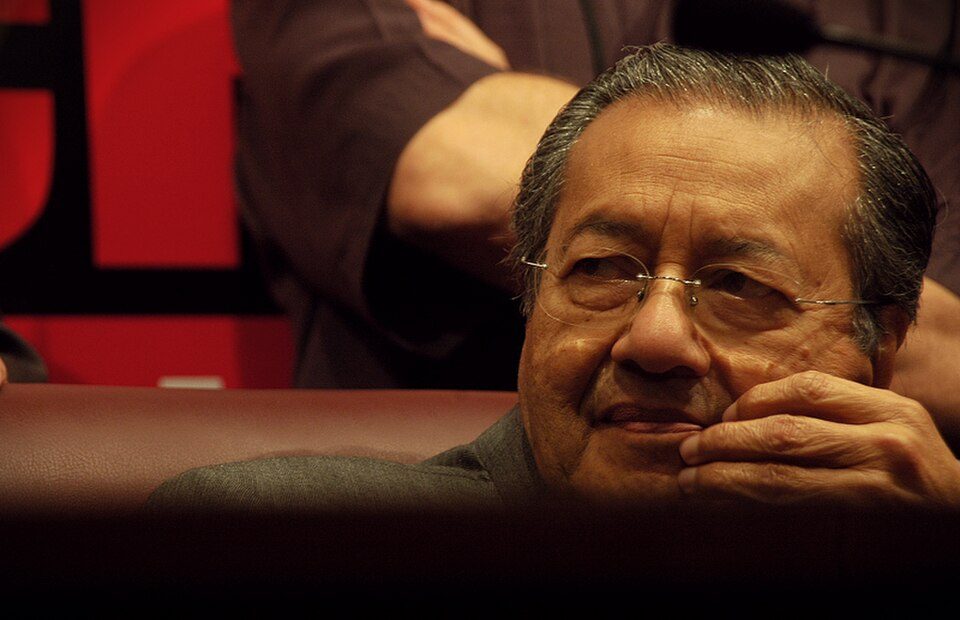
After the Dismissed Deputy#
Mahathir once had a widely known successor: Anwar.
The 1998 dismissal, arrest, and trials cut off that path completely. In January 1999, Abdullah was appointed Deputy Prime Minister; he lacked Anwar's mass movement background and had not publicly built a "Wawasan Team" within the party to challenge the Prime Minister. 4,3
This did not mean Abdullah was merely filling a temporary gap.
He had been a civil servant and held portfolios in Education, Foreign Affairs, Defense, and Home Affairs; during the 1987 UMNO split, he stood in Tengku Razaleigh's camp, was subsequently removed from the cabinet by Mahathir, and only returned to government several years later. 4,3
In other words, the person who received the baton was not someone who had never opposed Mahathir.
He just learned not to oppose the way Anwar did.
The 16-Month Countdown#
After the resignation was withdrawn at the assembly, the UMNO Supreme Council confirmed the delayed handover plan: Mahathir would stay in office until October 2003, and his successor would be Abdullah. 1,2,3
This arrangement accomplished two things simultaneously.
It ended speculations on "whether Mahathir would really leave" and gave him time to host the Non-Aligned Movement (NAM) summit and the Organisation of Islamic Cooperation (OIC) summit. Power did not fracture in that one minute on stage; rather, it entered a 16-month countdown with a publicly marked endpoint. 1,3,6
The countdown also gave everyone who relied on the old power structure time to adjust their positions.
Ministers had to prove they deserved to be kept by the new Prime Minister; bureaucrats had to gauge the new leader's working style; corporate and party factions had to guess how much Abdullah would continue, and how much he would change.
Public records cannot give us the dialogues behind every door, so we won't invent lines for the silent. What is visible is this: the successor who had not yet been sworn in was already standing beside the Prime Minister, while the incumbent began to be covered in news with the phrase "for the last time."
31 October: Two Men Enter the Palace#
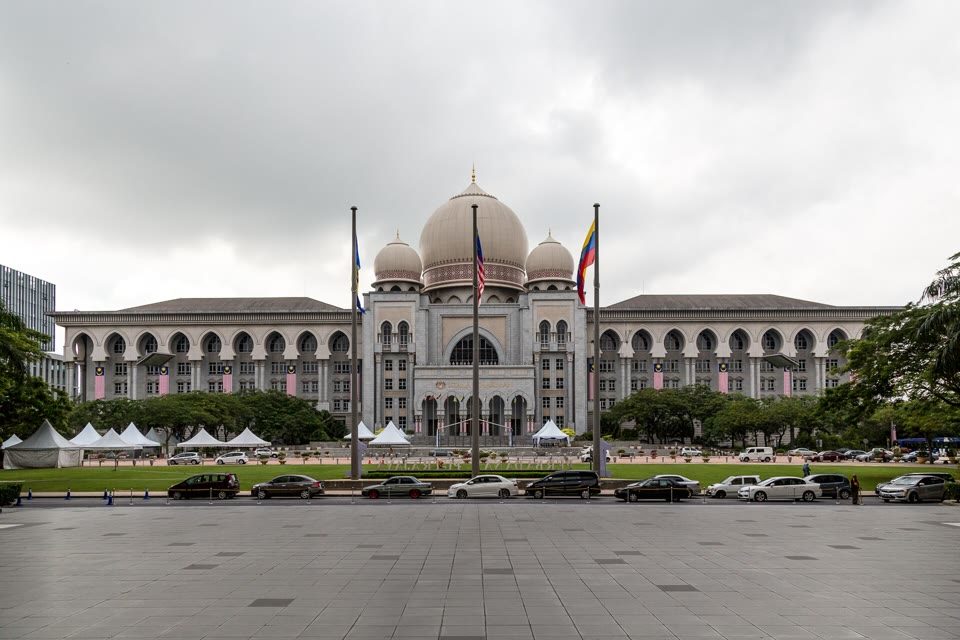
On 31 October 2003, the handover finally became more than just a party plan. 4,5,6
Mahathir concluded a Prime Ministerial term that had lasted 22 years, beginning in 1981; Abdullah took his oath at the National Palace, becoming Malaysia's fifth Prime Minister. Subsequently, official documents and the work of the Prime Minister's Office were also transferred to the successor. 4,5,6
This time there were no masked police, no tear gas on the streets, and no suddenly disappeared deputy.
The handover was completed via constitutional ceremony. This fact alone stood in stark contrast to Anwar's path to the premiership five years earlier. 5,3,6
Abdullah's public tone upon taking office was also noticeably different. He paid tribute to the four previous Prime Ministers, promised to continue building the nation on existing foundations, and invited the people to work with him, rather than for him. 7,6
His moderate tone won him space.
But a tone is not institutional reform. What Abdullah inherited was still the same powerful Prime Minister's Office, the same tradition of the Internal Security Act (ISA), and the same political system that tightly linked the party, the government, and government-linked companies. 7,3,6
The New Prime Minister Must First Face the Ballot#
The handover ceremony was completed, but Abdullah did not yet have his own popular mandate.
He inherited the parliament Mahathir won in 1999. Whether the people truly accepted this soft-spoken new Prime Minister promising integrity, or merely saw him as the designated successor of the old government, would only be known after the next vote.
Five months later, the answer landed on the whiteboards of tallying centers.
It was no ordinary victory. Almost the entire electoral map of the peninsula was covered in Barisan Nasional's blue. A new Prime Minister gained one of the most powerful parliamentary majorities in history—and a blank check for reform so large that its responsibility was impossible to evade.
Sources 7 Every important claim here can be checked. Open it and see.
Do not trust this site. Check it — every source below is clickable.
This site is written with AI assistance. Please check us.
AI can invent citations that look completely convincing — a real author's name, a plausible title, a sensible year, for a work that does not exist. This is not a theoretical risk; it is a known failure mode. That is why every source on this site is clickable. If a reference cannot be found anywhere, it may well not exist — and we want to know.
How to check us →

Reader Comments
Be the first to share your thoughts.