What Power Do Malaysian Courts Have?
Parliament Can Legislate, Government Can Execute, But There Must Be a Place to Answer: Did This Cross the Constitution
Parliament can legislate.
The government can execute.
But if the laws passed by Parliament cross the boundaries of the Constitution, who tells them to stop?
If the government acts beyond its authority, who can draw the line?
If the Federation and a state are in dispute, who decides the boundary?
This is where the courts come in.
They do not stand in the center of the square.
They stand at the boundary.
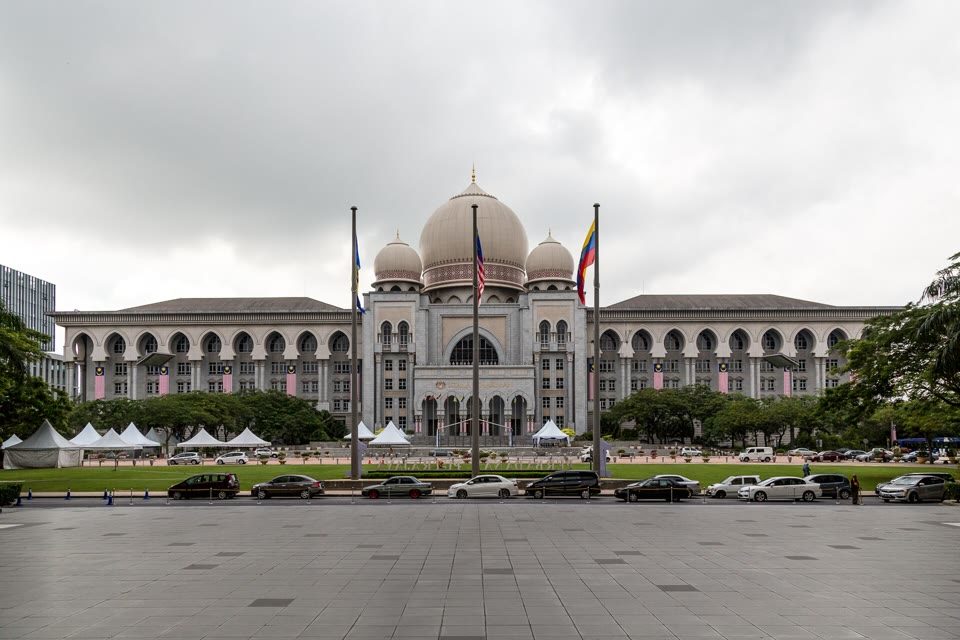
The Constitution is Supreme, Someone Needs to Speak for It#
The previous article discussed Article 4.
The Constitution is the supreme law of the Federation; any law passed after Merdeka Day which is inconsistent with it is void to the extent of the inconsistency.1,3
This statement, without a court, would ring hollow.
Because paper can say "void".
But in reality, someone must determine:
Where is the inconsistency?
To what extent is it inconsistent?
Is the whole law void, or just a part of it?
Who is qualified to raise the challenge?
This is the purpose of the judicial system.
It is not to make judges greater than the people.
Nor is it for the courts to make daily decisions for the government.
It is so that when power reaches a boundary, there is a place that can interpret the Constitution.
Article 121: The Court System is Written Down#
Article 121 structures the High Courts and the inferior court system.1,3
This might sound very technical.
But behind the technicality is the structure of the state.
Without courts, laws are just orders.
If courts are entirely subservient to the executive, laws are just another way of writing executive orders.
If courts have no boundaries whatsoever, judges themselves turn into another government.
Therefore, the Constitution must structure the courts.
At the same time, it must specify where the courts get their jurisdiction and power from.1,3
It's a fine line:
The courts must be independent enough to uphold the law.
Yet, courts must also operate within the framework of the Constitution and the law, and not turn themselves into boundary-less political organs.
Article 128: Between the Federation and the States#
Malaya is not a unitary state.
It is a federation.
There is a federal government.
There are state governments.
There are different lists of responsibilities.
There are different authorities.
When powers multiply, disputes arise.
Article 128 grants the Federal Court jurisdiction in certain matters, including disputes regarding the validity of laws and disputes between the Federation and any State, or between States.1,3
This is why courts don't just handle individual cases.
They also manage the boundaries of the state's structure itself.
When the Federation says, "This is my power," and the State says, "This is my power," the outcome cannot simply depend on who shouts louder.
There must be a measuring stick.
That measuring stick is the Constitution.
The one holding the stick is the court.
Judges Cannot Be Easily Removed#
If the courts are to guard the boundaries, judges cannot constantly fear being removed for making decisions contrary to the prevailing political winds.
Therefore, the Constitution addresses judicial appointments, tenure protection, and removal. Article 122B deals with judicial appointments; Article 125 deals with the tenure of office and removal of judges.1,3
These articles are not dramatic.
But they are crucial.
The freedom of an independent nation does not just rely on beautiful words of rights.
It also relies on mundane institutional protections:
Appointment procedures.
Tenure security.
Removal thresholds.
Remuneration and job security.
If these elements are too weak, the voice of the court becomes very quiet.
When the court is quiet, constitutional supremacy becomes quiet too.
The Court is Not a Hero, Nor an Enemy#
Here, two types of writing should be avoided.
One portrays the court as a hero who is always right.
The other portrays the court as an enemy obstructing the will of the people.
Both are overly simplistic.
Courts are made of humans.
Judges have their era's limitations.
Judgments can be subjected to criticism.
But institutionally, the reason for the court's existence is clear: when laws, government actions, or federal-state relations touch the boundaries of the Constitution, there must be an institutionally recognized position for a referee.1,2
Without this position, the Constitution would turn into a text that political strongmen interpret for themselves.
The Quiet Room After Independence#
Dataran Merdeka is loud.
Courts are usually quieter.
But whether a nation can survive in the long term often depends on what happens in that quiet room.
An application.
An affidavit.
A piece of legislation.
A federal-state dispute.
A judge turning the pages of the Constitution.
These scenes aren't as powerful as a protest march.
But they determine whether power has limits.
A nation cannot be sustained purely by cheers.
A nation is sustained by boundaries.
Evidence for This Article, Clearly Explained#
Core provisions are from the AGC Federal Constitution. This article uses Articles 4, 121, 122B, 125, and 128 to explain the basic positions of the courts, constitutional supremacy, judicial appointments, and federal structure disputes.1,3
The Reid Report serves merely as institutional background. This article does not expand on the 1988 judicial crisis, does not comment on specific judges, nor does it address subsequent judicial precedents.2,1
This article is an entry point, not a complete judicial history. Subsequent judicial independence, the basic structure doctrine, and the relationship between Syariah and civil courts all require independent research before they can be written.
Next up: The courts guard the boundaries, but where are the boundaries themselves written? What the Federation and the States each control is hidden in the Ninth Schedule.
Sources 3 Every important claim here can be checked. Open it and see.
Do not trust this site. Check it — every source below is clickable.
This site is written with AI assistance. Please check us.
AI can invent citations that look completely convincing — a real author's name, a plausible title, a sensible year, for a work that does not exist. This is not a theoretical risk; it is a known failure mode. That is why every source on this site is clickable. If a reference cannot be found anywhere, it may well not exist — and we want to know.
How to check us →
Reader Comments
Be the first to share your thoughts.