What Basic Liberties Does the Malaysian Constitution Protect?
The Emergency Has Not Ended, Yet the Constitution Must Enshrine Personal Liberty, Equality, Speech, Religion, Education, and Property
Now we finally come face to face with the people.
The previous articles all talked about the state machinery.
The Yang di-Pertuan Agong.
The Cabinet.
Parliament.
The Courts.
The Federation and the States.
But a nation cannot just be a machine.
The machine manages people.
So the Constitution must answer another question:
Where do the people stand?

Part II: Freedom Written Upfront#
The title of Part II of the Federal Constitution is Fundamental Liberties.1,3
This position is very important.
It is not at the very back of the Constitution.
It is not an appendix.
It appears before the structure of the state is even fully unfolded.
Personal liberty.
Prohibition of slavery and forced labor.
Protection against retrospective criminal laws and repeated trials.
Equality.
Freedom of speech, assembly, and association.
Freedom of religion.
Rights in respect of education.
These words put together are like a row of lamps.
They tell the new state: You will have power, but people are not merely materials for you to manage.
The Emergency is Still Ongoing#
But these lamps were not lit in a time of peace.
In 1957, the Emergency had not yet ended.
The Malayan Communist Party was still in the jungles.
The New Villages were still fresh in memory.
Detention, curfews, food rationing, identity cards, special constables, and military operations were not ancient history.
They were the very air this new nation breathed at its birth.2,1
Therefore, fundamental liberties were never purely an idealistic declaration from the start.
Standing beside them was security.
Public order.
Restrictions.
The state's justifications for saying "I must do this."
This is one of the tightest points of the Malayan Constitution.
It writes of freedom.
And it writes of freedom under the shadow of war.
Personal Liberty: The First Door#
Article 5 deals with personal liberty.1,3
Why is it placed at the front?
Because if the state can arbitrarily take away a person's body, all other freedoms become thin.
You can speak.
But if you are taken away after speaking, speaking is not true freedom.
You can have faith.
But if the state can lock you up anytime, faith too is laced with fear.
You can own property.
But if personal safety is not secure, property is just paper.
Therefore, personal liberty is the entry point.
It is not the only freedom.
But it is the floor upon which many other freedoms stand.
Equality: A Very Heavy Sentence#
Article 8 writes of equality.1,3
All persons are equal before the law and entitled to the equal protection of the law.
This sentence is very heavy.
Because in the exact same Constitution, there is also Article 153.
So Malaysia's Constitution is not a piece of paper with only one voice.
On one hand, it writes of equality.
On the other hand, it writes of special position.
The tension between the two cannot be resolved by simply erasing one side.1,3
A mature reading acknowledges the existence of both, and then continues to ask:
How do we execute this without turning affirmative action into humiliation?
How do we speak of equality without pretending historical inequality never existed?
These are political tasks for the future.
Not something a single sentence in 1957 could complete.
Speech, Assembly, Association#
Article 10 outlines citizens' freedom of speech, peaceful assembly, and association.1,3
But it also writes of restrictions.
Security.
Public order.
Morality.
Parliament may by law impose restrictions within the scopes specified by the Constitution.1,3
This is why freedom cannot be spoken of as infinite.
Nor can restrictions be spoken of as automatic.
If freedom has no borders, the state will be afraid.
If restrictions have no borders, the people will be afraid.
Article 10 writes both of these fears on the same page from the very beginning.
Religion, Education, Property#
Article 11 writes of freedom of religion.1,3
Article 12 writes of non-discrimination principles in education and religious education arrangements.1,3
Article 13 writes of rights to property.1,3
Each of these articles could be expanded into a long piece of its own.
We won't expand on them here yet.
But we must see the significance of them appearing together:
The new state does not just ask "Who rules?".
It also asks "Where must rule not step?".
Religion cannot be treated as a casual private matter to be handled carelessly.
Education cannot be treated merely as administrative distribution.
Property cannot be treated as something the state can take whenever it pleases.
They all enter the framework of fundamental liberties.1,3
Freedom is Not Limitless, Restrictions Are Not Without Danger#
This must be stated very clearly here.
Fundamental liberties in the Constitution have never been completely without limits.
Article 10 itself contains a constitutionally permitted structure for restrictions; security and public order will also return in other articles.1,3
But the existence of restrictions does not mean freedom is unimportant.
Quite the contrary.
If freedom were unimportant, there would be no need to spell out the restrictions.
The reason restrictions need to be clearly written is that freedom inherently holds a place.
The state cannot just say:
I feel there's a danger, so you shut up.
It must return to the text.
Return to the law.
Return to the courts.
Return to the boundaries the Constitution gave it.
Lamps Under the Shadow#
Therefore, the most moving aspect of Part II is not its perfection.
It is not perfect.
From the day it was born, it carried restrictions, exceptions, security pressures, and future controversies.
But it was still written down.
At a time when the Emergency had not yet ended.
When the New Villages had not entirely shaken off fear.
When the logic of colonial security laws had not disappeared.
At a moment when a new nation could easily have said, "Security first, talk about the rest later."
It still wrote down freedom.
This is no small feat.
Evidence for This Article, Clearly Explained#
Core provisions are from the AGC Federal Constitution. This article uses Part II, particularly Articles 5, 6, 7, 8, 10, 11, 12, and 13 to serve as an entry point to fundamental liberties, and uses the Constitute Project for secondary compilation cross-referencing.1,3
The Emergency background serves only as drafting context. This article does not expand on Article 149, the ISA, Emergency Ordinances, or later security legislation; these require separate verification.2,1
This article is sensitive: true. It touches on freedom of religion, equality, freedom of speech/assembly/association, and national security restrictions; the original draft was reviewed line by line by Jay before publication.
Next up: The lamps have been lit, but dark shadows lurk nearby. How do national security clauses allow freedoms to be restricted? Next, we read Article 149.
Sources 3 Every important claim here can be checked. Open it and see.
Do not trust this site. Check it — every source below is clickable.
This site is written with AI assistance. Please check us.
AI can invent citations that look completely convincing — a real author's name, a plausible title, a sensible year, for a work that does not exist. This is not a theoretical risk; it is a known failure mode. That is why every source on this site is clickable. If a reference cannot be found anywhere, it may well not exist — and we want to know.
How to check us →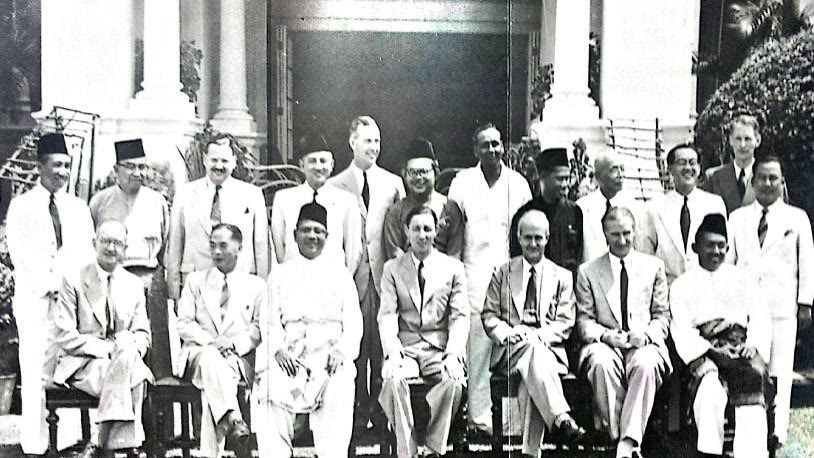
Reader Comments
Be the first to share your thoughts.