Abdullah's Reform Window: Why the Door Slowly Closed
The National Integrity Plan, police reform, and the unfulfilled promises of a powerful Prime Minister
The one thing the Prime Minister's desk did not lack after an election victory were files.
In 2004, the National Integrity Plan was officially launched; objectives concerning corruption, public service, corporate governance, and family and society were neatly written into a national framework. 1,2
A year later, the Royal Commission to Enhance the Operation and Management of the Royal Malaysia Police submitted an even harsher diagnosis.
Inadequate complaint mechanisms, abuse during detention, corruption, and professional standards were no longer just street-level accusations, but had entered official investigations and reform recommendations. 3,4
The door had opened.
However, the people who write down reforms and the people who must accept them are often not the same group.
Moderation Does Not Mean a Lack of Direction#
When evaluating Abdullah in hindsight, the easiest thing to say is that he was "too soft." This term is convenient, but it obscures the choices he did actually make.
He made integrity an official government agenda, allowed certain criticisms that were previously hard to voice into mainstream spaces, and established a commission to inspect the police force. Compared to his predecessor, the political air was temporarily more relaxed. 1,3,4
The problem was that a commission proposing recommendations did not mean executive organs were willing to surrender their power.
A truly independent oversight body capable of receiving and investigating police complaints would change who investigates whom; a more transparent procurement and anti-corruption system would change who gets contracts; empowering parliament and the media would change how the Prime Minister's Office explains its policies.
These were not matters of politeness.
They would cause a group of people to lose their discretionary power.
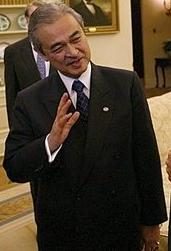
People Began to Measure Tone by Results#
As days went by, the public noticed that the word "integrity" appeared more frequently than the names of high-ranking officials held accountable; reform reports landed easier than new oversight bodies did. Cost of living issues, public services, and internal party politics constantly consumed the Prime Minister's time and credibility. 1,4
This did not mean all promises were a scam.
A more accurate description: Abdullah opened a window, but failed to transform it into an institutional door in time. When the wind changed direction, the window could be closed.
By 2007, waiting had turned into impatience.
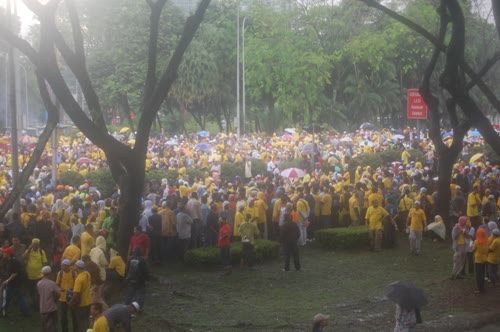
People no longer only discussed reform in seminars, newspaper columns, and committee reports. On a Saturday in November, they wore yellow and walked from different directions in Kuala Lumpur toward the National Palace.
Sources 4 Every important claim here can be checked. Open it and see.
Do not trust this site. Check it — every source below is clickable.
This site is written with AI assistance. Please check us.
AI can invent citations that look completely convincing — a real author's name, a plausible title, a sensible year, for a work that does not exist. This is not a theoretical risk; it is a known failure mode. That is why every source on this site is clickable. If a reference cannot be found anywhere, it may well not exist — and we want to know.
How to check us →
Reader Comments
Be the first to share your thoughts.