Why Were Sabah and Sarawak Central to Malaysia Formation?
When Tunku Drew Malaysia in Singapore, Sarawak and North Borneo Already Had Their Own Parties, Fears, and Future Plans
When Tunku said Malaysia in Singapore, the map looked very convenient.
On the left was an already independent Malaya.
Below was Singapore, anxiously looking for a way out.
On the right, across the South China Sea, were drawn Sarawak and North Borneo.
Just by circling a few patches of color, a new nation seemed to appear.
But maps do not speak.
The newspapers in Kuching did. So did the editors, businessmen, indigenous leaders, and newly formed political parties in Jesselton (now Kota Kinabalu).
The first question they asked was not "When do we join?"
It was: Why is our future being announced first by others in Singapore?1,2,3,4
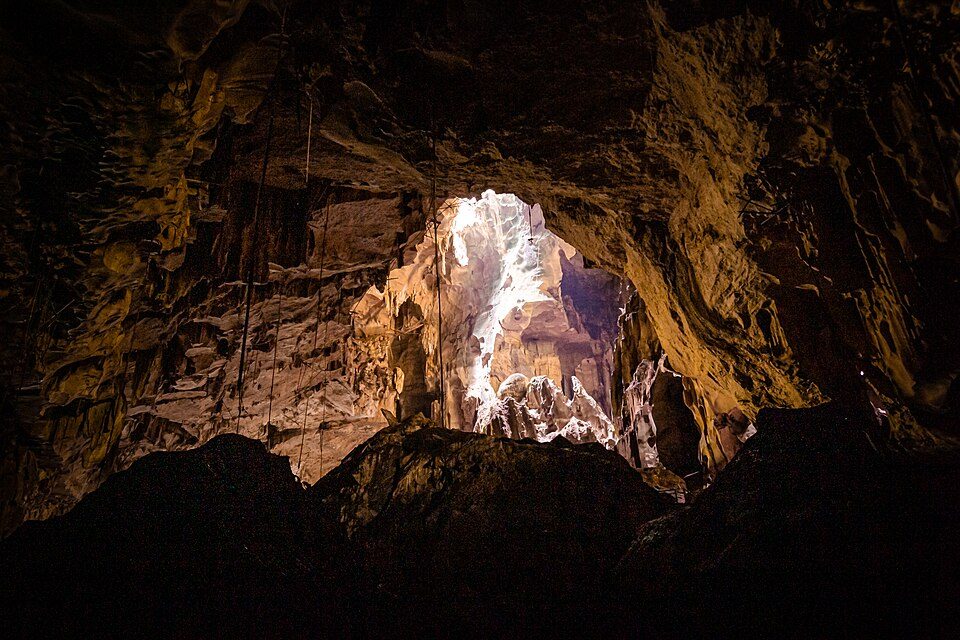
Sarawak is Not a Part of Malaya#
Sarawak had its own historical path.
The Brooke family established a White Rajah regime in the nineteenth century; only in 1946, when the third Rajah ceded Sarawak to Britain, did it become a Crown Colony. By 1961, Sarawak had a Council Negri, local elections, and tiers of electoral colleges, but not yet a self-governing administration directly elected by the whole population. Its earliest modern political parties were also very young: SUPP was formed in 1959, followed later by organizations like PANAS, SNAP, and BARJASA.1,3,5
So when the Malaysia proposal arrived, political identities were still forming.
The SUPP, with strong Chinese leadership, initially advocated achieving independence first before deciding whether to join. Some Iban and other indigenous leaders worried that, lacking sufficient education, administrative experience, and economic power, they would be entering a federation dominated by more mature Malayan political parties. Others supported forming Malaysia as soon as possible, hoping to gain rural development, educational opportunities, and the security capacity to counter the communist underground.1,2,3
Even within the same longhouse, there was not necessarily only one answer.
The Cobbold Report later recorded that some young Ibans were more uneasy about the conditions accepted by their elders. They said they hoped the Malays would treat them as "brothers," but not as "younger brothers"; nor did they want Sarawak to be treated merely as one of many ordinary states in the new federation.1,5
This sentence is very short.
More than sixty years later, it has still not lost its voice.
North Borneo Was Not Just Sabah's Old Name#
North Borneo went through a different path.
It was long governed by the British North Borneo Chartered Company and only became a British Crown Colony after World War II. Party politics started even later than in Sarawak, and local leaders had to discuss a massive decision in a very short time: who would control land, whether peninsular people could move in freely, where Islam and the Malay language would stand, when local civil servants would replace British officials, and whether the new federation would simply move decision-making power from London to Kuala Lumpur.1,2,4,5
Donald Stephens best illustrated this oscillation.
He ran the Sabah Times and later led the United National Kadazan Organisation. When the Malaysia plan first emerged, he worried that North Borneo was merely changing colonial masters and argued for understanding the terms first. But after the Commonwealth Parliamentary Association meeting in July 1961, he shifted to proposing the formation of the Malaysia Solidarity Consultative Committee, allowing Borneo leaders to visit, ask questions, and negotiate first, rather than immediately saying "yes" or "no."2,4
Changing a stance did not mean the doubts vanished.
Quite the opposite: he walked from outside the door of opposition into the negotiation room because he believed the terms had to be co-written by the locals.
Both Support and Opposition Had More Than One Reason#
Supporters saw three things.
A faster end to colonial rule, entry into a larger economic space, and defense and internal security borne by a stronger federation. Some, after visiting Malaya, were deeply impressed by the roads, schools, and rural development, hoping the same resources would come across the sea.1,2
Skeptics also saw three things.
Local land might be acquired by incoming populations; English, mother tongues, and religious arrangements might be overridden by peninsular systems; and if the safeguards were not written firmly enough, the center would only need to amend the constitution later, and the promises would shrink.1,3,4
There were also those who proposed a third path: letting Sarawak, North Borneo, and Brunei form a Borneo Federation first, or achieving independence separately first, before deciding whether to merge with Malaya. This ultimately did not become reality, but it shows that the future in 1961 did not consist of only one door.1,2,5
Evidence for This Article, Clearly Explained#
The political structures and anxieties of both territories are based on the Cobbold Report, but the Commission's colonial perspective is not treated as the entirety of local voices. The report's assessments of communists, ethnic groups, and "political maturity" carry the security framework of the British and Malayan governments; this article cross-references contemporary political party studies, Sarawak studies, and research on Donald Stephens.1,3,4,5
Donald Stephens's shift is not a simple story of being "persuaded." Academic research shows he moved from skepticism to supporting a consultative mechanism; this article does not fabricate closed-door persuasions, nor does it claim he subsequently accepted all conditions.2,4
This article is sensitive: true. It touches on the status of East Malaysia, ethnic politics, communist threats, and colonial withdrawal; the original draft was reviewed line by line by Jay before publication.
Next up: In February 1962, five men arrived in Borneo. They carried a mission: to determine the will of millions of people without a public referendum.1,2
Sources 5 Every important claim here can be checked. Open it and see.
Do not trust this site. Check it — every source below is clickable.
This site is written with AI assistance. Please check us.
AI can invent citations that look completely convincing — a real author's name, a plausible title, a sensible year, for a work that does not exist. This is not a theoretical risk; it is a known failure mode. That is why every source on this site is clickable. If a reference cannot be found anywhere, it may well not exist — and we want to know.
How to check us →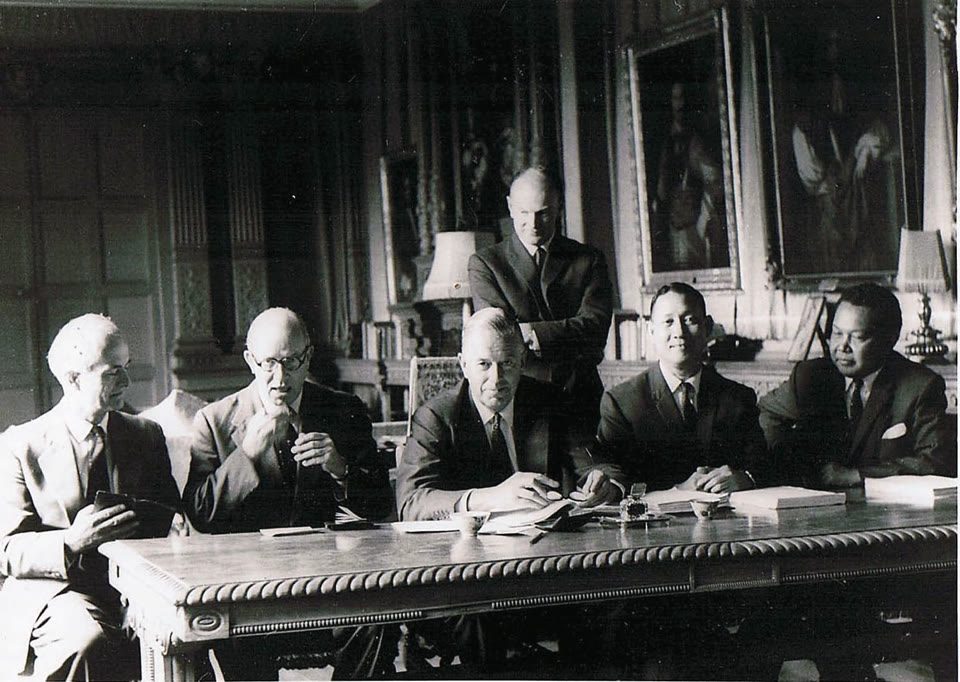
Reader Comments
Be the first to share your thoughts.