What Was the Cobbold Commission?
The Cobbold Commission Heard Many Voices, But It Was Never a Referendum That Counted Every Person
Five men walked into Borneo.
They did not come to hand out ballot papers.
They came to listen, and then write an answer on behalf of everyone.
The Chairman, Lord Cobbold, was a former Governor of the Bank of England. The Commission had two other British members, and two members nominated by the Malayan government: the Chief Minister of Penang, Wong Pow Nee, and a diplomat, Ghazali Shafie.
Among the five, not one was from Sarawak or North Borneo.1,2,3
This does not automatically render the report invalid.
But it determines that when reading the report, one must first ask: How did they listen, and how did they convert the voices they heard into "public opinion"?
Ships, Planes, and Places Out of Reach#
Between February and April 1962, the Commission toured the two territories.1,3
In Sarawak, they rushed to various districts using planes, roads, riverboats, and government launches. They held hearings in twenty locations and entered some longhouses. However, the report also admitted that it was impossible to reach all remote areas; many interior residents were illiterate, and government explanatory documents regarding Malaysia only began to be distributed in various languages about six weeks before the Commission arrived.1,3
In other words, some had already been reading party statements, attending rallies, and arguing in coffee shops for months.
Others were understanding the structure of this new nation for the very first time just as the Commission arrived at their doorstep.
This was not a ballot paper cast on the same day, answering the same question, with one vote per person.
It was a consultation conducted in an environment with highly unequal transportation, literacy, administrative mobilization, and party organizational capabilities.1,2,4
The Thirteen Conditions of Kapit#
On March 19, the Commission arrived in Kapit.
Placed before them was a resolution passed a month earlier by fifty-one elected Iban chiefs. It demanded: the Head of State must be a local indigenous person; traditional customs and land must remain under State jurisdiction; English must continue as the official language; freedom of religion; immigration must be controlled by Sarawak; indigenous people must receive safeguards similar to the peninsular Malays; and State rights could not be altered without the State's consent.1,2
The report stated that these fifty-one chiefs allegedly represented about 112,000 Ibans; at the time, the total Iban population in Sarawak was nearly 238,000. The Commission gave these resolutions "great weight."1,3
But the report also noted another voice.
Some younger Ibans were less willing to accept this. They worried that their lack of education and administrative experience would put them at a disadvantage in the new federation; some demanded independence first, and some even proposed retaining a right to secede after five years.1,4
Thus, Kapit was not a neat "yes" vote.
It was more like a check written full of additional conditions.
The Three "One Thirds"#
The most frequently cited part of the report is its final estimation.
About one-third strongly supported the early realization of Malaysia without too many reservations regarding the terms.
Another third leaned toward support in principle but demanded varying degrees of conditions and safeguards.
The final third was divided into two categories: one insisting on independence first before discussing Malaysia, and the other preferring British rule to continue for a number of years. The Commission also estimated that a "hard core" opposed to Malaysia under any terms might amount to near 20% in Sarawak and slightly less in North Borneo.1,2
Stop here.
This does not mean two-thirds had already unconditionally voted in favor.
The ones who truly offered unconditional or near-unconditional support were the first third. The attitude of the second third depended on safeguards; and the final third were not all permanently opposed—some wanted independence first, some wanted a delay.1,4
More importantly, the Commission itself wrote three limitations before its conclusion: it could only make an approximation; it was unable to travel throughout the vast territories; and some groups would exaggerate their numbers of supporters, sometimes to the point of absurdity.1,2
So, What Did It Prove?#
It proved that the forces supporting Malaysia truly existed, and on a significant scale.
It also proved that much of this support was conditional: land, immigration, language, religion, education, indigenous status, finance, and the local civil service all had to be addressed.1,3
It did not prove that every resident had been asked.
It did not produce an electoral roll that could be verified vote by vote.
Nor did it allow the people to cast a direct popular vote choosing between "independent state," "Borneo Federation," "continued colonial rule," and "joining Malaysia."1,2,4
The Commission ultimately agreed unanimously that forming Malaysia was in the best interests of the two territories.
But behind that "yes" trailed a whole page of unfinished "ifs".
Evidence for This Article, Clearly Explained#
The three one-thirds are summarized based on paragraph 144 of the Cobbold Report. This article simultaneously retains paragraph 143's warnings about the approximate nature of the estimate, the inability to cover the whole territories, and the possibility of views changing, refraining from rewriting the Commission's estimate into precise vote counts.1,2
The Kapit resolutions and the number of people represented come from the report itself. "Allegedly representing 112,000" retains the report's attribution and is not written as a number verified by modern voter registration.1,3
This article is sensitive: true. The representativeness of the Cobbold Commission and the legitimacy of Malaysia's formation remain politically controversial today. The original draft was reviewed line by line by Jay before publication.
Next up: Meanwhile, Singapore received a real ballot paper. But that ballot had three answers, and none of them was called "do not join."
Sources 4 Every important claim here can be checked. Open it and see.
Do not trust this site. Check it — every source below is clickable.
This site is written with AI assistance. Please check us.
AI can invent citations that look completely convincing — a real author's name, a plausible title, a sensible year, for a work that does not exist. This is not a theoretical risk; it is a known failure mode. That is why every source on this site is clickable. If a reference cannot be found anywhere, it may well not exist — and we want to know.
How to check us →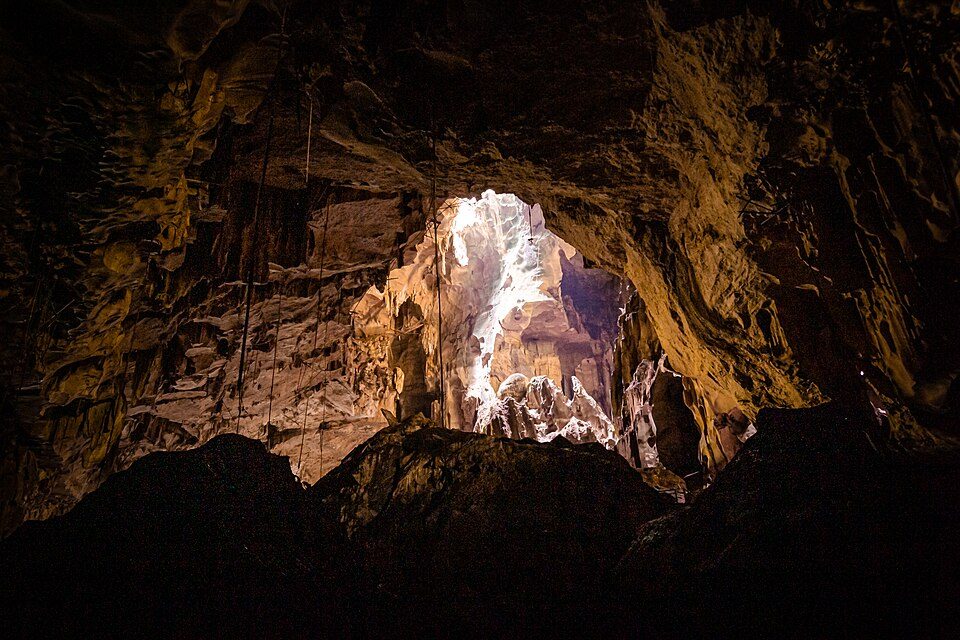
Reader Comments
Be the first to share your thoughts.