What Happened After the May 13 Incident?
The votes had just been counted, but the doors to Parliament did not open. For the next twenty-one months, the nation was decided at a different table.
The votes had just been counted.
But the doors to Parliament did not open.
On May 10, 1969, Malaysia held its third general election since independence.
The ruling Alliance remained the largest force in Parliament.
But for the first time, it lost the two-thirds majority required to amend most constitutional provisions; the state government of Penang also fell into the hands of Gerakan, and the situation in Perak and Selangor hung in the balance.1,2
Three days later, Kuala Lumpur burned.
Two days after that, a state of emergency was declared.
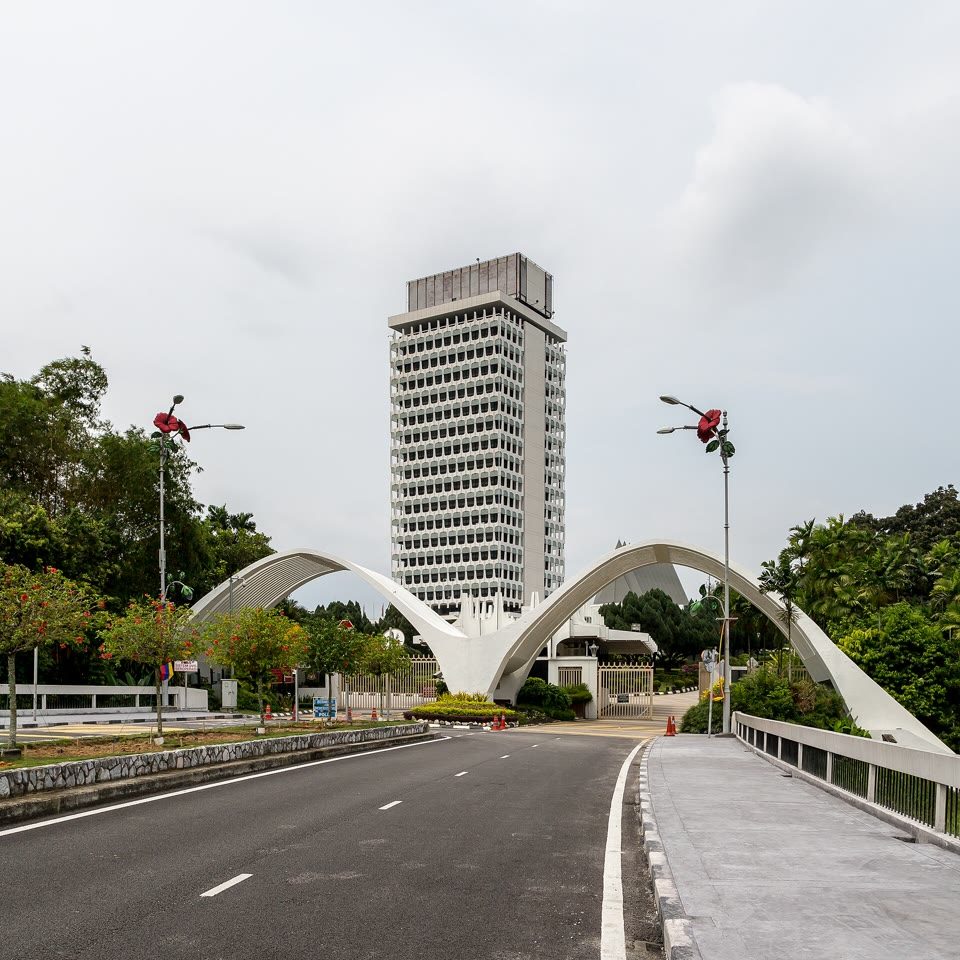
The ballot that the people had just cast did not send the new Parliament into the debating chamber; the nation had already been moved to another table for decisions to be made.3,4

That UMNO Youth Exco Member Later Kept Asking One Question#
On the evening of May 13, Ahmad Mustapha Hassan stood within the compound of the official residence of the Selangor Menteri Besar, Harun Idris.
He was not an opposition supporter.
Nor was he a commentator who only emerged years later.
In 1969, he was a member of the UMNO Youth Central Committee and its political bureau. That morning, he had attended an UMNO Youth committee meeting. The original plan, as he understood it, was to hold a counter-procession in response to the street victory celebrations by DAP and Gerakan supporters.7,8,9
But as evening approached, he saw headbands appear in the crowd, and he saw parangs and other sharp weapons suddenly materialise.
What tormented him most later was not just that those things appeared.
It was that he did not know where they came from.
He suspected in his memoirs that some weapons might have been hidden beforehand amidst the bamboo fences surrounding the residence; yet he immediately halted his own deduction: he did not know who had hidden them, nor did he know who had ordered the distribution of the headbands.7,9
This is exactly the hardest, yet most necessary moment to write clearly in the history of May 13.
A person within the UMNO Youth leadership publicly stated that headbands and sharp weapons appeared at the scene.
But the very same person also publicly stated:
He could not point out who prepared them.
The testimony pushed the door open, but failed to point out to history who was standing behind it.
Separate the Two Locations First#
When people recount May 13 orally, they often conflate "the UMNO meeting", "the gathering at Harun's residence", and "the UMNO headquarters" into one single location.
The timeline supported by available records is much more specific.
On the morning of May 13, the UMNO Youth committee met to discuss the counter-procession. The main gathering point was the residence of Selangor Menteri Besar Harun on Jalan Raja Muda, near Kampung Baru. The UMNO headquarters on Batu Road only appeared in the records concerning attempted arson after the violence had already spread that night.7,8,11
In other words:
The counter-procession did not set off from the front doors of the UMNO headquarters.
However, the people who organised it did indeed come from the Selangor UMNO Youth.
Harun was the Menteri Besar of Selangor and the leader of the state’s UMNO Youth; his political secretary, Ahmad Razali Ali, was in charge of the specific mobilisation. According to Goh Cheng Teik’s account based on Ahmad Razali’s statement, on the night of May 12, he spent about four hours visiting seven Malay villages, notifying supporters to gather at Harun's residence the next evening for a counter-procession. A permit for the procession had also been applied for and obtained from the police.5,8
Therefore, this was not a group of people accidentally converging on the same house with no prior arrangement.
The gathering was organised.
What is truly in dispute next is who pushed an approved political procession over the line into violence.
In Front of the Residence, the Crowd Grew#
By past 6 PM, the front and courtyard of the residence were already packed with people.
Police testimonies estimated there were about four to five thousand people. Most carried wooden sticks and banners, while a minority brought parangs or kerises. This observation is not entirely identical to Ahmad Mustapha’s account that "sharp weapons suddenly appeared": the former records that the police saw some people were already armed, while the latter describes an internal participant feeling that the weapons seemed to materialise out of nowhere.5,7,8
Both testimonies can be true at the same time.
Or perhaps each only saw a part of the scene.
At about 6:20 PM, two youths arrived on a motorcycle and crashed into the crowd, shouting a sentence that repeatedly appears in later records:
"Setapak dah kena langgar."
Roughly translated: Something has happened in Setapak.8,11
Just how accurate their news was, there was no time to verify at the scene.
The crowd only heard one signal:
Our people have been attacked.
Right outside the residence, a Chinese teenager delivering drinks for a coffee shop happened to pass by. Ahmad Mustapha claimed he saw the boy killed with his own eyes, and stated it was the first killing he witnessed on the scene. Goh’s reconstruction based on police and participant testimonies also places this murder at the initial stages of the violence erupting.7,8
We cannot swap out words here.
We can write: Ahmad saw it with his own eyes.
But we cannot solely rely on this scene to write: He already knew who orchestrated it.
Were Weapons Actually "Distributed"?#
There is a commonly circulated narrative:
Someone distributed weapons to the crowd at the UMNO gathering.
The evidence that can safely be committed to writing at present is divided into three layers.
The first layer is that weapons were indeed present at the scene. Police testimonies stated a minority of the crowd carried parangs or kerises; Ahmad Mustapha said long knives and other sharp weapons suddenly appeared on site. This part is supported by mutually independent records.7,8
The second layer is Ahmad stating that headbands were distributed to the participants. He put one on himself, yet said he did not know the purpose of the headbands, where they came from, or who ordered them. His memoirs and later interviews are consistent on this point, but they both stem from the same witness and cannot masquerade as two independent witnesses.7,9
The third layer is the most serious allegation: UMNO leaders systematically distributed weapons piece by piece to the crowd. Ahmad’s exact words only prove he saw weapons "appear" or be brought out; he did not state he saw any identifiable UMNO leader hand them out one by one, nor did he point out who had hidden them. The police testimonies cited by Goh prove people were armed, but equally fail to complete the evidentiary chain of "who supplied them, who ordered it".7,8,12
So, the answer is not a simple "yes" or "no".
The weapons were there, this is grounded in evidence.
The headbands were distributed, this is Ahmad's clear testimony.
But "the UMNO top leadership ordered the distribution of weapons" remains, within the currently public and verifiable materials, an allegation yet to be fully proven.
Separating these three statements is not about absolving anyone.
It is to prevent the author from putting words into the witnesses' mouths that they themselves did not say.
Harun Stood on a Bus, But Failed to Call the Crowd Back#
Shortly after, a van carrying two Chinese men was intercepted and burned near the residence, and the two men were killed.
Ahmad Razali’s statement notes that upon rushing back to the residence, he saw Harun standing on a bus, attempting to call on the crowd to calm down. The crowd shouted back; the situation was already beyond control.5,8
This testimony is crucial because it simultaneously shatters two overly convenient stories.
The first says everything was merely an unorganised, spontaneous reaction.
Incorrect. The counter-procession had persons in charge, mobilisation, a permit, and a clear gathering point.5,8
The second says that the mere fact the gathering was held at Harun's residence proves Harun personally ordered the crowd to kill.
Existing records do not complete that inference either. At least in Ahmad Razali's version, Harun had stepped up to try to stop the crowd. This testimony does not wash away his political responsibility for approving the gathering, but it turns "he directly commanded the violence at every step" into a charge that still requires proof.8,12
Political responsibility and criminal orchestration are not the same question.
If history conflates the two, it only allows the questions that truly need answering to escape more easily.
Once the Fire Left the Residence, the Victims Were No Longer Just on One Side#
At around 7 PM, the crowd began leaving the vicinity of the residence, and the attacks spread along the streets.
Soon, retaliation also appeared in areas populated by Chinese and Indians. Shops put up barricades; some took up makeshift weapons; vehicles, shophouses, and homes caught fire. By nightfall, Malay and Chinese civilians alike could be attacked simply for walking down the wrong street, sitting in the wrong cinema, or being judged by their physical appearance as belonging to a certain race.5,8,11
Former judge Mahadev Shankar was living near Jalan Raja Muda at the time.
He heard the crowds, then saw the flames. He hid a Chinese woman and her baby in his home. Later, a Malay man came to his house to pick up his Chinese wife and child. The specific details of civilian testimonies come from two press interviews; Goh’s contemporary study also supports the background that the violence had already spread to the streets surrounding the residence that evening.8,11,9
Journalist Johan Fernandez was trapped in a cinema. After armed men broke in, he survived because he was not seen as the target ethnic group, and subsequently hid in a police station for days. His personal experience comes from a later interview; this article only uses it to depict the civilian plight, not as proof of who orchestrated the riots.8,11,9
These testimonies cannot explain the behind-the-scenes politics.
But they restore the original weight to the words "ethnic conflict":
It was not two neat phalanxes battling each other.
It was a husband searching for his wife and child, a boy failing to deliver coffee, and a group of moviegoers suddenly having to prove which race they belonged to.
The Witnesses Sat at the Same Table, Yet Did Not Give the Same Answer#
In the aftermath, Tunku Abdul Rahman focused on the provocations during the opposition's victory processions, the instigation by communists and leftists, and the involvement of secret societies; he also acknowledged that there were "ultras" within UMNO who wanted him to step down. This was the explanation of the Prime Minister when the crisis hit, and it was also the explanation of a party involved in the political struggle.5,9,6
Kua Kia Soong later relied on declassified British diplomatic cables to pose a much sharper conclusion: the riots were exploited by emerging forces within UMNO, and were even a coup directed against Tunku.13,9,10
Former Inspector-General of Police Hanif Omar does not accept this conclusion.
He acknowledges that dissatisfaction with Tunku within UMNO genuinely existed, but says this dissatisfaction was not the cause of May 13; in his explanation, the riots instead accelerated the forces pushing Tunku to step down. Hanif participated in coordinating the Special Branch's investigations at the time, and claimed to have read the eyewitness statements, thus finding the basic narrative of the NOC report credible.5,8,9
Ahmad Mustapha’s position is different again.
He indeed saw the headbands and weapons, and he also believed that those anti-Tunku within UMNO might have had other plans; but the latter half of his sentence is a judgment he made based on the abnormalities at the scene, not because he personally witnessed a secret plotting meeting.7,9
Putting these individuals side by side leads to an uncomfortable but honest conclusion:
They were all close to power or the scene.
They still disagree with each other.
And after May 13, an independent commission of inquiry was never established to publicly test the testimonies through open hearings, cross-examinations, and complete archives. The government's most complete version still largely stems from the NOC, which later wielded emergency powers.5,12
Therefore, this piece will not declare who has already won the trial of history.
It merely marks out how far the evidence can go:
The counter-procession was organised.
The crowd gathered at Harun's residence.
Some carried weapons.
Ahmad saw headbands distributed, weapons appear, and witnessed a boy being killed.
Harun approved the gathering; another testimony claimed he later tried to stop the crowd.
As to who pre-prepared the weapons, who issued the command for violence, and whether the crisis was designed as a tool to overthrow Tunku, the public records have not completed the proof.
The most dangerous way to write history is not to admit "we don't know".
It is to cram the answer we want to believe into the half-sentence a witness left unfinished.
Was Lim Kit Siang Mainly Responsible for May 13?#
Here we need to test another claim that has circulated for a long time.
Some anti-DAP narratives describe May 13 as a riot "started by Lim Kit Siang," then attach it to a larger conspiracy theory:
The Chinese wanted to control the country.
The claim is attractive because it reduces a complex crisis to one name that is easy to hate. History cannot decide responsibility that way.
Start with the election figures.
After the 1969 election, the Alliance had lost its two-thirds majority but remained the largest force in Parliament. DAP won thirteen seats, Gerakan took Penang, PAS retained Kelantan, and the opposition produced hung situations in Perak and Selangor. The old order had been weakened, but the federal government had not fallen into DAP's hands, much less into the hands of "the Chinese" imagined as a single bloc.1,2,5
Next, look at where power stood that day.
The violence on the night of May 13 took place in Kuala Lumpur, with the counter-rally around Harun's residence as a central node. After the emergency, it was not DAP that took charge of the country, but MAGERAN under Tun Razak. Parliament's suspension, the expansion of executive orders, and the movement of power toward the Director of Operations all took place within the governing Alliance and the state apparatus.5,3,4,8
Third, examine the specific accusation against Lim Kit Siang.
One common version says that he made insulting gestures near Harun's residence, angered the crowd, and triggered May 13. There are two problems with that account. Ahmad Mustapha Hassan, then an UMNO Youth Central Committee member who was inside the residence grounds, later said the area was controlled by UMNO Youth and that a non-Malay could not have entered freely; had Lim been there, the crowd would likely have attacked him immediately. Lim himself has long said that he was outside Kuala Lumpur on May 11, 12, and 13, and was speaking in Kota Kinabalu for the Sabah election on the evening of May 13. That is a participant's account and cannot alone settle the matter, but it means the accusers need evidence harder than political speeches or scenes from a film.7,9
Fourth, ask whether official and research materials identify him as an organiser.
The public materials used in this article, including the NOC report, Tunku's book, Goh Cheng Teik's study, Trindade's legal analysis of emergency powers, and later scholarly discussion of gaps in the record, do not provide a complete chain of evidence showing that Lim Kit Siang was a principal organiser of the May 13 violence. They discuss opposition victory parades, ethnic provocations, secret societies, communists, the UMNO Youth counter-rally, Harun's residence, the police and military, MAGERAN, and shifts of power within UMNO.5,13,8,6,12
That does not mean DAP, Gerakan, or other opposition actors bore no responsibility for the street politics of 1969.
If some supporters shouted slogans that humiliated another community during victory parades, or turned an election win into ethnic humiliation, that should be recorded and criticised. The official narrative and several researchers place the post-election parades within the chain of rising tension.5,13,14,6
But there is a long evidentiary distance between "there were provocations during opposition parades" and "Lim Kit Siang was mainly responsible for May 13."
Political propaganda often erases that distance.
It turns the slogans of a few into the intention of all ethnic Chinese, recasts an electoral setback as "the Chinese taking power," and finally makes one party and one leader stand in for an entire community. Institutional failures, inequality, internal party struggles, policing responsibility, and the expansion of emergency power can then recede from view. Only the easiest sentence for igniting fear remains:
They want to control us.
That is why this language became so dangerous after May 13.
It does not need to prove every link.
It only needs to make people too afraid to keep asking questions.
The conclusion here must therefore remain limited.
The opposition's rise in 1969 did shake the Alliance's old order.
Some post-election parades and ethnic provocations did heighten tension.
DAP, as a rising urban opposition party, later became a lasting target in narratives of Malay political fear.
But the available public evidence does not justify describing Lim Kit Siang as the person mainly responsible for May 13.
A Number That Has Not Settled to This Day#
The statistics the government continues to use today are:
196 people died.
439 people were injured.
Over 6,000 people lost their homes.13,15
But the death toll was questioned almost immediately after the event.
Contemporary journalists, diplomats, and later researchers have offered higher estimates; the figures adopted by different books also do not align.13,14
This site will not pick the most horrifying of these numbers and put it in the headline.
Because higher does not automatically mean truer.
And official does not automatically mean complete.
We can only lay the boundaries of the evidence on the table:
196 is the number clearly attributable to the government's statistics.
Higher estimates indeed exist.
But without a verifiable complete register of the dead, unified calculating timeframes, and transparent investigation archives, the true total cannot be decided by an author's stance.
What is truly indisputable is that behind every number, there was someone who did not go home.
May 15: State of Emergency#
On May 15, the Yang di-Pertuan Agong declared a state of emergency pursuant to Article 150.
The subsequently formed Majlis Gerakan Negara, abbreviated as MAGERAN, was led by Deputy Prime Minister Tun Abdul Razak as the Director of Operations. Its duties included restoring public safety, maintaining administrative functions, and ensuring supplies and essential services.3,4
The name sounds like a temporary crisis committee.
But the actual changes touched the centre of state power.
Parliament did not sit.
Normal legislative debates were suspended.
Executive orders and emergency powers became the main track for running the country.
This state of affairs lasted for twenty-one months.3,4
We must pause here.
A country can continue to have a prime minister, a cabinet, courts, and civil servants.
Order can gradually return to the streets.
But if an elected parliament cannot convene, the mandate the people had just handed over loses its primary venue for questioning the government in public.
That is not just a building closing its doors.
It is power losing a pair of eyes that questions it to its face.
Tunku Was Still There, But Power Had Moved#
In the early stages of the emergency, Tunku Abdul Rahman was still the Prime Minister.
But the daily command of MAGERAN fell into the hands of Tun Razak.
This created a rare situation:
The country's nominal head of government remained.
But the centre for handling the national crisis, rebuilding order, and designing subsequent policies moved ever closer to the desk of the Director of Operations.3,4
On September 22, 1970, Tunku stepped down from his role as Prime Minister.
On the same day, Tun Razak was appointed as the second Prime Minister of Malaysia. The appointment instrument preserved in the National Archives pins this transition to a definitive date.16,3
We cannot automatically script this timeline as a premeditated plot.
Some interpret May 13 as a means by which new forces within UMNO used the crisis to force Tunku out; the official narrative focuses on restoring order and ethnic imbalances. Both explanations have political positions behind them, and both require readers to know who is doing the talking.5,13,14
What is certain is only the result:
When votes were cast on May 10, Tunku was still the leader guiding the Alliance into the election.
Sixteen months later, the person sitting in the Prime Minister's seat was already Tun Razak.1,3,16
Twenty-One Months Later, the Doors Reopened#
In February 1971, Parliament was restored.
The Hansard record of February 23 documented the formal agenda upon reopening; it also recorded MPs paying tribute to the retiring Tunku, and looking back on Tun Razak's role as the Director of MAGERAN.3,4
Parliament returned.
But it was not the same country from before May 10 that returned.
During the emergency rule, the government had already begun searching for a set of explanations:
Why didn't economic growth erase ethnic anxieties?
Why did the Alliance's old political formula fail after a single election?
How can we prevent the same violence from happening again?
These questions later evolved into the Rukun Negara, the New Economic Policy, party realignments, and new restrictions on public discourse.3,4,13
Therefore, May 13 cannot simply be filed under the "riots" tab.
It was also an institutional door.
The policies that walked out from behind that door would dominate the next two decades.
The Evidence for This Piece, Explained to You#
The election results are cross-referenced using the SPR official portal and the MECo academic dataset. This article only states that the Alliance lost its two-thirds majority, Penang changed hands, and the situation in some states hung in the balance; it refrains from piling up more seat numbers while the full official SPR report for that term is not yet obtained.1,2
The course of events on the streets is not written as a single version. The MAGERAN report is the official primary narrative; Anthony Reid's contemporary article was written before he had seen that report; later academic research collated perspectives challenging the official narrative. Therefore, the text only outlines the basic sequence supported by all three parties, preserving the contentious details regarding provocations, organisational responsibility, and the starting point of the violence as matters of dispute.5,13,14
The section outside Harun's residence distinguishes between eyewitness accounts and inferences. Ahmad Mustapha's memoirs provide the testimony of an internal participant; Goh Cheng Teik's study cites the accounts of police officers and Ahmad Razali. Both support the presence of weapons, but they do not jointly identify the supplier of the weapons. Ahmad's memoirs and later interviews, though consistent, are two narrations by the same witness, not two independent witnesses.7,8,9
"The UMNO headquarters distributed weapons" is not written as a fact. Verifiable materials place the morning Youth wing meeting, the gathering at Harun's residence on Jalan Raja Muda, and the incident at the UMNO headquarters on Batu Road that night in different locations. This article confirms the gathering was organised by UMNO Youth and that some carried weapons; however, public evidence remains insufficient to prove that a specific UMNO senior leader ordered the piece-by-piece distribution of weapons.7,8,12
Behind-the-scenes explanations are retained as controversies. Tunku, Kua Kia Soong, Hanif Omar, and Ahmad Mustapha have varying judgments regarding communists, UMNO infighting, and the coup theory. Because no independent commission of inquiry was set up afterward to publicly test these testimonies, the text merely explains each person's identity and the standing of their evidence, rather than declaring a case closed in favour of one side.5,6,12,10
The claims about Lim Kit Siang and "Chinese control of the country" are examined as political accusations, not accepted as fact. Election data can show that the Alliance was weakened and the opposition rose; it cannot show that federal power fell to DAP or to ethnic Chinese. On Lim's whereabouts and whether he entered Harun's residence, the text distinguishes his own account, Ahmad Mustapha's counter-evidence, and the silence of official materials.1,2,5,7,8,12
The death toll is explicitly attributed. The 196 deaths and 439 injuries are official figures, supported by cross-references from academic papers and RTM reports; higher estimates are noted only as disputed estimates, not masquerading as definitive conclusions.13,15
The suspension of Parliament, MAGERAN, and the transfer of power are grounded in Hansard, MKN, and the National Archives. Twenty-one months is the length of time adopted by the official retrospective; Tun Razak's appointment date as Prime Minister is confirmed by the instrument of appointment.3,4,16
This piece is marked sensitive: true. Before publication, all sentences concerning processions, ethnic identities, military and police actions, death tolls, UMNO internal power dynamics, and the legitimacy of policies must be reviewed line by line by Jay.
Next up: When Parliament reopened its doors, a new order was already laid out on the table. The man who designed it was Tun Razak — he first took over the crisis, and then turned the temporary machinery into the country's direction for the decades to come.
Sources 16 Every important claim here can be checked. Open it and see.
Do not trust this site. Check it — every source below is clickable.
This site is written with AI assistance. Please check us.
AI can invent citations that look completely convincing — a real author's name, a plausible title, a sensible year, for a work that does not exist. This is not a theoretical risk; it is a known failure mode. That is why every source on this site is clickable. If a reference cannot be found anywhere, it may well not exist — and we want to know.
How to check us →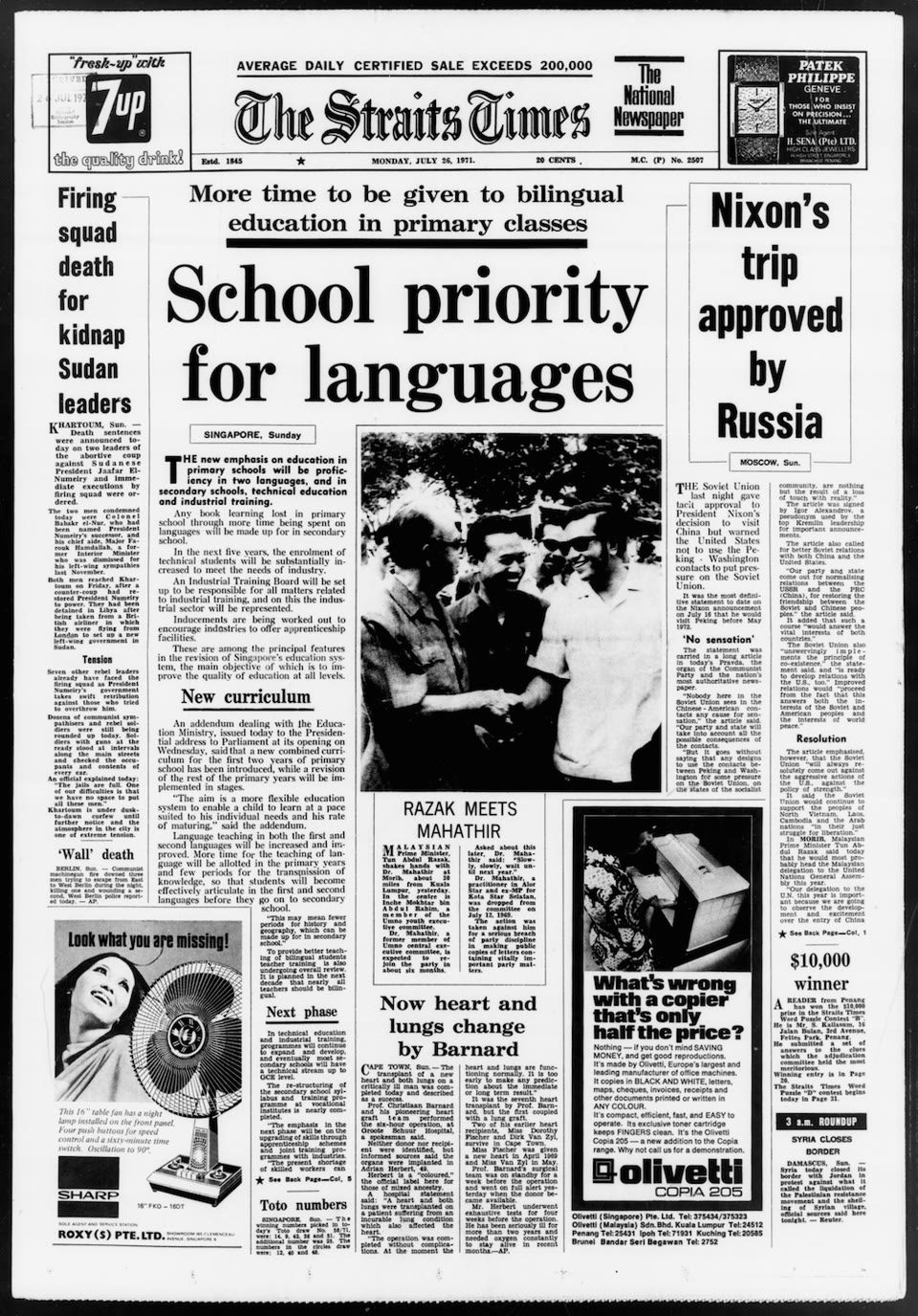
Reader Comments
Be the first to share your thoughts.