Who Was Hussein Onn and Why Did His Quiet Years Matter?
Hussein Onn did not leave behind a strongman's voice, yet he shifted the country's direction through an anti-corruption storm and a succession decision
Hussein Onn's prime ministerial career began with tears.
On January 14, 1976, facing television cameras, he announced to the nation:
Tun Razak had passed away in London.
The next day, he took over as the third Prime Minister of Malaysia. Five years later, in another emotional speech, he announced his resignation due to ill health. Those who later wrote about him left behind a very visual summary:
His prime ministerial career began in tears, and ended in tears.1,2,3
Between those two moments of tears, Malaysia did not experience an explosion that altered all political rules like May 13.
No single project like FELDA was forever tied to his name.
Nor did a twenty-two-year strongman style leave his personal stamp on an entire era.
As a result, Hussein Onn is easily skipped over by history.
But the decisions that truly change the course of a country often do not make a loud noise.
The Six-Inch Ruler#
To understand Hussein Onn, you can look away from the Prime Minister's Department for a moment.
Look first at a clove of garlic.
Former Attorney General Kadir Yusof recalled that when they studied together in London, they used to cook curry. Kadir casually placed the garlic on the table and smashed it. Seeing this, Hussein Onn took the garlic over and neatly sliced it, piece by piece. After washing the dishes, he arranged the forks and knives on the rack before covering them with a cloth. Years later, when they sat side-by-side in Parliament, Kadir noticed that the papers on his desk were just as tidy.2,7
Hussein Onn carried a small box with him wherever he went.
Inside were a short ruler, paper clips, an eraser, and colored pencils. He used the ruler to underline key points, changing colors based on their importance. If an aide borrowed something and left items scattered on the desk, he would immediately rearrange them. When encountering difficult words, he even wrote the pronunciations neatly above them. For a visit by a foreign head of state, his team spent five hours revising a ten-minute speech; on another occasion, they spent fifteen minutes polishing just one sentence.1,7
This is not meant to romanticize "neatness."
What his colleagues really wanted to explain was why the public often found him slow: he would write down the pros and cons of a decision on paper, listening to opinions one by one; if there was no consensus, he would leave the decision for the next meeting. Once he considered he had read all the information, a decision was hard to change.2,7
This habit also had an explanation left by the man himself.
When Hussein Onn returned to India in 1979, he said that the Indian Military Academy in Dehradun taught him not just military knowledge, but leadership, loyalty, and a sense of responsibility for the well-being of those who entrusted him. That was the meaning he gave to his early training years later; it cannot prove that every political decision came from the military academy, but it does explain why he always weighed the consequences of a single sentence so heavily.8,9
Therefore, when Tun Razak died suddenly and the position of Prime Minister fell to him, the person taking over was not a grassroots leader fond of impromptu speeches.
It was the man who would use a ruler to draw every line straight.
A Position Not Prepared For Him#
The position of Prime Minister originally belonged to Tun Razak.
The New Economic Policy, Barisan Nasional, diplomatic relations with China, and rural development had all been set in direction by his predecessor. What Hussein Onn inherited was not a blank sheet of paper, but a machine already running, yet having suddenly lost its designer.
What he first needed to prove was not how many new slogans he could invent.
But that the machine would not stop because of Tun Razak's death.
He continued the New Economic Policy and non-aligned diplomacy, maintained the operation of Barisan Nasional, and handled the UMNO-PAS cooperation that was already fracturing in Kelantan. The official title "Father of Unity" given to him later was precisely because his policy focus remained centered on closing the economic and ethnic gaps.2,4,8
However, when he took over, he had not been through a general election with himself as the leader.
It was only in 1978 that Hussein Onn led Barisan Nasional to face the voters. PAS had already left Barisan Nasional, Kelantan had just gone through emergency rule and a state election, and the "big tent" of the Alliance had a hole in it.
Barisan Nasional still won a stable majority.
From that moment until his resignation in 1981, a period of about three years, is the "quiet three years" of the title: he possessed his own electoral mandate, but he did not transform the country into the "Hussein Onn era."2,10
Integrity is Not a Slogan, It is Refraining From Acting#
Hussein Onn is most often praised for his integrity.
The most dangerous part of historical evaluation also lies right here:
If "he was very clean" is merely repeated by subsequent generations, it becomes an unverifiable character advertisement.
What we can put on the table is a specific case.
The former Menteri Besar of Selangor and UMNO Youth strongman, Harun Idris, was charged with corruption and misappropriation of public funds. Court records confirm the case went to trial and resulted in a conviction; political research notes that Harun's camp hoped party leaders would intervene or mitigate the consequences, but Hussein Onn did not block the judicial process for him.2,5
Hussein Onn's most important action was precisely taking no action.
He did not publicly order the judges on how to sentence.
He did not turn a court case into an internal party disciplinary proceeding just because the accused was influential within the party.
Researchers argue that by letting the anti-corruption agency investigate high-level officials and refusing to grant political protection, he established his image of being strict on corruption.2,5
But this still does not equate to the era being completely free of corruption.
A leader's non-interference in a case is an important precedent.
But it is not proof that the entire system was already independent.
The true systemic question remained:
If replaced by a less restrained Prime Minister, could investigations and prosecutions still proceed normally?
He Continued the Predecessor's Contract#
Hussein Onn did not abandon the New Economic Policy left by Tun Razak.
On the contrary, he advanced the part about "expanding Bumiputera asset ownership" into forms easier for ordinary families to participate in.
In 1981, Amanah Saham Nasional, or ASN, was launched. It allowed more Bumiputera investors to indirectly hold corporate assets managed by PNB through unit trusts.1,2,4,8
This is different from handing a company directly over to a specific businessman.
Unit trusts could break up large assets into many small portions, allowing families unable to pick stocks themselves to participate in the capital market.
It had the aspect of broadening wealth participation.
It also further expanded the role of state investment agencies in corporate enterprises.
Consequently, the question left by The New Economic Policy (NEP): A Twenty-Year Contract reappeared:
How do assets held by government agencies on behalf of the people translate into long-term family capabilities?
Would an institution created to disperse wealth simultaneously concentrate even greater economic power?
Hussein Onn did not end this machine.
He made it run more steadily.
The Quietest and Heaviest Choice#
After Tun Razak's death, Hussein Onn had to select a Deputy Prime Minister.
What lay before him was not just a single name.
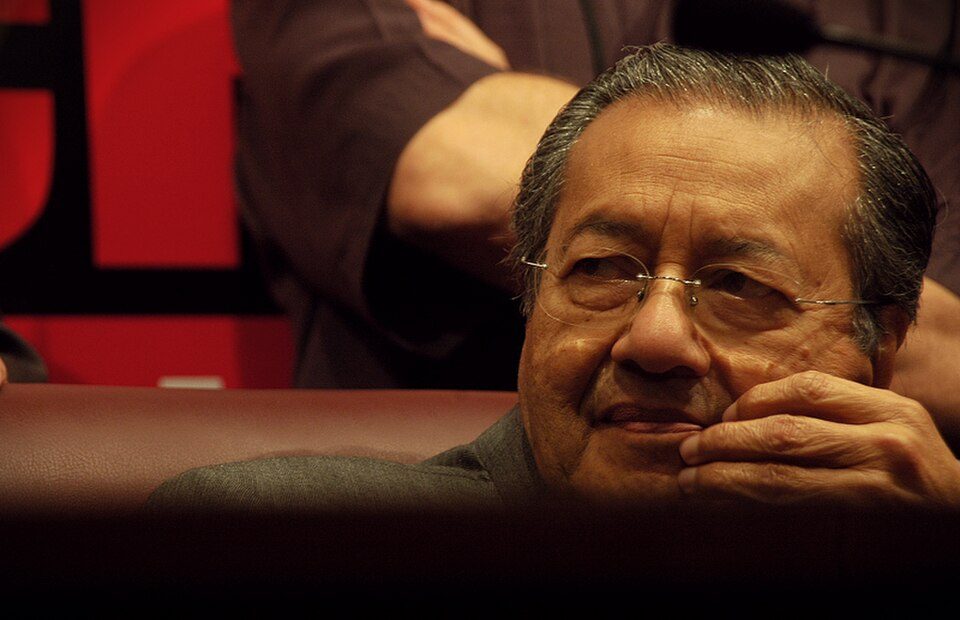
UMNO top ranks included Ghafar Baba, Tengku Razaleigh Hamzah, and Mahathir; Home Minister Ghazali Shafie was also considered a weighty candidate. Although Mahathir had returned to the party and served as Minister of Education, he was still the man who had publicly criticized the Tunku and had been expelled by UMNO.6,11
Hussein Onn considered it for several weeks.
He finally chose Mahathir.
This was not because the two were particularly close. Later research actually described their relationship as somewhat distant, and Hussein Onn did not accept every one of Mahathir's propositions.6,11
He chose the person who was rising fastest in the party, had the clearest ideas, and was most likely to garner organizational support at the time.
The Deputy Prime Minister is not an honorary award.
In Malaysia's political conventions, it is almost equivalent to placing a person right in front of the Prime Minister's office door.
Hussein Onn had no way of knowing Mahathir would govern for twenty-two years.
But he knew he was deciding who would take over the country's next steps.
The Second Time of Tears#
In early 1981, Hussein Onn underwent coronary bypass surgery.
On May 15, he told 400 UMNO delegates in Johor Bahru that his physical recovery was not as expected and he would resign as soon as possible. Contemporary UPI reports noted it was an emotional speech; within the party, there was almost no doubt that Deputy Prime Minister Mahathir would take over.1,3,8
On July 16, Hussein Onn formally left the position of Prime Minister.
He did not exit under party pressure and national crisis like the Tunku.
He did not die in office like Tun Razak.
He acknowledged his body could no longer bear the role, and then handed power over to the pre-selected deputy.2,3,8
It was a calm handover.
So calm that many did not realize:
The longest, most powerful, and most controversial prime ministerial era of Malaysia was already standing outside the door.
The Evidence for This Article, Clearly Explained#
"Starting and ending in tears" comes from subsequent news profiles. The main text does not fabricate television dialogue; the succession after Tun Razak's death and Hussein Onn's resignation due to health are cross-confirmed by academic studies, UMNO official records, and 1981 contemporary UPI reporting.1,2,3,8
The clean reputation focuses on the Harun Idris case. Court data only proves the charges, trial, and verdict; the account that Hussein Onn refused political protection and gave space for anti-corruption investigations comes from specific biographical research. The text explicitly states: a single case does not prove the entire system was independent.2,5
Mahathir was not the only "destined" candidate. Studies of contemporary leadership structure and subsequent political leadership research both list other strong candidates, pointing out that Hussein Onn and Mahathir were not intimate.6,11
The ruler, colored pencils, and garlic in the curry belong to the memories of those close to him. The ISIS special issue reprinted 1981 interviews, closer to the events, yet still carrying colleagues' evaluations; the impact of the military academy comes from Hussein Onn's own 1979 reflection. The text uses these materials to present his working style, without equating "caution" with "every decision was right."2,7,9
This article is sensitive: true. Before publishing, sentences involving Harun Idris, anti-corruption agencies, the Kelantan emergency, Bumiputera asset policies, and succession motives must be reviewed line-by-line by Jay.
Sources 11 Every important claim here can be checked. Open it and see.
Do not trust this site. Check it — every source below is clickable.
This site is written with AI assistance. Please check us.
AI can invent citations that look completely convincing — a real author's name, a plausible title, a sensible year, for a work that does not exist. This is not a theoretical risk; it is a known failure mode. That is why every source on this site is clickable. If a reference cannot be found anywhere, it may well not exist — and we want to know.
How to check us →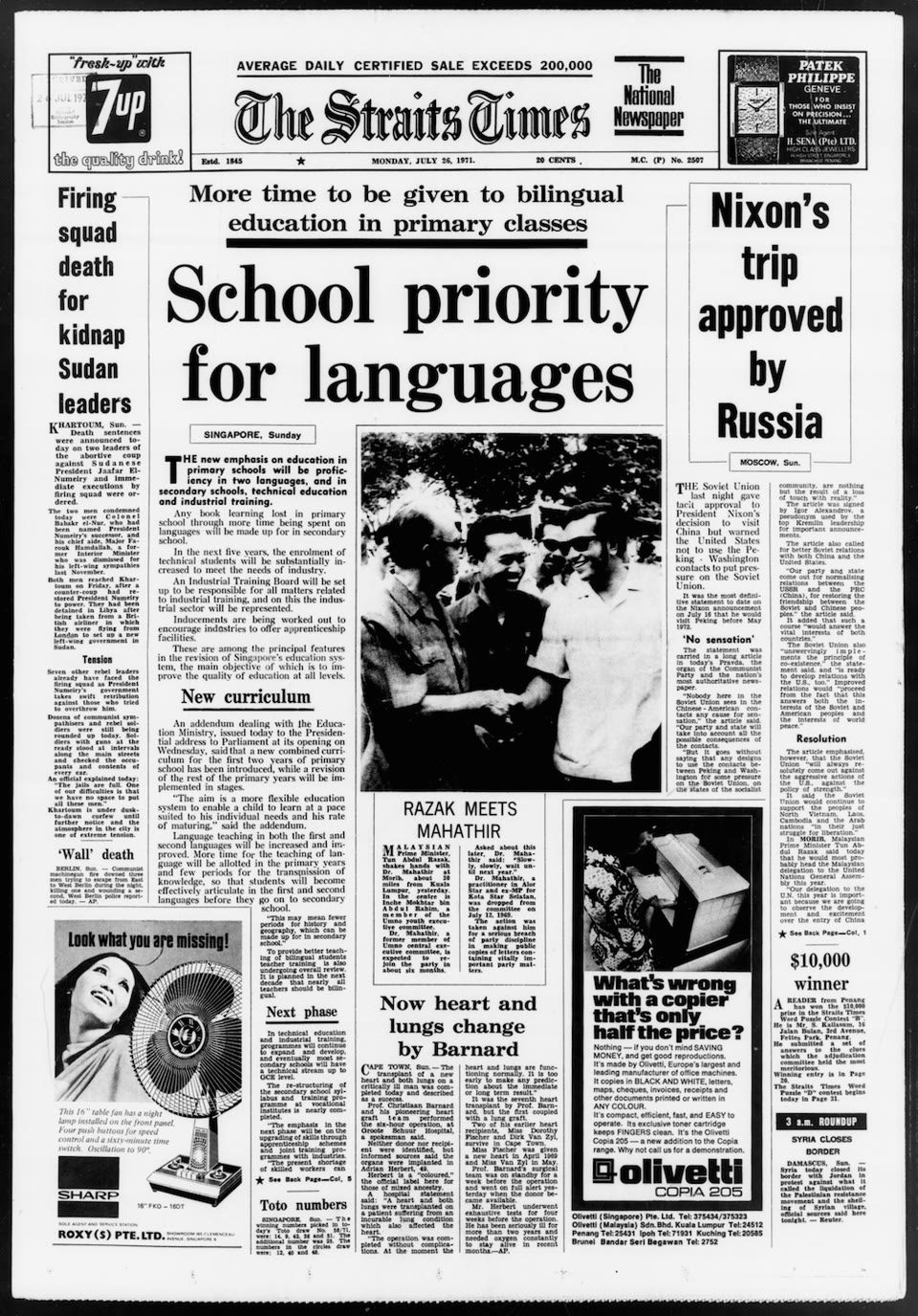

Reader Comments
Be the first to share your thoughts.