The Doctor Who Ascended
Twelve years ago, he was expelled from UMNO; in 1981, he returned to take over the entire government
On July 16, 1981, a doctor was sworn in as the fourth Prime Minister of Malaysia at the National Palace.
Eleven years ago, the government had banned his book from being sold domestically.
Twelve years ago, his party had kicked him out.
Now, the author walked into the Prime Minister's office.
That book would also step out of the ban.1,2,3,4
If one writes Mahathir's rise as a straight line, they will miss the most crucial part of the story.
He was not groomed all the way to the top by the organization.
First, he challenged the organization and was cast out by it; then he returned carrying an even sharper set of explanations, ultimately taking over the organization.
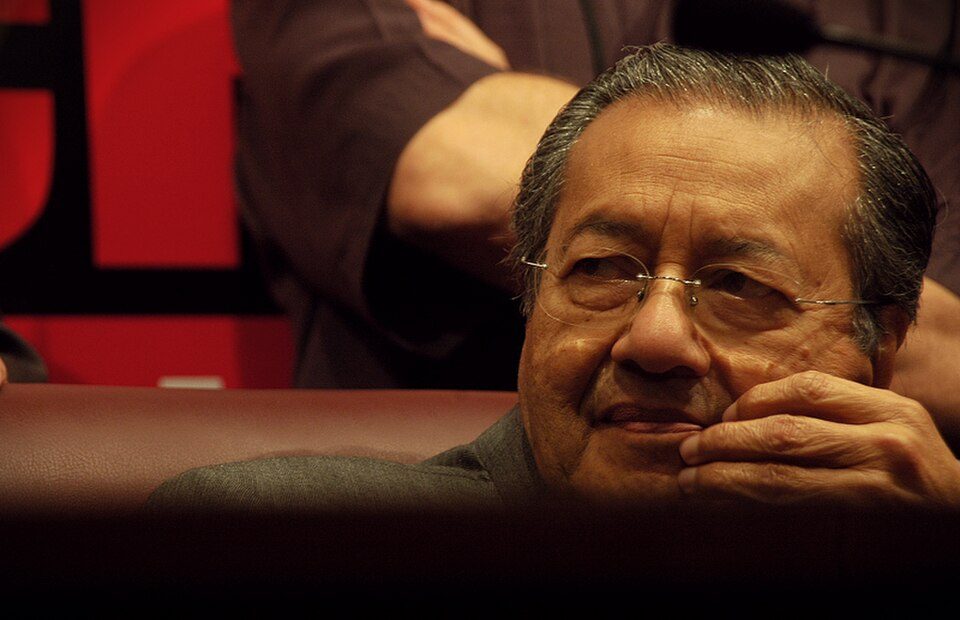
Before the Doctor, the Boy in the Classroom#
But don't rush to push the lens to 1969 just yet.
Pull it back, back to a wooden house without electricity in Alor Setar, where the whole family shared a single bedroom; then to a barefoot boy attending a Malay school, who still had to study the Quran after school.
His father, Mohamad Iskandar, believed education could change a family's position. While other children played outside, the Mahathir siblings were often kept home to study. Mahathir later described his father in his memoirs as a strict man who highly valued education; after interviewing former neighbors and family members, Barry Wain also left a similar outline: this boy knew English, lived a regulated life, and was not entirely the same as his peers in the neighborhood.6,7,8
"Not the same" could sometimes turn into a harsh slur.
Wain noted that neighborhood children once mocked him as mamak. This term pointed to his paternal Indian Muslim ancestry, carrying a derogatory tone in certain contexts. Years later, Mahathir publicly recounted another childhood story: he bought three balloons to resell, only to have a stronger boy named Husin force him to spend the earnings buying him food. These two memories come from different interviews and cannot be pieced into a single scene; what they leave behind is only a more cautious truth: being differentiated, mocked, and bullied was not a political vocabulary he learned only in his later years.7,9
Another door at home had also closed on them.
Based on family interviews, Wain wrote that Mahathir's four older sisters were all unable to enter the local girls' secondary school because the places were filled by children of elite families. The angriest was the father: he was invited to Kedah to set up a school, yet his own daughters could not get into one. We must be careful here; this is a biography reconstructing family memory from interviews, not a complete dossier left by an admissions committee. But it at least makes "elite threshold" no longer just an abstract noun in later political speeches.6,7
Then the war came.
The Japanese invasion interrupted his studies. Mahathir later recalled selling banana fritters and firewood during those years. He only returned to school after the war and subsequently won a scholarship to study medicine in Singapore. Official biographies and his own recollections cross-check each other on these basic milestones.6,9,8
These childhood fragments do not prove why he later wrote The Malay Dilemma, much less provide a psychological pass for any policy.
They simply bring a Prime Minister who is very distant from us a little closer: before he became the doctor diagnosing the nation, he was first a student who cared deeply about grades, order, competition, and remembered how others viewed him.
Only then does the lens push to the letter that got him kicked out of UMNO.
An Open Letter#
After the 1969 general election, the Alliance suffered a severe setback.
After the May 13 violence occurred, those within UMNO also began to question the leadership responsibility of Tunku Abdul Rahman.
Mahathir wrote a widely circulated open letter, blaming the crisis and deaths on the Tunku's leadership and demanding his resignation. It was not a cautious internal party exchange of opinions, but a public challenge to prime ministerial authority.1,10
The result was direct.
Mahathir was expelled from UMNO.
He left Parliament and the party's center of power, returning to his clinic in Alor Setar to practice medicine.1,10
For a politician kicked out of a party, the story usually ends here.
Mahathir, however, continued a different kind of diagnosis outside the clinic.
The patient was the "Malay society."
The prescription was later written into a book.
That Banned Book#
The Malay Dilemma was published in 1970.
Mahathir explained Malay economic backwardness as the combined result of colonial economics, ethnic competition, cultural habits, and even genetics and environment, arguing that the state must provide protection and active intervention.1,5
These arguments later profoundly influenced how people understood the New Economic Policy.
But it must be stated clearly:
These were Mahathir's theories, not scientifically proven ethnic facts.
Scholar Carl Vadivella Belle pointed out that the book's descriptions of Malay and other ethnic characters and abilities were full of broad, superficial, and even contradictory generalizations, perpetuating the colonial mindset of packaging complex social differences into "racial traits."1,5
The government believed the book could exacerbate post-May 13 tensions and banned its distribution domestically. By 1976, censorship studies still listed it as a banned book; the ban lasted until the author became Prime Minister.1,2
The irony lay in this:
The book could not be sold publicly.
Yet the logic within the book advocating for active state intervention to support the Malays grew increasingly close to the government's policy direction.
What was banned was not all the ideas.
Rather, it was that the author of those ideas still stood outside the door of power.
Tun Razak Reopens the Door#
After the Tunku stepped down, the political climate changed.
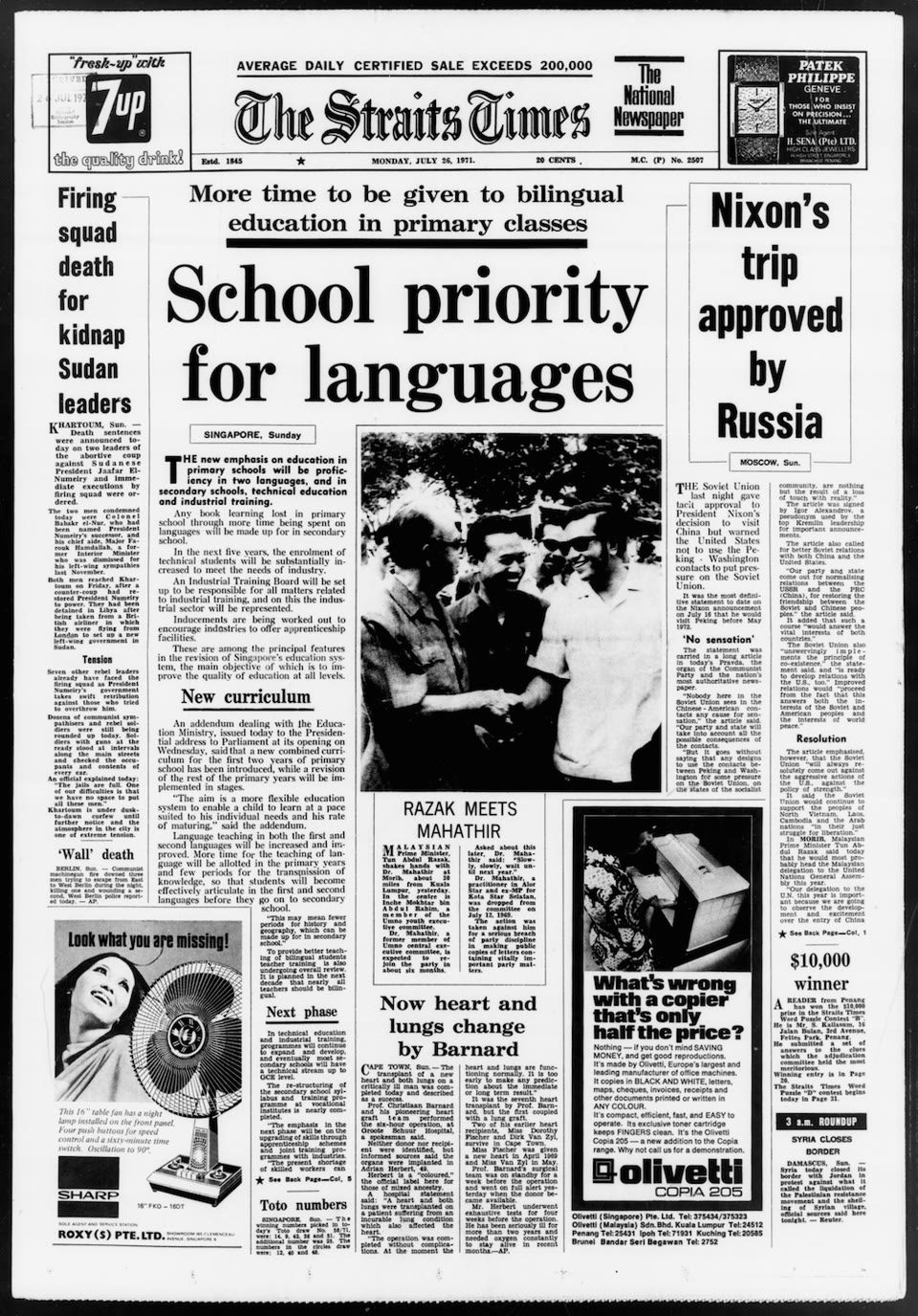
In 1972, Mahathir was permitted to return to UMNO.
In 1974, he returned to Parliament and was appointed Minister of Education; two years later, Hussein Onn chose him as Deputy Prime Minister among several high-level candidates.1,10
From being expelled to becoming Deputy Prime Minister, it took only seven years.
This comeback demonstrated that Mahathir possessed two rare abilities:
He could compress complex anxieties into clear, sharp, and easily transmittable explanations.
He could also rebuild organizational support after being rejected by that organization.
The first ability made him a politician with an ideological label.
The second ability is what made him a successor.
1981: The Keys Handed to the Doctor#
When Hussein Onn stepped down due to heart health issues, the succession did not erupt into a public struggle.
Deputy Prime Minister Mahathir was already standing at the very front of the line.
On July 16, 1981, he took his oath before the Yang di-Pertuan Agong. A UPI report that day specifically reminded international readers: the new Prime Minister is a doctor, fifty-five years old, taking over a country of about 13.5 million people.3,4
But "doctor" was not just a resume.
It gradually became his political posture.
The country was like a patient in need of urgent treatment.
Problems could be diagnosed.
Backwardness could be corrected.
Society could be remolded through discipline, education, industrial, and administrative engineering.
This line of thinking possessed powerful agency.
It also had a risk:
If a doctor is convinced he knows the cause of the disease, when the patient voices objections, they are easily treated as refusing treatment.
The First Election in His Name#
Less than a year after taking office, Mahathir announced a general election.
On April 22, 1982, voters faced a Barisan Nasional led by Mahathir for the first time.
The result was a landslide victory.
Contemporary election observers described it as Mahathir's personal victory; election data also showed that Barisan Nasional continued to hold a strong majority sufficient to dominate Parliament.11,12
This ballot accomplished what Hussein Onn's appointment could not.
In 1981, he received the position from his predecessor.
In 1982, he received his own mandate from the voters.
From then on, he was no longer just the deputy chosen by Hussein Onn.
He could begin prescribing medicine according to his own diagnosis.
The Style of Power, Just Beginning to Show Its Contours#
When people later look back at Mahathir, they often jump straight to the judicial crisis, Operation Lalang, the Anwar incident, and his twenty-two-year rule.
But the voters of 1982 had not yet seen those chapters.
What they saw was a Prime Minister who acted swiftly, emphasized discipline, and wanted to rid Malaysia of backwardness and dependency.
His supporters saw hope in efficiency and national confidence.
Critics would gradually discover that he had an extremely strong belief in the "right direction," and disliked institutions blocking executive plans.
These two sides did not suddenly appear later.
They can both be traced back to the doctor who wrote the open letter, issued prescriptions, and diagnosed social problems as a set of national engineering projects.
The Evidence for This Article, Clearly Explained#
The open letter, expulsion, and return are primarily based on academic reconstruction. This article does not reprint the racialized rhetoric in the letter, only writing the political actions and outcomes that can be jointly supported by two studies.1,10
**The arguments in The Malay Dilemma are attributed only to the author.** Bibliographic records and the original work confirm publication and themes; the criticism that its generalizations perpetuated colonial racial thinking is explicitly attributed to Belle, not presented as an undisputed conclusion.1,5
The ban is cross-confirmed by contemporary censorship records and later academic works. The main text only states it was banned in 1970 and the ban continued until Mahathir took power, without guessing the personal motives of every official.1,2
The 1982 "landslide victory" is grounded in academic election data and contemporary election reports. This article does not pile up unverified vote counts by constituency, merely confirming that it gave Mahathir his first personal national mandate.11,12
The childhood section deliberately retains "who is remembering." The father's strictness and making a living during the Japanese occupation come mainly from Mahathir's own memoirs and late-life interviews; the mamak moniker, sisters losing school places, and neighborly impressions come from interviews for Barry Wain's biography. Memories can sketch character, but they also select, compress, and reinterpret the past; therefore, this article only uses these materials to present the formative environment, not writing them as single causes for later political actions.6,7,9,8
This article is sensitive: true. Before publishing, sentences involving May 13 responsibility, ethnic traits, the banned book, Bumiputera support, and executive power centralization must be reviewed line-by-line by Jay.
Sources 12 Every important claim here can be checked. Open it and see.
Do not trust this site. Check it — every source below is clickable.
This site is written with AI assistance. Please check us.
AI can invent citations that look completely convincing — a real author's name, a plausible title, a sensible year, for a work that does not exist. This is not a theoretical risk; it is a known failure mode. That is why every source on this site is clickable. If a reference cannot be found anywhere, it may well not exist — and we want to know.
How to check us →
Reader Comments
Be the first to share your thoughts.