Why Did the 2022 Election Produce a Hung Parliament?
Harapan 82, Perikatan 74, BN 30, and Anwar's 24-Year Wait for the Oath
One hundred and twelve is the simple majority in the 222-seat Parliament.
On November 19, 2022, no coalition reached that number.
Parliament was dissolved early on October 10, and voters cast their ballots on November 19. 1,2
Totaling the component parties within the same coalitions, Pakatan Harapan won 82 seats, Perikatan Nasional 74 seats, and Barisan Nasional 30 seats; GPS held 23 seats, while other Sabah parties and smaller parties held the seats sufficient to alter the majority. 1,3
The election was over.
Cabinet formation had just begun.
Being First Doesn't Mean Governing Automatically#
Pakatan Harapan was the largest coalition but was far from 112 seats. Perikatan Nasional similarly claimed it could secure enough support. Barisan Nasional, falling from a coalition that had ruled for 61 years to just 30 seats, suddenly became the most coveted puzzle piece any majority needed to secure. 1,3
Some supporters hoped Barisan Nasional would cooperate with Perikatan Nasional to establish a government dominated by Malay parties; the other side advocated for Barisan Nasional and Pakatan Harapan to form a cross-ethnic grand coalition. There wasn't an immediate, single answer within Barisan Nasional itself.
The King summoned leaders, requested the submission of support, and suggested forming a more inclusive government. On November 24, Anwar was appointed as the tenth Prime Minister. 1,3
From being sacked in 1998 to taking the oath in 2022, twenty-four years had passed.
Sitting on the Same Side as Former Opponents#
Anwar's government was supported by Pakatan Harapan, Barisan Nasional, GPS, and other partners.
For reform supporters, one of the hardest scenes to accept was PKR and DAP having to govern together with the long-criticized UMNO; for UMNO supporters, it was equally difficult to cooperate with DAP, which had been painted as a threat to Malay political status.
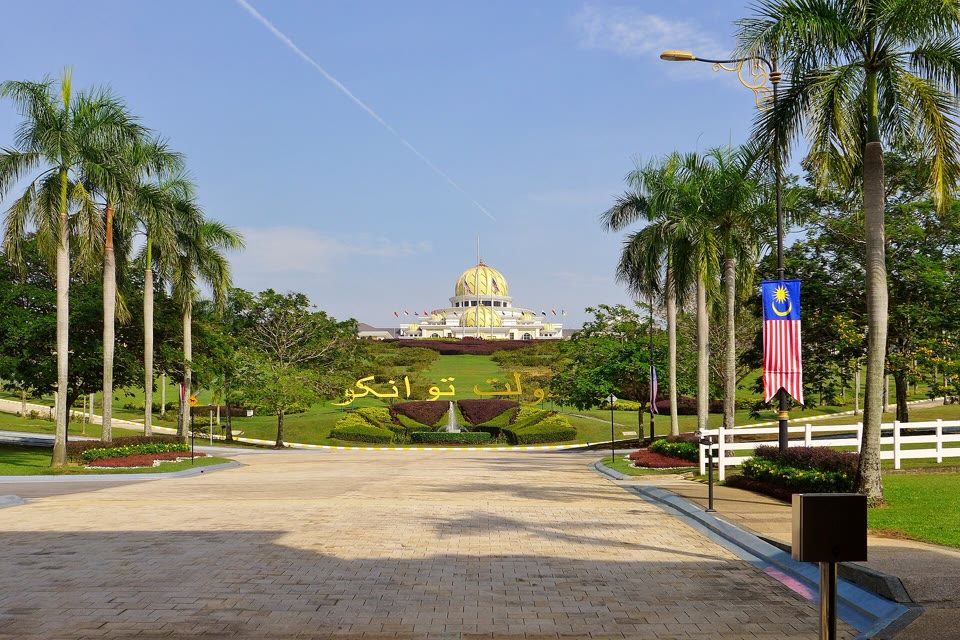
On December 19, Anwar passed a motion of confidence in Parliament. 1,3
He finally sat in the seat he had nearly touched twenty-four years ago.
But history does not stop its pen at the swearing-in ceremony.
Have the institutional reforms demanded since Reformasi been completed? Will cooperating with UMNO constrain the old powers, or grant old problems new protection? How will the federal promises demanded by Sabah and Sarawak be fulfilled? Can the cost of living and ethnic policies stop holding each other hostage?
These questions belong to the next phase.
They cannot be answered with "Anwar finally succeeded," but must be tracked point by point on an updatable fulfillment sheet.
The next article will enter "Unity Government: Reform Scorecard". Now that the story has reached the present day, the most honest way to write is no longer to pre-write an ending for any leader, but to lay out the promises, actions, compromises, and responsibilities point by point before the reader.
Sources 3 Every important claim here can be checked. Open it and see.
Do not trust this site. Check it — every source below is clickable.
This site is written with AI assistance. Please check us.
AI can invent citations that look completely convincing — a real author's name, a plausible title, a sensible year, for a work that does not exist. This is not a theoretical risk; it is a known failure mode. That is why every source on this site is clickable. If a reference cannot be found anywhere, it may well not exist — and we want to know.
How to check us →
Reader Comments
Be the first to share your thoughts.