What Is Malaysia Unity Government?
How Harapan, BN, and Sarawak and Sabah Partners Turned a Hung Parliament into a Government
In November 2022, power in Malaysia was not on a podium.
It was on a table.
Sitting around the table was Pakatan Harapan, which had just won the most seats, and Barisan Nasional, which had just suffered a crushing defeat; there were also Sarawak's GPS, Sabah's GRS, and a few smaller partners. No single party reached 112 seats alone; the government could only be born out of negotiations. 1,2,3
This table solved one problem.
It also created another.
Arithmetic Arrived First, Principles Scrambled to Catch Up#
Pakatan Harapan 82 seats, Perikatan Nasional 74 seats, Barisan Nasional 30 seats. Barisan Nasional lost its old hegemony, but because no one crossed the halfway mark, it paradoxically held the weight to decide who could form the cabinet. GPS and Sabah partners similarly became parts of the majority puzzle. 1,3
This is the reality of a hung parliament: voters did not give any coalition a blank check.
After Anwar was appointed Prime Minister, the government had to prove it was not just a temporary array of numbers thrown together overnight. In December, the coalitions and parties supporting Anwar's government signed an agreement; subsequently, Anwar passed a motion of confidence in Parliament. 1,2,4
On paper, the government stood firm.
Politically, the explaining had just begun.
Sitting at the Same Table with Former Opponents#
For Harapan supporters, the most glaring scene was governing together with UMNO.
Many of the slogans from the twenty-four years of the Reformasi movement were originally shouted against the UMNO establishment. The corruption, political appointments, racial mobilization, and judicial pressure heavily criticized by DAP and PKR for years were all tied to the old Barisan Nasional era.
Now, the same group of people had to tell voters: cooperation does not mean forgetting the old accounts.
Barisan Nasional had its own pains. For some UMNO supporters, cooperating with DAP and Anwar meant sitting next to the most impossible side in years of campaign rhetoric. Sarawak and Sabah partners, meanwhile, were more concerned with stability, federal resources, autonomy promises, and the subsequent fulfillment of the Malaysia Agreement 1963. 2,3,5
So the Unity Government was not a fairy tale "grand reconciliation."
It was a transaction forced by election results.
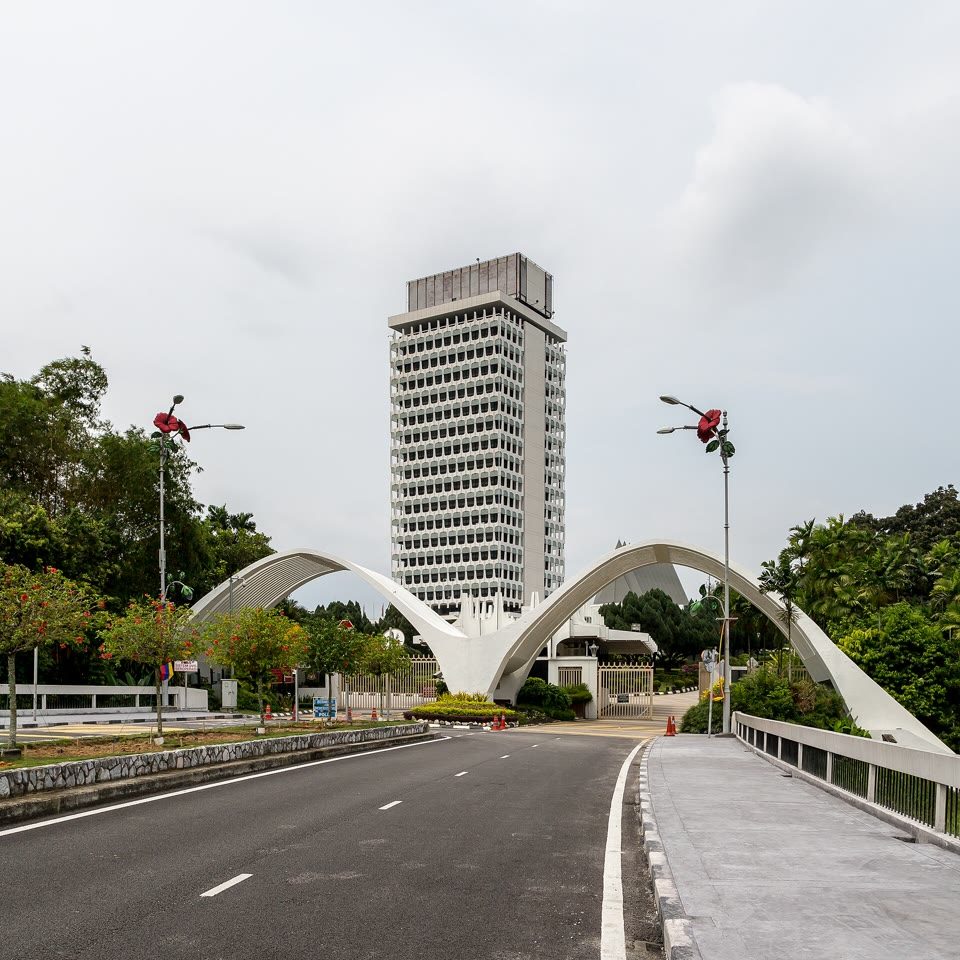
East Malaysia is No Longer Just an Appendix#
There was another change at this table.
Sarawak and Sabah partners were no longer just the federal government's supplementary votes.
When none of the three major peninsular coalitions could cross the halfway mark on their own, GPS, GRS, and other East Malaysian forces could push MA63, development allocations, state rights, and representation demands closer to the center. The post-2022 cabinet formation negotiations showed that East Malaysian seats did not just supplement a majority; they were part of determining the shape of the government. 1,3,6
This does not mean East Malaysian demands would automatically be fulfilled.
Rather, it means the hung parliament changed the posture of negotiation: previously the center decided and then distributed; now the center had to first ask who was willing to sit down.
Stability is Not Free#
The Anwar government secured a much more stable majority than the previous two.
The cost is that it must simultaneously placate four types of people: urban voters wanting reform, Malay voters fearing marginalization, East Malaysian partners demanding federal promises be met, and Barisan Nasional grassroots hoping the old party won't be completely dismantled.
These demands cannot all be accommodated painlessly.
When the government says "stability first," supporters will ask: After stability, when does reform start?
When the government says "reform takes time," opponents will ask: How is this statement any different from every past government that delayed reforms?
The danger of the Unity Government lies here.
If it relies only on arithmetic, it will sooner or later lose its moral justification.
If it speaks only of morals and refuses to handle the arithmetic, it will return to the fractures of 2020.
After 2022, the story has reached the present day.
Therefore, the ensuing writing style can no longer wait for the archives to cool down as in old histories.
It must place the promises, actions, compromises, and excuses, item by item, onto a single scorecard.
Sources 6 Every important claim here can be checked. Open it and see.
Do not trust this site. Check it — every source below is clickable.
This site is written with AI assistance. Please check us.
AI can invent citations that look completely convincing — a real author's name, a plausible title, a sensible year, for a work that does not exist. This is not a theoretical risk; it is a known failure mode. That is why every source on this site is clickable. If a reference cannot be found anywhere, it may well not exist — and we want to know.
How to check us →
Reader Comments
Be the first to share your thoughts.