Why Was the 1995 Election BN Peak?
Barisan Nasional's Most Glorious Victory, and the Cracks at the Top that No One Saw
On the night of April 24, the ballot boxes were opened.
One ballot. Then another.
The numbers on television screens kept moving in one direction. When the counting finished, out of the 192 parliamentary seats nationwide, Barisan Nasional walked away with 162. 1,2,3
This was not a narrow victory.
This was a victory where power, having reached the summit, could no longer see the foot of the mountain when looking back.
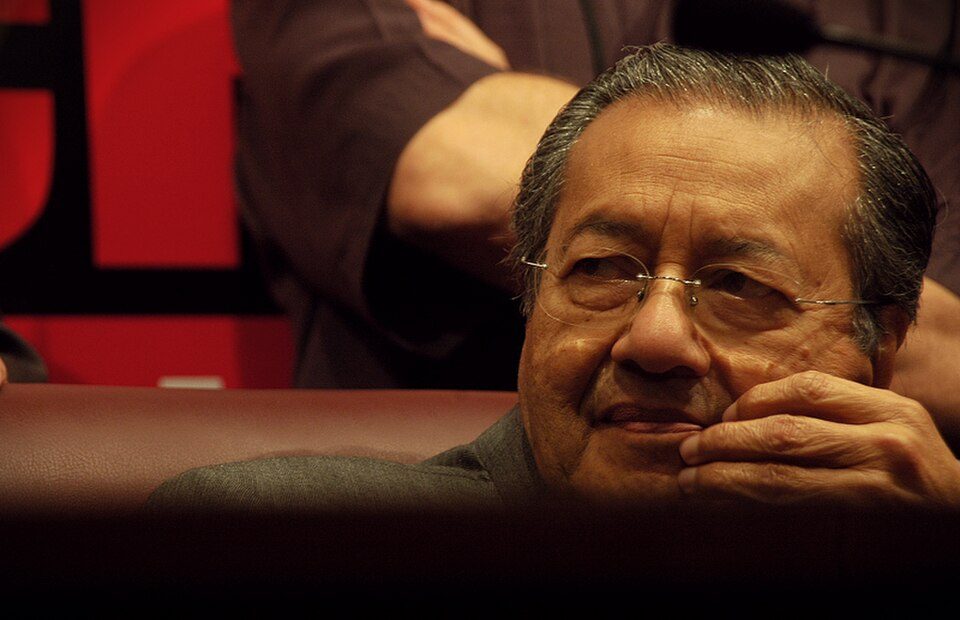
The voters cast their ballots for the days right in front of them#
Looking back at 1995 today, we already know the Asian Financial Crisis would arrive two years later.
But the people queuing to vote back then did not know.
What they knew was that the economy had been growing rapidly for several consecutive years. Factories were hiring, cities were expanding, and national cars were increasing; the Twin Towers were still climbing, KLIA and Putrajaya were under construction. From 1990 to 1996, Malaysia's real Gross Domestic Product (GDP) grew at an average of about 9 percent annually. 2,4
Growth was not an illusion invented by newspapers.
Salaries, orders, housing prices, shopping malls, and traffic jams all brought it into everyday life. Barisan Nasional's message was therefore simple: don't hand a well-running machine over to someone else.
This line worked, not just because the government knew how to campaign. Many households truly felt their lives were moving upwards. Scholars point out that eight years of high growth, relatively improved ethnic relations, and Malaysia's rising international prestige combined to create a tailwind for the ruling coalition. 1,2
The Rocket gambled on an island#
The DAP set its sights on Penang, launching the "Tanjong 3" campaign in an attempt to capture the state government. Lim Kit Siang left the relatively safe Tanjong parliamentary seat and contested the Tanjong Bunga state seat; it was a gamble that wagered personal prestige, party strategy, and the regime of an island all at once. 1,2
But elections do not only reward courage.
They also punish misjudgments.
As more Chinese voters turned to BN due to prosperity and stability, the breakthrough the DAP intended to engineer turned into a receding tide instead. Academic reviews describe how BN significantly expanded its support among the Chinese and Indian minorities, while the DAP suffered a heavy blow. 1,2
On the other side, Tengku Razaleigh's Semangat 46 failed to extend its 1990 challenge into a national wave. It still won seats, but it struggled to convince voters that it could replace UMNO. Not long after, the party dissolved, and Razaleigh returned to UMNO. 1,2
Politics sometimes has no gunshots.
A single result sheet is enough to make a path disappear.
What 162 seats actually mean#
162 seats, occupying more than 80 percent of Parliament.
This result can easily be read as "the whole nation has agreed." But election numbers speak two languages: the seats say BN practically swept Parliament, but the popular vote shows that a significant portion of voters still chose other parties. The first-past-the-post electoral system turns a lead into a much larger seat advantage; both numbers are true, but they answer different questions. 1,3
BN's victory was also not uniform across every region. In Kelantan and the northern Malay heartland, PAS still held its resistance; in Sabah, PBS still retained Kadazandusun support. The national wave was massive, but it did not erase local politics. 1,2
The most accurate statement for 1995 is not "everyone loved BN."
It is: At the most advantageous economic moment, Barisan Nasional channeled Malay votes, increased Chinese and Indian votes, the coalition machinery, and opposition blunders into the strongest electoral dominance since independence. 1,2
Two men at the summit#
The victory thrust two men into the spotlight simultaneously.
One was the 70-year-old Prime Minister Mahathir.
The other was the 48-year-old Deputy Prime Minister Anwar.
Anwar went from a leader of the Islamic youth movement into UMNO, rose to Finance Minister, and then became Deputy Prime Minister. By 1995, he was no longer just a cabinet member, but a name written in the future tense in the eyes of many. Before the UMNO party elections the following year, speculation surrounding succession and challenges heightened; Mahathir later publicly stated he would not take too long to step down, indicating that Anwar would succeed him. 1,2
In the camera frame, they stood in the same victory.
But the peak of power cannot accommodate two uncertain futures.
At that time, the economy was still hot, the party machinery remained strong, and open rifts were still small. No one looking at that group photo could accurately predict that three years later, one would sack the other.
After the summit, the map must be drawn differently#
If Malaysia were only compared to its yesterday, 1995 was certainly an excellent report card. Poverty declined, industry expanded, cities renewed, and the nation had moved far away from the old economy of rubber and tin. 2,4
But during the same period, South Korea, Taiwan, Singapore, and Hong Kong were also on the move, and some places had already pushed their factories, schools, and technologies to a higher tier.
The next question, therefore, is more uncomfortable than an election: Are we really running slow, or did we choose the wrong benchmark for comparison?
Next up: "Why the Four Asian Tigers Ran Further". First, let's pull apart the pretty phrase "the same starting line," and then look at exactly what methods those economies used to turn a single takeoff into continuous upgrading.
Sources 4 Every important claim here can be checked. Open it and see.
Do not trust this site. Check it — every source below is clickable.
This site is written with AI assistance. Please check us.
AI can invent citations that look completely convincing — a real author's name, a plausible title, a sensible year, for a work that does not exist. This is not a theoretical risk; it is a known failure mode. That is why every source on this site is clickable. If a reference cannot be found anywhere, it may well not exist — and we want to know.
How to check us →
Reader Comments
Be the first to share your thoughts.