BNM Forex Scandal: The Money We Lost
Maminco, BNM Forex, and Perwaja —— Three Public Losses, Three Dilemmas of Accountability
Don't ask who stole the money first.
Look at two numbers first.
5.7 billion.
31.5 billion.
In 1994, the net foreign exchange losses the public saw from Bank Negara's accounts and parliamentary debates were 5.7 billion ringgit. Twenty-three years later, a Royal Commission of Inquiry (RCI), based on Bank Negara's internal records, audit materials, and testimonies, determined that the total related losses from 1992 to 1994 were around 31.5 billion ringgit. 1,2,3
The same storm.
Why was the water level measured later so much higher?
This is what this piece truly wants to trace.
Not to first find a villain and push all the bills in front of him.
But to see how a nation places massive bets, how it records failure, and how "who should explain" drags into a problem spanning over two decades.
The Central Bank steps into the trading room#
A central bank is supposed to buy and sell foreign exchange.
It manages national reserves, maintains financial stability, and needs to adjust its mix of different currencies. The issue is not "whether there was trading," but whether the purpose, scale, and risk of the trading crossed the boundaries of reserve management.
From the late 1980s to the early 1990s, Bank Negara moved from traditional reserve management to actively taking positions in the foreign exchange market to seek profit. By around 1992, its bets on currencies like the British Pound met with drastic market changes, and massive losses gradually surfaced. 1,2,3
"Position" sounds very technical.
In everyday language, it means betting on a direction first: believing a currency will rise, you buy large amounts; believing it will fall, you stand on the other side.
If the judgment is right, profits enter the ledger.
If the judgment is wrong, national reserves bear the loss.
In 1993, Bank Negara's accounts listed 5.7 billion ringgit as net foreign exchange trading losses, intending to write them off gradually against future profits. Then-Governor Jaffar Hussein described it as an unfortunate incident arising out of good intentions but an error in judgment; however, opposition voices in Parliament questioned whether the even larger losses and asset revaluations from the previous year meant the numbers the public saw were lower than the actual cost. 1,2
We must slow down here.
The Members of Parliament in 1994 were still using public statements, press conferences, and estimates to chase the accounts. The 31.5 billion figure proposed by the Royal Commission of Inquiry later was a total derived from looking back at internal documents in 2017.
We cannot take the answer obtained later and pretend it was a fact everyone already knew back then.
An investigation 23 years late#
In 2017, after hearing witnesses and examining documents, the Royal Commission of Inquiry recorded the losses for 1992, 1993, and 1994 as approximately 12.35 billion, 15.29 billion, and 3.86 billion ringgit respectively, totaling about 31.5 billion ringgit. The Commission concluded that the trading had shifted from reserve management to excessive, speculative activity, and believed that the true scale was not fully presented in the public reports of those years. 1,2,3
The Commission also recommended police investigations into Bank Negara's management, board of directors, the Ministry of Finance, the Auditor-General, and the political leadership of the time for potential criminal breach of trust or concealment.
Note the verb here:
Recommended investigations.
A Royal Commission of Inquiry is not a criminal court. Its report can point out suspicions, chains of responsibility, and potential legal breaches, but it cannot replace a prosecutor in presenting evidence, nor can it replace a judge in convicting.
Therefore, this site will not directly write the names mentioned by the Commission as criminals.
What can be confirmed is: Bank Negara indeed suffered immense foreign exchange losses; a huge discrepancy existed between the public figures of the time and the total reconstructed later; and the ultimate responsibility was not clarified through a complete, timely public procedure during that period. 1,2,3
But "not directly writing them as criminals" does not mean erasing the names.
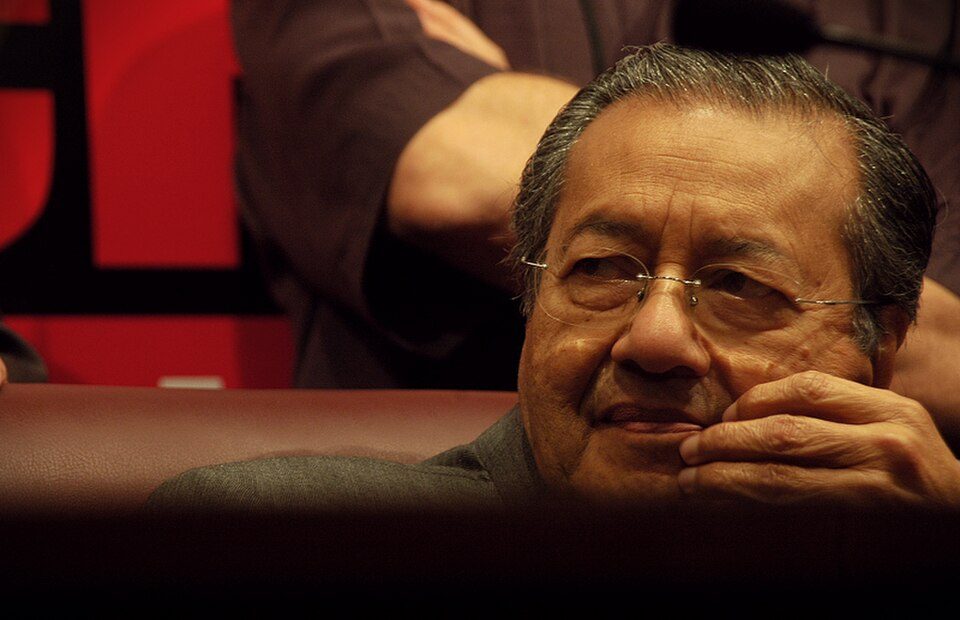
The person closest to operational responsibility in the trading room was the then Bank Negara advisor Nor Mohamed Yakcop; the Royal Commission placed him at the center of primary operational responsibility and recommended further investigation. The Minister of Finance during the expansion phase of the trading was Daim Zainuddin; Anwar Ibrahim, who took over as Finance Minister after 1991, faced the losses and the parliamentary disclosures; the Prime Minister throughout this entire period was Mahathir. 1,7,8
The responsibilities of these four men are not identical.
Nor Mohamed must answer how the trading crossed the normal boundaries of reserve management. Daim must answer why, during his tenure as Finance Minister, sufficient oversight was not established to detect and limit massive positions. Anwar must answer when he knew the true scale after taking over the Finance Ministry, and whether the government's explanation to the Cabinet and Parliament was complete and timely. Mahathir must bear the highest political responsibility for the overall administrative oversight during his tenure as Prime Minister and how the government ultimately accounted to Parliament. 1,2,7,8
The Royal Commission of Inquiry raised more severe legal suspicions, but the investigation recommendations did not turn into criminal convictions for these political figures later. This article, therefore, does not declare them guilty; what this article insists on is another line: Bank Negara is a public institution, and the Finance Minister and the Prime Minister, even if they did not personally place the trades, cannot leave the political responsibility for the 31.5 billion ringgit entirely inside the trading room.
And this was not the first time the country waited until the money was lost before Parliament asked how the operation actually began.
A two-ringgit company enters the tin market#
Turn the clock back to 1981.
Tin was a vital export for Malaysia and the livelihood of many miners and towns. The government believed international tin prices were being depressed by forces beyond the control of producing nations, and so it decided to enter the market to buy tin, hoping to tighten supply and prop up the price. 4,9,3
The company executing the mission was Maminco.
Its paid-up capital was only two ringgit.
Yet the company could, through credit from Bank Bumiputra, conduct transactions in the international market far exceeding two ringgit and partner with commodity trader Marc Rich to buy and sell physical tin and futures. 4,9
The logic of the plan was not mysterious:
Buy enough tin, market supply drops, and the price goes up; the national mining industry is saved, and the tin on hand can be sold at a high price.
The problem is, the people on the other side of the market will also react.
High prices encourage more supply. Buyers can wait, but those holding the stock must continue paying interest and warehousing fees. The one trying to support the market must keep taking out more money to defend the price they pushed up.
Eventually, Maminco retreated.
The government only acknowledged this operation in detail in Parliament in 1986. Then-Primary Industries Minister Lim Keng Yaik stated that actual trading losses exceeded 80 million ringgit; the loans provided by Bank Bumiputra were repaid by the government. The figures calculated by the opposition were higher because they included financing costs and subsequent liabilities. The two figures measure different things and cannot be mixed into one "definitive loss." 4,9,3
The story should have ended here.
But the account was not settled.
Opening a new table to chase the losses from the last one#
The government used the remaining funds in the Maminco account to set up Makuwasa Securities and Makuwasa Jaya, hoping to recover some of the losses through stock trading. Officials told Parliament that the profits would be returned to the government; later, both companies ceased operations. 4,9
This step pushed the problem a layer deeper.
After the first bet failed, why was the remedy to continue betting in the market?
Maminco's original intention could be explained as protecting the mining industry.
Makuwasa's goal, however, had turned into trying to get Maminco's money back.
When a public institution must rely on the next trade to prove the last decision wasn't wrong, the risk no longer just comes from the market.
It also comes from the difficulty of admitting failure.
A steel mill, two entirely different problems#
Perwaja's story is different again.
It was not a currency bet, nor a secret tin purchase. It was a heavy industry project: the country hoped to build domestic steel-making capacity, cultivate technical skills, and drive industrialisation.
The steel mill was real.
The workers, machines, debts, and production problems were also all real.
By around 1996, parliamentary discussions had mentioned accumulated losses, outstanding debts, government loans, and capital injections. Later academic research estimated that Perwaja accumulated around 9.9 billion ringgit in losses from 1982 until its privatisation; such totals include years of operations, financing, and restructuring, and cannot all be written off as a sum of cash taken by someone. 5,6
Public records simultaneously showed severe governance issues: weak internal controls, questionable board oversight and transaction authorisations, and some payments and contracts becoming subjects of investigation. 5,6,10
Thus, the public easily combined two problems into one:
Perwaja lost a lot of money.
Therefore, someone must be convicted of stealing that exact same amount.
The legal record is not like that.
The court did not provide evidence for the anger#
The criminal case Eric Chia later faced only involved a payment of about 76.4 million ringgit, not Perwaja's entire losses.
The prosecution accused him of making a payment to a company account in Hong Kong without board approval; the case went through 43 days of trial with 29 prosecution witnesses. In 2007, the Sessions Court ruled that the prosecution failed to establish a prima facie case, acquitting and discharging him. The judge criticised the charge, the way documents were tendered, and pointed out that the prosecution failed to call key witnesses. 11,10
This ruling must be written out completely.
We cannot treat unproven criminal charges as fact just because Perwaja's governance failure was concrete.
Nor can we say Perwaja had no massive losses or internal control issues just because the accused was acquitted.
Corporate governance audits ask: Did the system fail?
Criminal trials ask: Did the prosecution prove, with the evidence demanded by the law, that this accused committed this crime?
The two questions can yield different answers.
Three pools of money, not the same kind of failure#
Now put the three bills side by side.
Maminco was the government secretly entering a commodity market, wanting to hold up the price of tin, and later trying to chase the losses with Makuwasa.
The Bank Negara forex case was the central bank pushing reserve management towards massive market positions, with the scale of the losses only reconstructed years later.
Perwaja was a long-term industrial project that accumulated massive losses in operations, financing, and oversight, accompanied by serious governance controversies.
Calling them all "corruption" in one breath is very satisfying.
It is also inaccurate.
Public records have not proven that every ringgit was stolen, much less proven that all three cases benefited the same group of people in the same way.
What they truly share is another less dramatic but more dangerous chain:
Grandiose goals → Centralised decision-making → Risks hard to inspect externally → Bad news arrives late → Public institutions absorb the losses → Personal responsibility becomes blurred amid years of arguments. 2,4,3,5,6
Three bills, they cannot just be left with the word "Government"#
The political responsibility for Maminco falls first on the Cabinet led by Mahathir, and also on Tengku Razaleigh, who held the Finance portfolio at the time. Maminco was established in 1981, and the government later admitted in Parliament that it was a tool to enter the international tin market, with financing going through Bank Bumiputra; this was a Cabinet-level state action, not a gambling table set up by a low-level civil servant. 4,9,7
This article has no evidence to assert that Mahathir or Tengku Razaleigh extracted personal gain from the transactions.
But Mahathir's government must bear political responsibility for the secret market intervention, admitting it in full only years later, and using Makuwasa to re-enter the market to chase the losses; Tengku Razaleigh must be held accountable for the financing and public risk oversight during his tenure as Finance Minister. Barisan Nasional, as the ruling coalition, must also take up this collective political responsibility.
Perwaja's name is even harder to decouple from Mahathir.
The steel mill was part of the heavy industry route he championed; he chose Eric Chia to enter Perwaja and lead its turnaround. The criminal charges Eric Chia later faced ended in acquittal, and this must be respected; what must also remain is that the person who appointed him, supported this highly centralised governance style, and held the highest executive power throughout years of expansion, was Mahathir. Therefore, Mahathir and the BN government he led must bear political responsibility for Perwaja's operational failures and the collapse of its oversight. 5,6,11,10,12
Naming them this way is not saying one person stole money in all three cases.
It is rejecting the most convenient way of writing history: when a project succeeds, the leader stands on the ribbon-cutting stage; but when a project fails, history is left with only the nameless word "Government."
The simple answers this piece cannot give you#
31.5 billion was not a figure publicly confirmed in 1994. It came from a 2017 reconstruction by the Royal Commission of Inquiry based on internal records obtained later; public debates at the time revolved around 5.7 billion, 9.3 billion, and other estimates. This piece does not mix figures from different times and accounting treatments into one. 1,2,3
The 80 million for Maminco and the higher cost stated by the opposition are not on the same basis. The former is the actual trading loss admitted by the government, the latter may include loans, interest, and subsequent liabilities. This piece uses the officially admitted figure while outlining the controversy, rather than creating a false single total. 4,9,3
Perwaja's accumulated losses do not equal the criminal case amount. 9.9 billion is the result of years of corporate accumulation; the charge Eric Chia faced was around 76.4 million, and he was acquitted. 5,6,11,10
Governance failure does not automatically equal a corruption conviction. This piece discusses transparency, internal controls, risk authorisations, and public burdens; wherever individual crimes are concerned, we use only court results and do not replace verdicts with political speeches. 2,5,11,10
This piece names layered political responsibilities. Nor Mohamed was responsible for Bank Negara's trading operations; Daim and Anwar, based on their respective tenures as Finance Minister, were responsible for risk oversight and loss disclosure; Mahathir was responsible for overall administrative oversight during his premiership. The RCI's investigation recommendation is not a criminal verdict, and this piece does not rewrite it as a conviction. 1,2,7,8
The political responsibilities for Maminco and Perwaja are not the same as allegations of personal profit. Existing records are sufficient to confirm government market intervention, public financing, the heavy industry route, and the chain of appointments and oversight, which is enough to demand answers from Mahathir, Tengku Razaleigh, and BN; but it is not sufficient to say they stole the identical amounts without any verdict. 4,9,5,6,7,12
This piece is marked sensitive: true. Before going online, all sentences involving living persons, criminal liability, concealment, government losses, and individual conduct must be reviewed word-by-word by Jay.
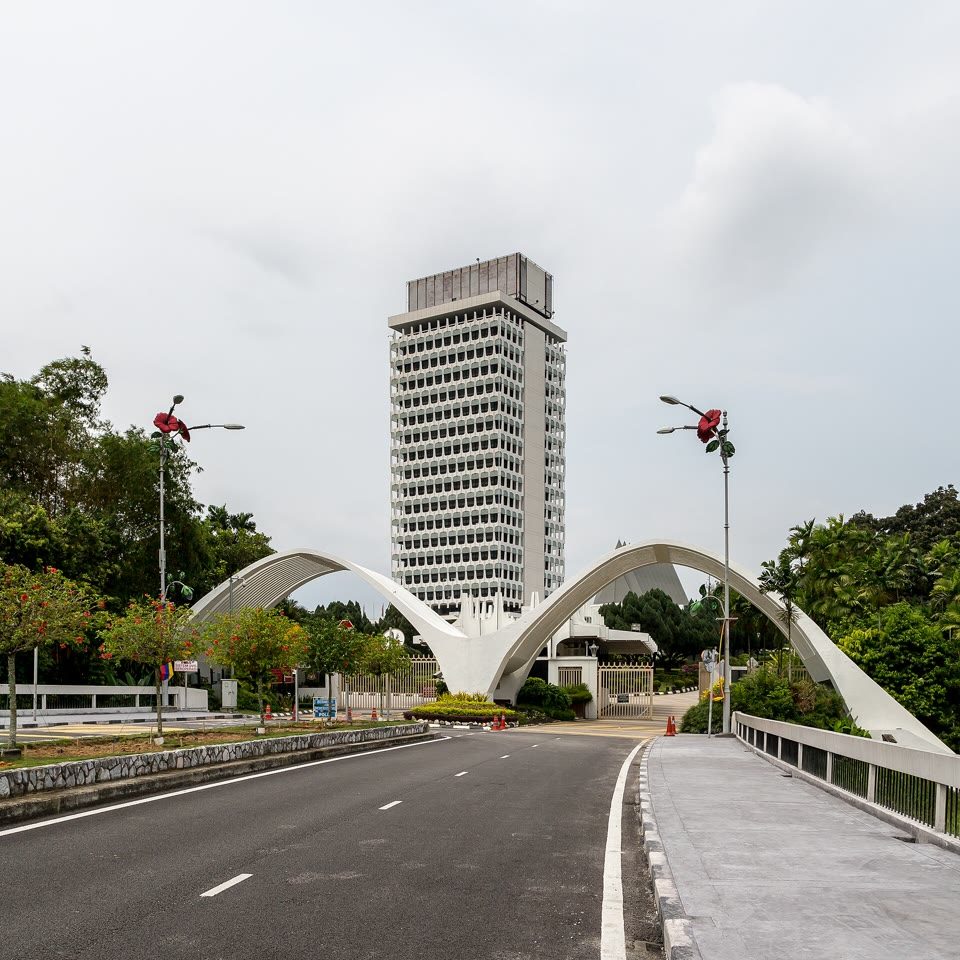
Next up: Money can vanish from the ledgers, and power can also turn into concrete, steel frames, and skylines. Vision 2020 was not just a phrase from then on; it would grow into towers, dams, a new airport, and a brand-new administrative capital. The question is, when the state uses buildings to prove that the future has arrived, who calculates the cost on the ground?
Sources 12 Every important claim here can be checked. Open it and see.
Do not trust this site. Check it — every source below is clickable.
This site is written with AI assistance. Please check us.
AI can invent citations that look completely convincing — a real author's name, a plausible title, a sensible year, for a work that does not exist. This is not a theoretical risk; it is a known failure mode. That is why every source on this site is clickable. If a reference cannot be found anywhere, it may well not exist — and we want to know.
How to check us →
Reader Comments
Be the first to share your thoughts.