Why Was Malayan Union Opposed After the Signatures?
In late 1945, the Sultans signed it one by one. The objections only started afterwards — this sequence cannot be reversed
Let's lay out the newspapers first, in chronological order. In 1946, these headlines appeared sequentially in Malaya's English-language press:

9 March — 〈Sultans' Proposals To British Government〉
>
10 March — 〈Selangor, Perak and Kedah Rulers' Complaints〉
>
1 May — 〈Malays Boycotting Union Politics〉
>
27 May — 〈'No Compromise' Sultans Meet〉
Four headlines, two and a half months. From "proposals" to "no compromise".
But this piece will start from an earlier point, because beginning only from here would omit the most crucial sequence in the whole affair.
They Signed First#
In August 1945, Japan surrendered. Starting in October — just two months after the surrender — a British special envoy, Sir Harold MacMichael, began visiting the Sultans of the Malay states one by one, securing their signatures to transfer sovereignty to the British Crown.
These signatures were the legal foundation of the constitutional scheme known as the Malayan Union.
They signed.
They signed one after the other. And those four headlines above, all appeared after the signatures.
🔴 This site must write this sequence clearly, and they cannot be conflated.
In later Malay political narratives, the common phrasing is that the Sultans were "forced" to sign. That claim might be true — the situation at the time was indeed extremely asymmetrical: the Japanese occupation had just ended, the Sultans' political standing was fragile, and some carried the shadow of having collaborated (or being perceived as having collaborated) with the Japanese.
But this site must faithfully report the results of its fact-checking:
- This site found no primary records of any Sultan refusing to sign during the MacMichael mission.
- This site also found no primary document of any Sultan issuing a formal, post-facto statement that they were "forced to sign".
- The Sultans' public expressions of opposition occurred after the Union scheme was published, not before they signed.
"They were forced to sign" and "They signed, and then objected" — these two sentences are different. For the first, this site has no evidence; for the second, newspaper headlines serve as proof.
This site will write the second sentence.
(For the specific dates each state signed, one would need to consult the Colonial Office archives at the UK National Archives, which this site cannot access.)
The Plan Did Two Things, To Be Counted Separately#
In January 1946, the British government published White Paper Cmd. 6724, announcing the constitutional arrangements of the Malayan Union.
⚠️ This site could not find the full text of this White Paper. It is not on the Internet Archive, nor in any open web archives. So what is written below are the general directions, not the legal clauses — this site does not quote any "original text".
The scheme did two things simultaneously, and they offended different things:
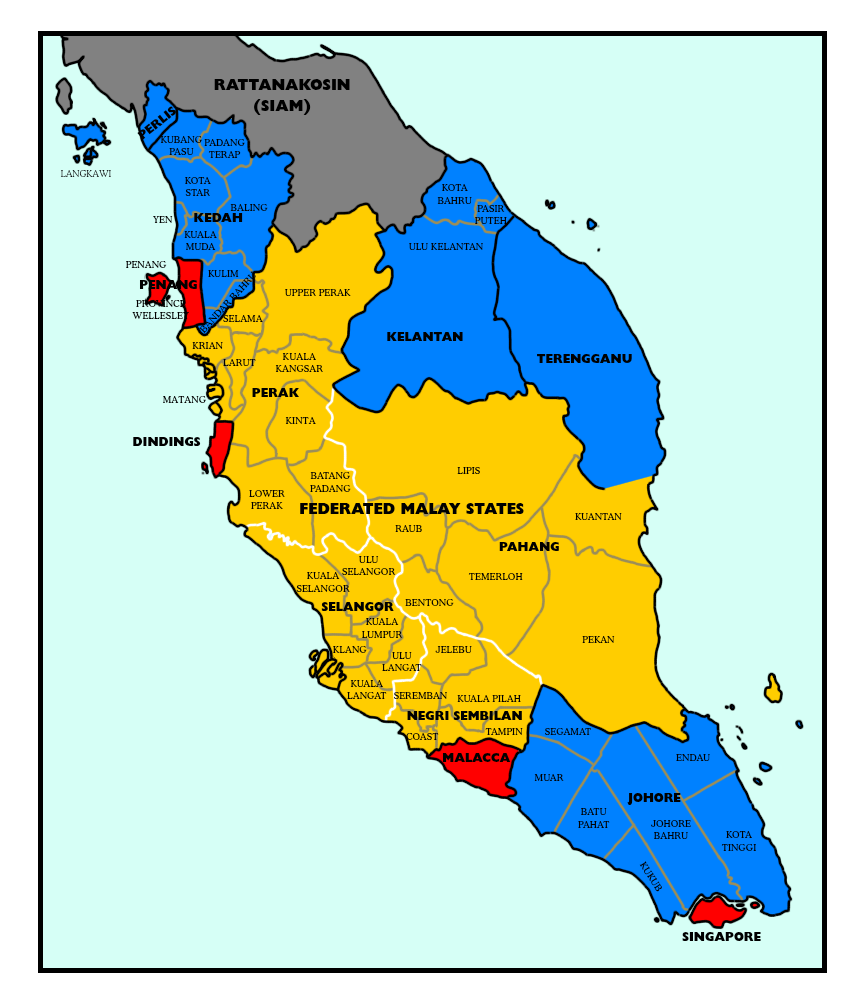
The First Thing: It transferred the sovereignty of the states to the British Crown. After 1874, the Sultans nominally remained the sovereigns, and the British Residents only "advised" — this site covered that phrasing in Advice That Must Be Listened To. The Malayan Union dropped the pretense: sovereignty went directly to the King. That was not a further transfer of power; that was stripping away the nominal layer itself.
The Second Thing: It opened citizenship to non-Malays under very lenient conditions. This affected not symbols, but numbers — it meant that in any future electoral system, demographic proportions would translate directly into political proportions.
These two things must be discussed separately.
Merging them into "the Malays opposed opening citizenship" compresses a struggle over symbols of sovereignty into a struggle over ethnic quotas. The former is what the newspaper headlines at the time said ("Rulers' Complaints," "No Compromise"); the latter was read into it only later.
On 11 May 1946, the UMNO (United Malays National Organisation) was formed, led by Dato Onn Jaafar.
It took less than five months for a constitutional plan to forge a political party.
But "The Malay Reaction" Is Not A Monolith#
This section is what this site considers the most important part of the entire piece.
During the same period, there was another political track among the Malays — one that was fundamentally different from UMNO's, and which has virtually disappeared from the prevalent subsequent narratives.
That was the left-wing Malay nationalism represented by the MNP (Malay Nationalist Party / PKMM). Its core demand was not "protecting the special position of the Malays", but rather Malaya's independence from Britain. Under its umbrella were the youth organisation API (Angkatan Pemuda Insaf) and the women's organisation AWAS (Angkatan Wanita Sedar).
The existence of this track left a record in a contemporary document.
In 1949, the US Central Intelligence Agency produced an assessment of the situation in Malaya. It described the difference between the two tracks like this:
"Whereas the UMNO has adopted a co-operative attitude toward the British, the MNP is considerably more militant and nationalistic…"
UMNO adopted a co-operative attitude toward the British, while the MNP was considerably more militant and nationalistic.1,2
The same document used this phrasing when describing UMNO's stance:
the UMNO stands for what Dato Onn calls "Malayism," which "aims at achieving and maintaining Malay interests."
⚠️ This document is a 1949 assessment by an American intelligence agency, carrying its own perspective. It refers to Malayan Communist Party armed personnel as "terrorists" — that is its wording, which this site does not adopt. It is cited because it was written at the time, and this site can read the full text directly.
The point is this: between 1946 and 1948, there were at least two distinct "Malay political stances," and their postures toward the British were opposites.
20 October 1947: Another Path Was Actually Tried#
After the Malayan Union was opposed, the British presented an alternative: the Federation of Malaya — and this version tightened citizenship requirements for non-Malays.
Consequently, there occurred an event most easily glossed over in this entire stretch of history.
The AMCJA (All-Malaya Council of Joint Action, predominantly Chinese groups) and PUTERA (Pusat Tenaga Rakyat, predominantly left-wing Malay groups) joined forces to oppose the Federation scheme, putting forward their own constitutional draft.
On 20 October 1947, the two coalitions launched a **pan-Malayan hartal (general strike). Newspapers of the day specified its duration: 18 hours.**2,1
According to contemporary reports, the groups supporting this action included the Chinese Chambers of Commerce, AMCJA, PUTERA, and the Malayan Communist Party.
⚠️ Two evidentiary boundaries must be clarified: First, a news headline on 16 October 1947 read "NOV. 20" instead of October 20; this site is unsure whether that referred to a separate action or was a typographical error, so it is noted factually. Second, this site could not find the full text of that "People's Constitutional Proposals" — it is often mentioned in secondary accounts, but having not read the original, this site will not outline its specific clauses.
**But the hartal itself is evidenced by newspapers of the time.**
And the weight of this event lies in this: a pan-Malayan political action jointly launched by left-wing Malay groups and Chinese groups did actually happen.
It failed. On 1 February 1948, the Federation of Malaya was established. Four months later, the Emergency was declared, and the political space for the left was shuttered — that belongs to the next piece.
The Surprise in the 1949 Document#
Let us return to that CIA assessment, because it contains a passage that runs counter to the prevalent narrative.
The prevalent story is: UMNO was born to defend the sovereignty of the Sultans. By 1949, that was no longer the case.
The document states:
The organization, until recently supported by the Sultans, accepts the premise that Malaya will not be ready for self-government for several years. … Dato Onn's increasing political strength and the aims of the UMNO, which include the establishment of a single Malayan State with one ruler, have aroused considerable opposition from the Sultans, who are cognizant of these threats to their sovereignty. As a result, some of the Sultans are attempting to undermine the influence of both Dato Onn and the UMNO…
UMNO was "until recently supported by the Sultans." But one of its aims — the establishment of a single Malayan State with one ruler — aroused considerable opposition from the Sultans, who recognised what this meant for their own sovereignty. As a result, some Sultans were attempting to undermine the influence of Onn and UMNO.1,2
The document even anticipated a possibility: the Malay community splitting into pro-Sultan and pro-UMNO factions.
Three years. From an organisation born in 1946 for the sake of the Sultans' sovereignty, to 1949, when the Sultans were trying to weaken it.
There is another sentence in the same paragraph pointing to something bigger later on:
Its most recent move, devised to broaden its popular support, was to allow associate non-voting membership to non-Malays.
UMNO's most recent move was to allow non-Malays associate, non-voting membership.
This was a move by Dato Onn. Two years later, when he tried to open that door slightly wider — offering full membership to non-Malays — he would be rejected by his own party, resign to form a new one, and be soundly defeated in elections.
**That is the beginning of the piece The Alliance's Deal.**
The evidence for this piece, clearly explained#
This piece has two primary sources, but neither is the kind of primary source it ideally needs.
The first is the 1949 CIA assessment (ORE 33-49, 17 November 1949, declassified). This site directly read the full text from the Internet Archive. Its value lies in that it was written at the time — the friction between UMNO and the Sultans, and Onn's move to offer associate memberships, were documented as they were happening, not retrospectively.
⚠️ But it is an assessment by an American intelligence agency, carrying its own perspective and vocabulary. It calls MCP armed personnel "terrorists," a term this site does not adopt. Its judgments regarding UMNO and the Sultans belong to a foreign intelligence report, not the self-descriptions of the parties involved.
The second is the newspapers of the day (digitised 1946–47 papers from the National Library Board of Singapore). ⚠️ This site read the headlines and abstracts; the main text of most articles requires a login, which this site does not have. A headline proves "this event was reported on that day," but cannot prove the detailed contents of the report.
Four things this site could not find, any of which could change how this piece is written:
- The full text of White Paper Cmd. 6724 — thus, this site only outlines directions without quoting clauses.
- The exact dates and processes of each Sultan's signing — which requires access to the Colonial Office archives at the UK National Archives.
- Any primary record of a Sultan refusing to sign, or formally stating post-facto that they were coerced — this site found none, so writes only "signed, and then objected".
- The full text of the AMCJA-PUTERA "People's Constitutional Proposals" — so its specific terms are not detailed here.
There is also one overarching gap: This piece discusses political splits within the Malay community, yet this site relies on English-language newspapers and American intelligence documents. **How the Malay-language press of the time (such as Utusan Melayu) recorded all this is entirely beyond this site's reach.** This is the same blind spot as in They Used to be Neighbours, and this site reiterates it here.
Sources 2 Every important claim here can be checked. Open it and see.
Do not trust this site. Check it — every source below is clickable.
This site is written with AI assistance. Please check us.
AI can invent citations that look completely convincing — a real author's name, a plausible title, a sensible year, for a work that does not exist. This is not a theoretical risk; it is a known failure mode. That is why every source on this site is clickable. If a reference cannot be found anywhere, it may well not exist — and we want to know.
How to check us →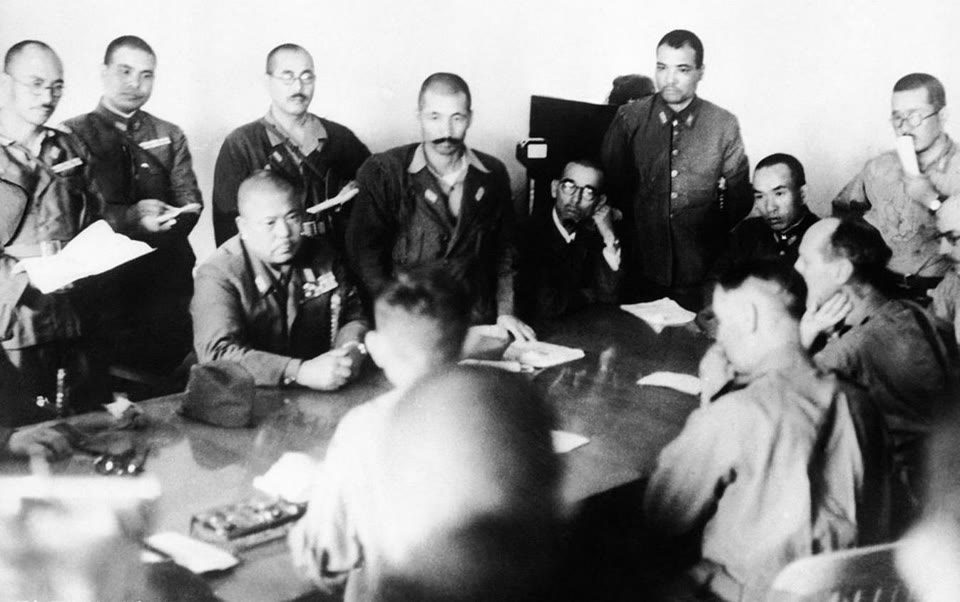
Reader Comments
Be the first to share your thoughts.