How Did Japanese Residents Become Neighbours Before Occupiers?
The Japanese lived on this land for seventy years before invading. After the occupation began, every community fractured from within
Before they invaded, they had already lived here for seventy years.

From 1871, Japanese people began arriving in Singapore. In 1892, Japanese fishing companies began operating here. By the mid-1930s, there were thousands of Japanese residents in Singapore, and roughly the same number on the Malayan Peninsula.
They were engaged in these trades: fisheries, rubber, iron ore, banking, dentistry, photo studios, publishing, furniture, and those "ten-cent stores" on Middle Road — cheap sundries.
In the 1930s, Japan supplied over half of Singapore's daily necessities: canned sardines, cotton cloth, glassware, bicycles.
This is the starting point of this piece, and the one thing most easily skipped by war narratives: The war did not bring strangers here. It turned neighbours into something else.
(In the post-war British records, there is a very chilling sentence: Japanese intelligence work was done very well; those fishermen, barbers, estate managers, and photographers became Japan's eyes and ears. ⚠️ This site must remind the reader: this is a retrospective post-war claim, which easily turns every resident of Japanese descent into a suspect. The records support that "some among them served in intelligence roles," not that "they were all spies.")
1937, The First Divergence#
After the Marco Polo Bridge Incident in 1937, the people on this land took sides for the first time over a war happening elsewhere.
On the side of the Chinese community: In October 1938, about two hundred representatives from Malaya, Singapore, and the Dutch East Indies met in Singapore and formed the Nanyang Federation of China Relief Funds. Tan Kah Kee (1874–1961) was elected as its chairman. He publicly called for a boycott of Japanese goods and organised mass rallies in Singapore.3,2
The boycott was effective. After 1937, a large number of Japanese businesses in Malaya went bankrupt or were sold off cheaply.
Then came a step further.
On 7 February 1939, the Relief Federation issued a recruitment notice: it needed volunteer drivers and mechanics to go to the Burma Road to transport supplies into China.
From February to August, about 3,200 men signed up and departed — from Malaya, Singapore, the Dutch East Indies, Burma, Vietnam, and Thailand. They were known as the Nanyang Mechanics.
By the end of the war, about 1,000 to 1,100 of them had died on that road. One third.4,2
⚠️ Various sources state the total number as between "over 3,000" and "3,200". This site takes the more common figure of about 3,200, and notes the discrepancy.
On the side of the Malay intelligentsia: Japan had another image in the Malay nationalist publications of the 1930s — the Asian nation that defeated Russia in 1905. The fact that "Asians could defeat Europeans" carried a lot of weight in a place ruled by Europeans.
In April 1941, Ibrahim Yaacob used 18,000 Malayan dollars provided by the Japanese Consul-General in Singapore to buy the newspaper Warta Malaya, using it for anti-British propaganda and intelligence gathering.
⚠️ For this item, this site only has Wikipedia as a source group, and was unable to find a second independent corroboration, so it does not insert a citation marker.
But the Malay intelligentsia was not uniform internally either. Later, Japan ceded the four northern states (Kedah, Perlis, Kelantan, Terengganu) to Thailand, severely dealing a blow to the enthusiasm of the collaborators — that was a concrete event that ruptured the relationship between the nationalists and Japan, not merely a shift in mood.
On the side of the Indian community: This site could not find information. The attitude of the pre-war Malayan Indian community towards the Japanese invasion of China, their interactions with the Indian National Congress, whether there were boycotts — in the channels accessible to this site, this part is almost a blank. This is one of the biggest gaps in this piece, and this site does not intend to fill it with speculation.
After the Occupation: Every Community Fractured Within#
Below are seven individuals. They do not represent their respective communities — no one represents a community, which is exactly what this piece aims to say.
Lim Boon Keng: The Man Pushed to the Front#
Lim Boon Keng (1869–1957), a Straits Chinese from Singapore, a doctor and educator who spent most of his life managing the public affairs of the Chinese community.
In March 1942, the Japanese military administration established the Overseas Chinese Association in Syonan-to, compelling the Chinese community to participate in its governance. Lim Boon Keng was forced to become its president.1,2
According to records, the Japanese used his family as hostages to threaten him. Another account states that Japanese officer Mamoru Shinozaki persuaded him to take the post, nominally to help protect the Chinese community.
The Association's tasks included: apportioning the fifty million Straits dollars "voluntary contribution" to the Chinese community, recruiting labourers, restoring order, recruiting police personnel, and assisting large numbers of people to move to the Endau settlement in Johore for land cultivation.
One detail is worth noting: Of that fifty million, only 28 million could be raised. The remaining portion was made up by the Association taking a loan from the Yokohama Specie Bank at a 6% annual interest rate.1,2
His motives — self-preservation, saving others, or something else — are historically debated. This site passes no judgement. What this site writes is: a 73-year-old man, in a situation where his family was held by others, stepped forward to head an organisation that apportioned a fine upon his own community.
This is recorded. How to evaluate it is up to the reader.
Lim Bo Seng: Left, Then Returned#
Lim Bo Seng, born on 27 April 1909 in Fujian, a Singaporean businessman. Even before the war, he was active in relief fundraising and the boycott of Japanese goods.
On 11 February 1942, as the Japanese army approached Singapore, he fled — via Sumatra, Ceylon, and eventually arriving in Calcutta, India.
In India, British officers persuaded him to lead a group of Malayan and Singaporean Chinese intelligence operatives back. Force 136 was formed, and the operatives trained at the Far Eastern military school in Pune, India.
On 27 March 1944, he was arrested while executing "Operation Gustavus" in Perak.
He died in Batu Gajah Prison, Perak, on 29 June 1944. Subjected to torture, severely malnourished, holding a hunger strike in protest, he never disclosed intelligence on Force 136. He was thirty-five.1,2
Sybil Kathigasu: She Was in None of Those Three Boxes#
Sybil Kathigasu (3 September 1899 — 12 Jun 1948). She was Eurasian — of French and Penang parentage. A trained nurse. Her husband, Abdon Clement Kathigasu, was a doctor.
This site stops for a sentence here: This entire website has devoted a lot of space to explaining how those three boxes were drawn. And one of the greatest wartime figures of this country was in none of those three boxes.
After the Japanese invasion, the couple moved from Ipoh to Papan in Perak, where they secretly provided medical care and medicines to anti-Japanese resistance fighters, and used a shortwave radio to listen to the BBC and pass the news on.
In 1943, she was arrested by the Kempeitai. Torture included waterboarding, as well as hanging her five-year-old daughter over a charcoal fire as psychological coercion. She was tortured until she suffered multiple bone fractures, all her fingernails were torn off, and she was unable to walk.
She never gave up the name of a single contact.
In 1945, she was awarded the George Medal, the only Malayan woman to receive this honour.
She died in Scotland on 12 June 1948 — from septicaemia caused by the torture she suffered those years. She did not live to see independence thirty years later.2,1
Elizabeth Choy: One Hundred and Ninety-Three Days#
Elizabeth Choy Su-Moi (29 November 1910 — 14 September 2006), born in Kudat, British North Borneo (present-day Sabah), Hakka.
During the war, she and her husband were in Singapore, secretly passing medicines, money, and messages to British prisoners of war and civilian internees held at Changi Prison.
In 1943, the couple was arrested on charges of being "British sympathisers" and were held at the old YMCA building and tortured by the Kempeitai.
One hundred and ninety-three days. She did not confess.
After the war, she served as a member of the Legislative Council, and from 1956 served as the first principal of the Singapore School for the Blind, living until 2006.1,2
Yeop Mahidin and Pahang's Wataniah#
Yeop Mahidin bin Mohamed Shariff (20 February 1918 — 1999), from Perak, a graduate of the Malay College Kuala Kangsar (MCKK), was an Assistant District Officer before the war.
During the Japanese occupation, he organised a resistance force called Wataniah in Pahang, numbering about 250 men, who were assisted in training by Force 136.
After the war, he served as the first commander of the Rejimen Askar Wataniah (Territorial Army Regiment). His nickname was the "Lion of Malaya".
⚠️ This site must state the strength of evidence clearly here. Regarding the specific numbers of the Wataniah's ambush results (how many Japanese soldiers killed, how many military vehicles destroyed), this site only saw them in a single Wikipedia source, and the article itself is marked "needs additional citations". Therefore, this site does not cite those numbers, only noting the force's existence, its size, and its relationship with Force 136 — those two points have a second source (a 2022 Malaysian media report mentioned a memorial list of about 244 people).
Regarding the Claim About Abdul Razak Hussein#
A circulating claim goes: the future second Prime Minister, Tun Razak, during the Japanese occupation, served in the Japanese civil administration while secretly joining Pahang's Wataniah, passing Japanese troop movements to the resistance; and at the time, only Yeop Mahidin and a few others knew of his dual identity.
This site does not treat this as an established fact.
The reason lies in the sentence itself: "at the time, only a few knew" — which means that this claim was almost impossible to have left independent records at the time, and every post-war retelling may be a reconstruction. The two sources this site found are both secondary accounts, without primary archives.
Therefore, this site's phrasing is: Records show there is such a claim, but this site could not verify it. This does not imply it is false, but means this site lacks the ability to judge.
Mohan Singh: Founded With the Japanese, Then Imprisoned by Them#
Mohan Singh, a Punjabi Sikh, an officer in the 1/14th Punjab Regiment of the British Indian Army.
On 15 December 1941 — just a week after the war started — he met with Japanese Major Fujiwara Iwaichi and Giani Pritam Singh at a rubber estate near Jitra, Kedah, to discuss forming an army of Indians.
On 31 December, the Indian National Army was declared formed in Taiping. (This was a month and a half before Singapore surrendered.)
On 1 September 1942, he was appointed commander, by which time volunteers numbered forty thousand.
Then, in December 1942, he was dismissed from his command and imprisoned by the Japanese — because the Japanese were unwilling to grant the Indian National Army true independent status.2,1
A man who built this army together with the Japanese became a prisoner of the Japanese within a year.
⚠️ And here must be added a sentence this site considers even more important: The Indian National Army does not represent the wartime experience of the Malayan Indian community. During the same period, large numbers of Tamil labourers on rubber estates were plunged into extreme poverty, many of whom were sent to the Thai-Burma Railway. The narrative of "national liberation" and the people on that railway had almost no intersection.
Post-War: Whose Memories Were Compiled#
After 1945, the way these three years and eight months were remembered was highly asymmetrical among the communities.
In 1962, the Singaporean Chinese community demanded a "blood debt" compensation. In 1966, Japan agreed to pay fifty million dollars as compensation — without a formal apology.
But on the other side, there is something this site must write plainly, because it is in itself one of the conclusions of this piece:
This site can hardly find the names of Malay resistance fighters.
On the Chinese resistance side, the names form long lists: Lim Bo Seng, Elizabeth Choy, Sybil Kathigasu (though she was Eurasian), and the countless individuals in the MPAJA. On the Malay side, this site found only Yeop Mahidin (weak sourcing), a highly debated claim about Tun Razak's dual identity, and Adnan Saidi — and Adnan's case itself speaks volumes.
The Case of Adnan Saidi#
He indeed fought valiantly at Pasir Panjang and was killed in action, a point this site has already written about in Seventy Days — the Australian official war history recorded the 1st Malay Battalion's resistance on that ridge, but his name does not appear.
And the most widespread details (being tied to a tree and bayoneted to death, etc.) show discrepancies across different sources; his death was never officially recorded; the narrative building him into a national hero was mainly driven by Malay-language newspapers after 1995, and only entered school textbooks in 1999.
This does not detract from his heroism. But it illustrates one thing: how a person is remembered depends on who is compiling the memories later, and when that compilation began.
Then why are there so few names of Malay resistance fighters?#
This site finds two possible explanations, and cannot distinguish which it is:
- The historical materials themselves are scarce — Malay resistance mostly existed in small-scale guerrilla forms, without the systematic party records of the Malayan Communist Party; the British Special Operations Executive's files on Force 136's Chinese operatives were also more detailed than on others.
- They have not been compiled — relevant archives may exist in the National Archives of Malaysia or the Australian War Memorial, but are just not in the English and Chinese online materials accessible to this site.
This site leans towards the second explanation, but has no proof.
And the biggest structural blind spot of this entire piece lies here: **how the Malay-language newspapers (like Utusan Melayu) of the 1945 to 1960s looked back on these three years and eight months, is completely inaccessible to this site. Using English and Chinese materials to write a history involving three communities carries an inherent skew — in writing this piece, this site is also reproducing that skew.**
The evidence for this piece, clearly explained#
This piece is not marked with this site's highest evidence tier, for a very practical reason: it writes about people, and the source tiers for biographical records generally tend to be lower.
This site mainly uses: the National Library Board of Singapore (NLB) profile and topic entries (compiled from archival collections, but this site read the compiled pages, not the archives themselves) · relevant Wikipedia entries · the official biography from the Tan Kah Kee Foundation · feature reports from a few media outlets.
Not a single standard academic book on this topic was read to the main text by this site.
The strength and weakness of each point is stated in the main text: the item about Ibrahim Yaacob buying the newspaper has only one source group, so no marker is attached; the Wataniah ambush figures are only in one Wikipedia entry marked "needs additional citations," so this site does not cite them; the claim about Tun Razak's dual identity exists only in secondary accounts, so this site writes "Records show there is such a claim, but this site could not verify it."
Three things this site could not find are written into the main text rather than hidden here: the pre-war stance of the Indian community · why named records of Malay resistance fighters are scarce · how Malay-language newspapers reviewed this history after 1945.
The last point is the most crucial. If an article about three communities is written using the languages of only two of them, the blank spaces are not random. This site writes this into the main text because readers have the right to know from which angle they are looking.
Sources 4 Every important claim here can be checked. Open it and see.
Do not trust this site. Check it — every source below is clickable.
-
Search for this source ⌕ no direct link — this button searches for the work 2026-07-30 Report this source
-
Search for this source ⌕ no direct link — this button searches for the work 2026-07-30 Report this source
-
Search for this source ⌕ no direct link — this button searches for the work 2026-07-30 Report this source
-
Search for this source ⌕ no direct link — this button searches for the work 2026-07-30 Report this source
This site is written with AI assistance. Please check us.
AI can invent citations that look completely convincing — a real author's name, a plausible title, a sensible year, for a work that does not exist. This is not a theoretical risk; it is a known failure mode. That is why every source on this site is clickable. If a reference cannot be found anywhere, it may well not exist — and we want to know.
How to check us →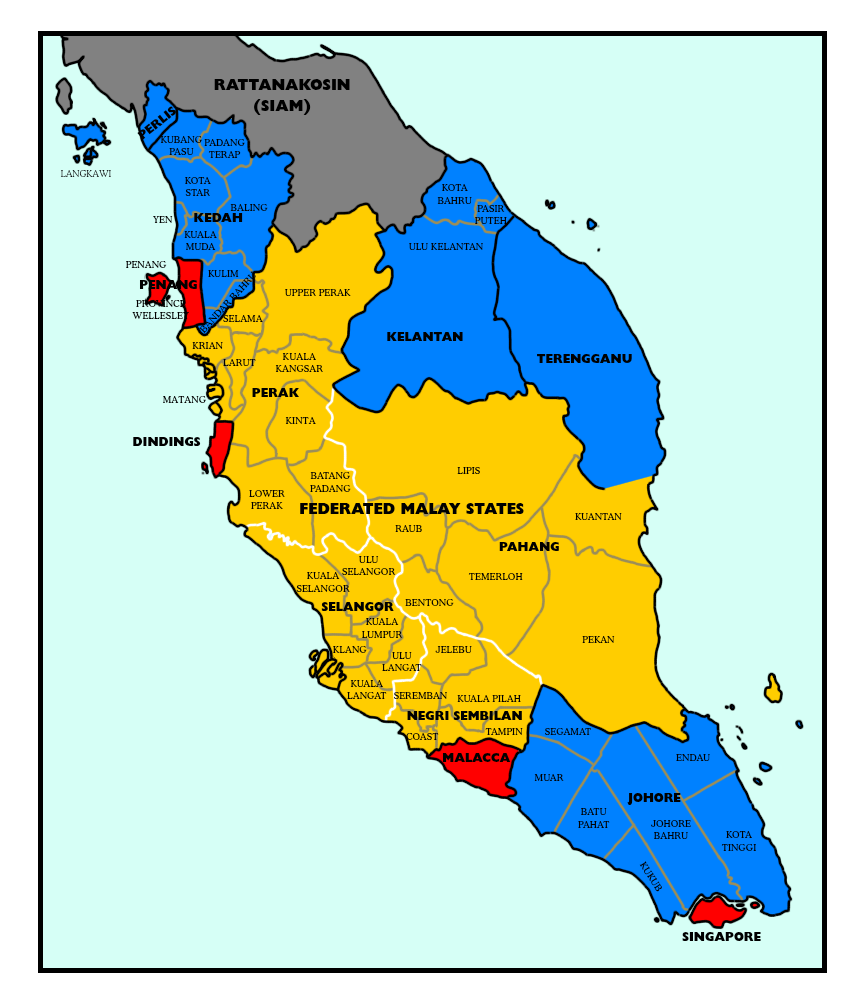
Reader Comments
Be the first to share your thoughts.