Japanese Occupation of Malaya: Three Years and Eight Months
The occupiers kept a separate ledger for each community. After the war, they each held their own book
On 31 July 1942, in a village named Sungai Lui in Negeri Sembilan.
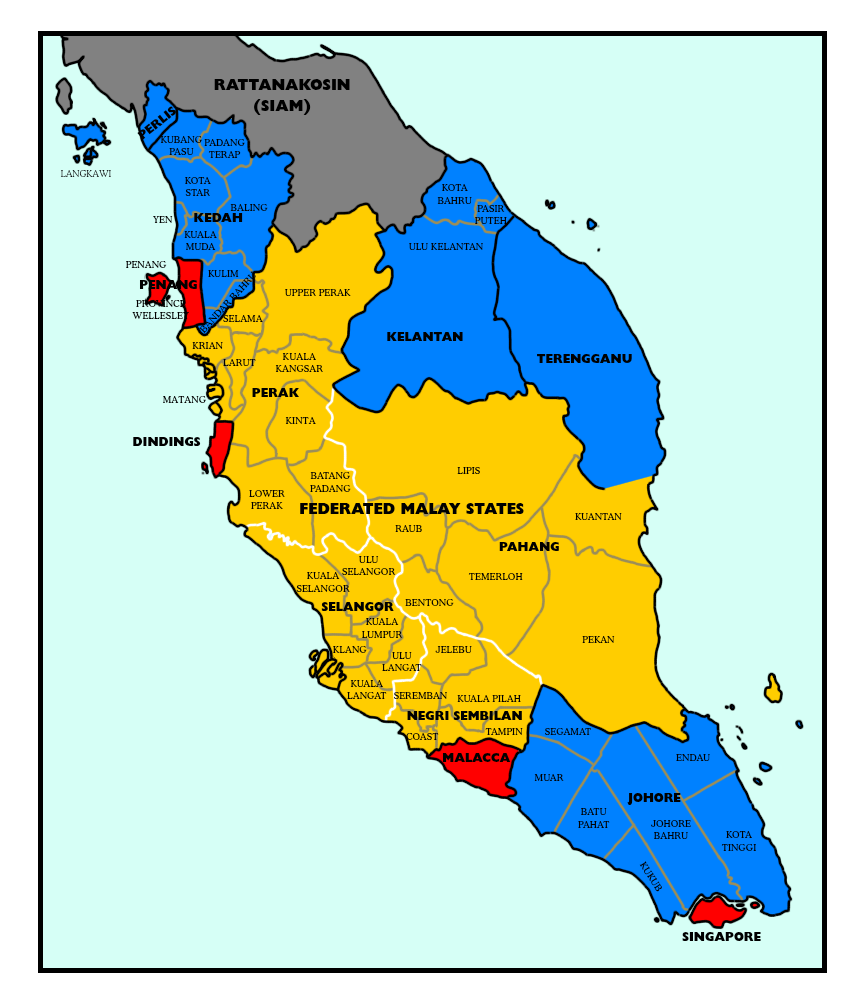
According to records, on that day three hundred and sixty-eight villagers were killed.
This figure could be written down because it concerned a single village, a single day, a single event. The scope was small enough to be counted.
Most of the events to be discussed in this piece cannot be counted.
The figure that remains unsettled to this day#
Starting 18 February 1942, the Japanese military carried out a "screening" (检证) targeting Chinese men in newly conquered Singapore — bringing people to concentration centres, and those identified as "anti-Japanese" were taken away on the spot. This is widely known in Chinese as Sook Ching (Purge), and in Japanese as "Daikenshō" (Great Screening).
How many people died?
To this day, there is no single figure universally accepted by academia. And what this piece argues is that the reader needs to know not a specific number, but why there isn't one.
Historian Hayashi Hirofumi investigated the Japanese military archives. He found two documents specifying the numbers:
- Lieutenant General Kawamura's diary, which records 5,000
- The 25th Army Intelligence Record No. 62 (28 May 1942), a classified internal document, which records those "missing due to bombing and purging" as 11,110
The weight of the second document lies in the fact that it was written shortly after the event, and it is an internal document rather than a public statement. However, Hayashi Hirofumi simultaneously points out its two limitations: it aggregates casualties from the bombing and the purge, and it does not explain how this figure was derived.1,2
On the other hand, the figure generally accepted by Singaporean society is fifty thousand.
How Hayashi Hirofumi handled this figure is worth reading word for word:
"In Singapore it is generally believed that the number killed in this event was about 50,000. However, on the basis of materials available in Japan, Singapore, and the UK, I find no basis for this figure. Although I can not present exact figures, my estimation is that a minimum of 5000 died; I can offer no figure for the maximum. The issue of numbers remains unsettled."
On the basis of materials available in Japan, Singapore, and the UK, he finds no basis for the figure of 50,000. He states that he cannot present exact figures, his estimation is that a minimum of 5,000 died, and he can offer no figure for the maximum. The issue of numbers remains unsettled.1,2
Please note that he did four things; omit one, and this paragraph means something else entirely:
- He presented two of Japan's own documents
- He pointed out the limitations of one of those documents
- He stated that the popular figure of 50,000 lacks a material basis
- He refused to give a maximum limit
The fourth point is the most important. When a scholar says "I cannot offer a maximum," he is not trying to suppress the number, he is saying he does not know where the ceiling is.
This site's position is: Lay all four sets of statements out together; they do not synthesize into one. If someone wants to take only one part, that is their choice, but they will know what they took when they do it.
The Peninsula was not a spillover, it was a division of labour#
Regarding Sook Ching, the most widespread understanding is: it was a Singaporean affair.
It was not.
Hayashi Hirofumi's archival investigation reveals: On 21 February 1942, the 25th Army ordered the 5th and 18th Divisions to enter the Malayan Peninsula to carry out "mopping-up" operations. The same order assigned the screening of the Singapore suburbs to the Imperial Guards Division, while the rest of the peninsula was assigned to the 5th and 18th Divisions.1,2
This was not a loss of control; it was zoning.
Documented locations include Penang, Kuala Lumpur, Malacca, Johore, Perak, Negeri Sembilan, Taiping, and Johor Bahru. The Chinese relief organisation in Penang registered over one thousand six hundred victims — and that was just those registered. As for the overall death toll across the peninsula, there are no reliable independent statistics.
One more thing, Hayashi Hirofumi writes very clearly:
Similar killings on the peninsula did not become known to the Japanese public until the late 1980s — because he was the one who uncovered the relevant documents of those units.
And also:
The 1947 British war crimes trials in Singapore indicted the Imperial Guards Division commander Nishimura Takuma, but did not indict the commanders of the 5th and 18th Divisions.1,2
The Singapore portion was put on trial. The peninsula portion was not.
This site merely writes the factual record here. As for why the British did not indict them, this site has not found the materials, and therefore makes no inferences.
Three Ledgers#
Now onto the real theme of this piece.
The occupying authorities did not oppress the people on this land uniformly, but treated them separately — and that method of separate treatment, over three years and eight months, turned communities that originally lived apart by trade and geography into three groups each keeping their own ledger.
The Chinese Ledger#
Besides Sook Ching, there was money.
The occupying authorities levied a sum of fifty million Straits dollars on the Chinese communities in Singapore and Malaya — equivalent to about six million pounds at the exchange rate then. The official Japanese term for this was a "voluntary contribution" (奉纳金) from the Chinese community, meant to atone for their previous "disloyalty" to Japan.
A collective fine in the name of "voluntarism".
Twenty years later, in 1962, the Singaporean Chinese community demanded a "blood debt" compensation. In 1966, Japan agreed to pay fifty million dollars as compensation — without a formal apology.
The Malay Ledger#
At the administrative level, the occupying authorities retained the original structure: district officers, the police system, and parts of the civil service continued to function, largely keeping the same personnel.
At the same time, the Japanese fostered Malay nationalism. The Kesatuan Melayu Muda (KMM) and its leader Ibrahim Yaacob received funding from the Japanese, and some members were integrated into Japanese military-affiliated units.
But this relationship was not a one-way heroic tale. Research shows that KMM had substantive cooperation with Japan, and the Japanese also suppressed them after making use of them. In 1945, the "Greater Indonesia" (KRIS) concept involving Ibrahim Yaacob collapsed alongside the Japanese surrender, and he himself fled to Java.
This site does not paint KMM as purely anti-colonial heroes, nor does it label them as outright collaborators. Both labels were slapped on later out of political necessity. The recorded fact is: a nationalist movement that had long been suppressed by colonialism gained resources and space under a new occupier, and then collapsed when that occupier fell.
The Indian Ledger#
In July 1943, Subhas Chandra Bose arrived in Singapore. The Indian National Army (INA) was reorganised with Japanese support, and records suggest about twenty thousand prisoners of war joined.
That is the most remembered page for the Indian diaspora in this history.
But it is not the most tragic page.
On the Thai-Burma Death Railway, among the Tamil labourers conscripted — mostly through deception or coercion — the estimated death toll ranges from forty-five thousand to ninety thousand.
And the Japanese left no systematic records.
There is an ugly but necessary contrast here: The soldiers of the INA had nominal rolls, military ranks, post-war trials, and monuments. For the Tamil labourers on the railway, even their numbers can only be estimated. How one is remembered depends on who was keeping the books at the time.
Separate Accounting is a technique of governance#
Three ledgers, three treatments, three kinds of memory.
This approach had its embryonic form during the colonial era — this site discussed how those grid lines were drawn in Swap a Word, and how the people in those three tracks were placed in settings where they would not encounter each other in Who Will Plant These Trees.
The Japanese occupation turned that classification system from statistical tables into a knife.
Which box a person was in dictated the kind of life they would lead for those three years and eight months. And after three years and eight months, each community held its own ledger, and the things written in that ledger were true.
The problem is: no ledger contained a page for anyone else.
Those Three Weeks#
On 15 August 1945, Japan announced its surrender.
The British Military Administration (BMA) did not formally restore its governance in Malaya until 12 September.
In the three to four intervening weeks, the only organised armed force on this land was the Malayan Peoples' Anti-Japanese Army (MPAJA).
Regarding the MPAJA, one thing must be clarified first, as popular accounts often get it wrong: It was not a multi-ethnic anti-Japanese movement. It was formed by the Malayan Communist Party in 1942; its members were predominantly ethnic Chinese, alongside a minority of Kuomintang-affiliated Chinese and a small number of Malays. At the end of the war, it had about eight battalions and ten thousand fighters.
During those three weeks, the MPAJA emerged from the jungles, announced their takeover of a significant number of towns and rural areas, and carried out summary executions against those identified as having collaborated with the Japanese.
Retaliatory violent conflicts broke out in some areas. The violence was two-way.
🔴 This site must pause here and clarify where the evidence stops.
This paragraph is the thinnest part of the entire article in terms of evidence. The key academic work on this period is Cheah Boon Kheng's Red Star Over Malaya, but this site was unable to access the main text. The materials this site could read only go as far as "records show that two-way retaliatory conflicts occurred."
Specific death tolls, a specific list of incidents, the chronological sequence of events in various locations — this site cannot provide them, and therefore writes not a single word on them.
In particular, this site will never write sentences like "race X massacred race Y." Not out of evasion, but because this site possesses no material whatsoever that could support a sentence with a racial group as the subject. And on this topic, an unsubstantiated sentence with a racial subject inflicts far more damage than writing nothing at all.
The evidence for this piece, clearly explained#
This is the article with the most unbalanced evidence on this site so far.
The hardest part is the two sections on the Sook Ching casualties and the peninsular operational orders. The source is Hayashi Hirofumi's 2009 paper published in The Asia-Pacific Journal: Japan Focus — an open-access journal, and this site directly read the full PDF hosted on Cambridge Core to verify. His investigation is based on Japanese military archives: Kawamura's diary, the 25th Army Intelligence Record No. 62, and the wartime logs and documents of the relevant divisions.
⚠️ What this site read was his paper, not the Japanese military documents themselves. The contents of the documents are known to this site via the retelling of a historian.
The thinnest part is the three weeks from August to September 1945. This site could not access the main text of the key academic work for this period, Cheah Boon Kheng's Red Star Over Malaya; it could only read the bibliographic layer and popular media summaries. Therefore, for that section, this site only wrote "two-way retaliatory conflicts occurred," providing no figures and no list of incidents.
The remaining sections — the fifty million dollar contribution, KMM and Ibrahim Yaacob, the INA, the estimated Tamil labourer deaths on the Thai-Burma Railway, and the composition and size of the MPAJA — this site relied on encyclopaedia entries and compilations by institutions such as the National Library Board (NLB) of Singapore, all of which are secondary sources. The three standard books on this topic (Paul Kratoska, Cheah Boon Kheng, Akashi Yoji) were entirely inaccessible to this site's main text reading, all trapped behind paywalls.
Regarding the Thai-Burma Railway's "forty-five thousand to ninety thousand" range, this site retained its width, because that width itself is the content: the Japanese left no systematic records.
The day those three books become accessible, this piece will be rewritten.
Sources 2 Every important claim here can be checked. Open it and see.
Do not trust this site. Check it — every source below is clickable.
-
Search for this source ⌕ no direct link — this button searches for the work 2026-07-30 Report this source
This site is written with AI assistance. Please check us.
AI can invent citations that look completely convincing — a real author's name, a plausible title, a sensible year, for a work that does not exist. This is not a theoretical risk; it is a known failure mode. That is why every source on this site is clickable. If a reference cannot be found anywhere, it may well not exist — and we want to know.
How to check us →
Reader Comments
Be the first to share your thoughts.