Why Did Singapore Leave Malaysia?
When the Public Heard the News, the Agreement Had Already Been Signed Two Days Prior; Singapore's Departure Was Neither Simply "Kicked Out" Nor an Ordinary Withdrawal
The camera did not look away.
At noon on August 9, 1965, at Singapore's Broadcasting House, reporters' questions came one after another: what about Indonesia, what about defense, where would the water come from, how would the new nation survive. Lee Kuan Yew sat before the camera, answering them one by one.1,2
When it was his turn to explain why he accepted the separation, the complete sentences began to break.
He said that every time people look back on this moment when the separation agreement was signed, it would be a moment of anguish.
Then, he brought the phrase back to himself:
"For me, it is a moment of anguish."
He paused.
Because ever since his adult life began, he had believed in merger and the unity of the two territories as one society connected by geography, economics, and ties of kinship. At this point, he could not continue, asking only: "Could we stop for a while?" The transcript of the press conference left a rare stage direction: recording paused to allow the Prime Minister to regain his composure.1,2
Television producer S. Chandra Mohan later recalled seeing the tears appear, and he immediately ordered the camera to push in and hold on Lee Kuan Yew's face. The lens stayed on that face until the image faded to black.1,2
No narrator was needed to tell the audience he was in pain.
The pause, the tears, and the fading black screen had already said it all.1,2
Two Nights Prior, He Was Still Looking for Another Door#
The breakdown before the camera did not suddenly fall from the sky on August 9.
According to a later attributed recollection by Lee Hsien Loong, drawing on family memories and public oral archives, even after the agreement was settled on August 7, Lee Kuan Yew went to see Tunku to ask if a looser federation, or even a confederation, could be retained. Tunku's reply was: the matter was closed. That night, the family stayed at Temasek House in Kuala Lumpur; Lee Hsien Loong recalled his father repeatedly getting up to write note after note to himself.
This family memory cannot substitute for the agreement or parliamentary records, nor can it alone prove the motives of all negotiators.
But it prevents the time between August 7 and August 9 from just being two blank squares on a calendar.
A man signed his name.
Returned to his room.
Spent the entire night never truly putting the decision down.
And then sat before a national audience to announce from his own mouth an outcome that could no longer be taken back.
The 7th and the 9th#
Now look at the dates again.
The agreement says:
The 7th.
The public heard the news on:
The 9th.
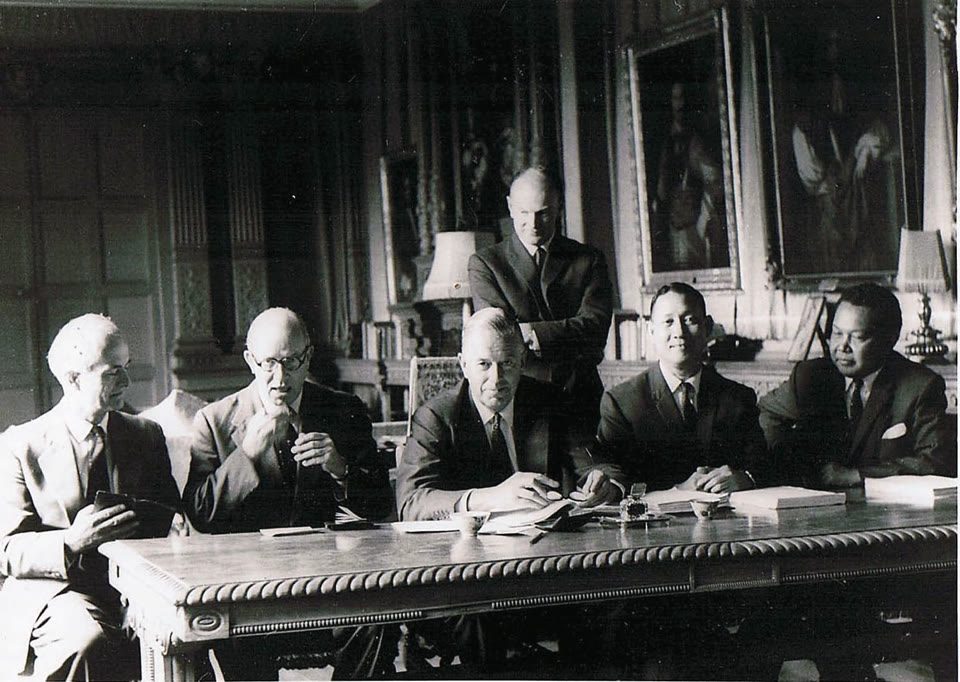
On August 7, 1965, ministers from Malaysia and Singapore had already signed the separation agreement in Kuala Lumpur. Two days later, Tunku Abdul Rahman brought the relevant bill to Parliament; on the same day, Singapore became an independent sovereign state.3,4,6,7
The distance between these two days was very short.
But it was enough to leave the entire country outside the door.3,4,1
As for the sleepless night between the signing table and the camera, we only have the memories later publicly shared by the family; it brings us closer to Lee Kuan Yew, but it cannot speak for the other parties involved.
Why We Cannot Just Write "Kicked Out"#
People often end this history with one sentence:
Singapore was expelled from Malaysia.
This sentence grasps an important fact: the force pushing for the final separation and completing the legal severance through the federal parliament came from Tunku and the federal leadership; Singapore did not leave by holding its own referendum following an open, normal withdrawal procedure.3,4,5
But the phrase "kicked out" is still insufficient.
The separation terms were not unilaterally drafted by Kuala Lumpur and tossed across the strait.
Singaporean officials participated in the secret negotiations; the agreement bears the signatures of both Malaysian federal ministers and Singaporean ministers. The Singapore cabinet accepted the arrangement and managed the continuation of the state post-independence through its own laws.3,6,5
Therefore, a more complete description is:
The federal leadership judged that coexistence was no longer viable and decided to move toward separation.
A small number of officials from both sides negotiated secretly and signed the terms.
Finally, the Malaysian parliament amended the constitution, detaching Singapore from the federation.3,4,5
It was not an easy, voluntary withdrawal.
Nor was it an eviction notice entirely devoid of Singapore's participation.
Parliament Got the Documents Last#
On August 9, the Dewan Ra'ayat did not just face a bill.
It also faced an agreement that was already signed.
Opposition MPs immediately questioned: Why was Parliament kept in the dark beforehand? Why was the agreement signed first, and the house representing the people only asked to approve it later? The constitution originally had no normal procedure for a state to leave the federation this way; now Parliament had to use a constitutional amendment to process a decision that had already become a political fact.3,4
These questions did not stop the bill from passing.
But they left behind a question that cannot be covered up by scenes of celebration:
When the leadership believed that making it public would doom the agreement, there might have been diplomatic reasons for the secrecy.
But the price of secrecy was that Parliament went from being the place that decided the nation's fate to the place that confirmed a decision at the very last minute.
The agreement dealt with more than sovereignty.
It also had to handle water supply, defense, assets, debts, personnel, and existing legal relationships. When a state leaves, it is not finished by just erasing a color on a map; every shared pipeline, every joint agency, and every obligation had to answer the question, "Whose is it tomorrow?"3,4,6
After the Morning of the 9th#
After the recording resumed, the reporters kept asking: Would Singapore apply to join the United Nations? Where would it send envoys?
Lee Kuan Yew began to answer again.
The verbatim transcript from that day shows him listing India, Pakistan, Burma, Japan, Britain, Australia, New York. As he tallied the potential diplomatic outposts, he admitted the cabinet had not had the time to consider it in detail, and the new nation could not afford too many overseas embassies.
The sorrow did not end the press conference.
The nation's bills were already waiting in the next question.
Singapore was independent.
Malaysia's territory, population, parliamentary structure, and political competition also changed with it.3,4,6
However, the political separation did not cut all ties on the spot.
Trade still had to cross the Causeway.
Water supply still flowed through the pipes.
The monetary arrangements and economic ties between the two territories continued for a period after separation, only to be dismantled gradually later.3,8
This is also why "separation of the household" is closer to the truth than "departure."
The house number can be changed overnight.
The electrical wires, water pipes, contracts, markets, and memories left by living together do not vanish simultaneously at midnight.
Those Who Stayed Behind Also Entered Another History#
After Singapore left, peninsular politics did not return to the way it was before the merger.
The two years of argument had changed the language of the political parties.
"Malaysian Malaysia" did not disappear from Malaysian politics along with Singapore.
Issues of economic competition, ethnic representation, and national identity also remained.6,5
More directly, Konfrontasi was not yet over.
The institutions put away under the state of emergency did not automatically return just because Singapore had left.4,5
The nation was short one state.
The problems it faced did not decrease proportionally.
Evidence for This Article, Clearly Explained#
The signing on August 7, the effective date on August 9, and the signatures of both parties are based on the UN treaty text, and cross-referenced with Malaysian parliamentary records and Singapore's written law. 3,4,6
Neither "expelled" nor "voluntarily left" is sufficient to solely summarize the process. This article relies on four verifiable stages: secret negotiations, mutual signing, federal political decision, and parliamentary constitutional amendment.3,4,5
The economic ties post-political separation are based on the separation agreement and academic research on the monetary union. This article does not write August 9, 1965, as the moment all institutional ties zeroed out simultaneously.3,8
The television press conference scene is reconstructed by cross-referencing the verbatim transcript of the day with the oral memory of producer S. Chandra Mohan. The "moment of anguish," the request to pause, and the regaining of composure come from the contemporary record; the camera pushing in, holding on the face, and the fade to black come from the producer's attributed memory, and are not expanded into unrecorded actions or inner monologues.1,2
The repeated rising to write notes on the night of August 7 is found only in the family memory publicly shared by Lee Hsien Loong. S1 can independently confirm the agreement was signed on August 7, but cannot verify the actions in the room; S9 is the sole source for the night's details. This article presents both side by side, and does not pass off the date verification as independent corroboration of a personal memory, nor does it write family memory as the unanimous on-site record of all participants.3,9
This article is sensitive: true. It involves founding leaders, parliamentary power, ethnic politics, and national separation; the original draft was reviewed line by line by Jay before publication.
Next up: Singapore had left, but the war was not yet over. The ballot boxes for local elections had previously been put away on the grounds of the state of emergency—next, people would discover that things put away temporarily do not necessarily return after the crisis has passed.
Sources 9 Every important claim here can be checked. Open it and see.
Do not trust this site. Check it — every source below is clickable.
This site is written with AI assistance. Please check us.
AI can invent citations that look completely convincing — a real author's name, a plausible title, a sensible year, for a work that does not exist. This is not a theoretical risk; it is a known failure mode. That is why every source on this site is clickable. If a reference cannot be found anywhere, it may well not exist — and we want to know.
How to check us →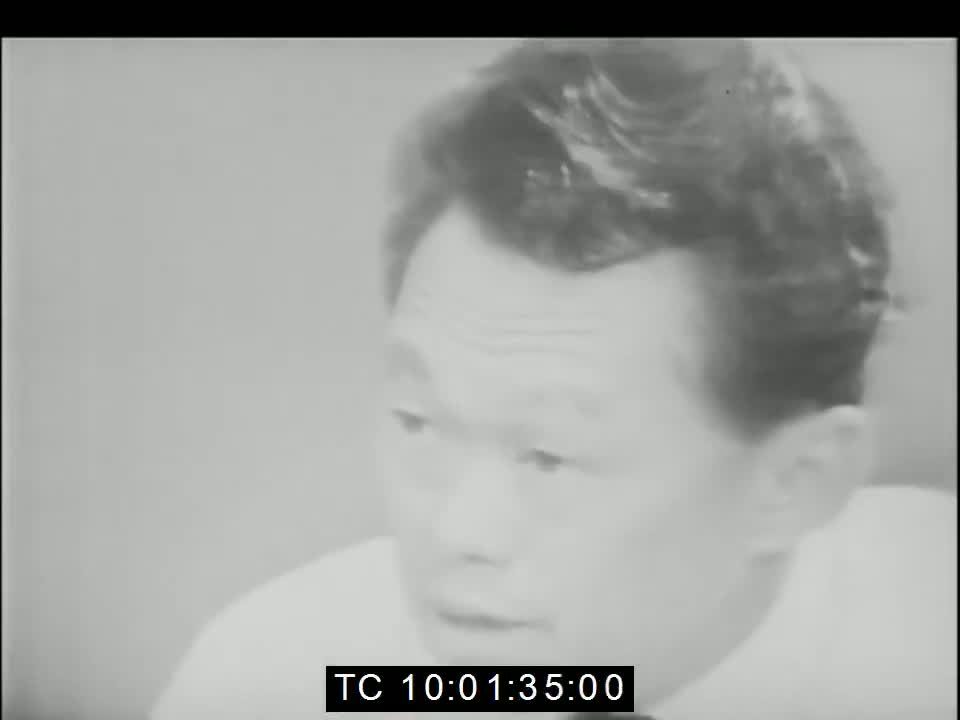
Reader Comments
Be the first to share your thoughts.