What Were Proton and the Look East Policy?
When Malaysia decided to learn from Japan, what it wanted to learn was not just a car, but a method to become an industrialized nation
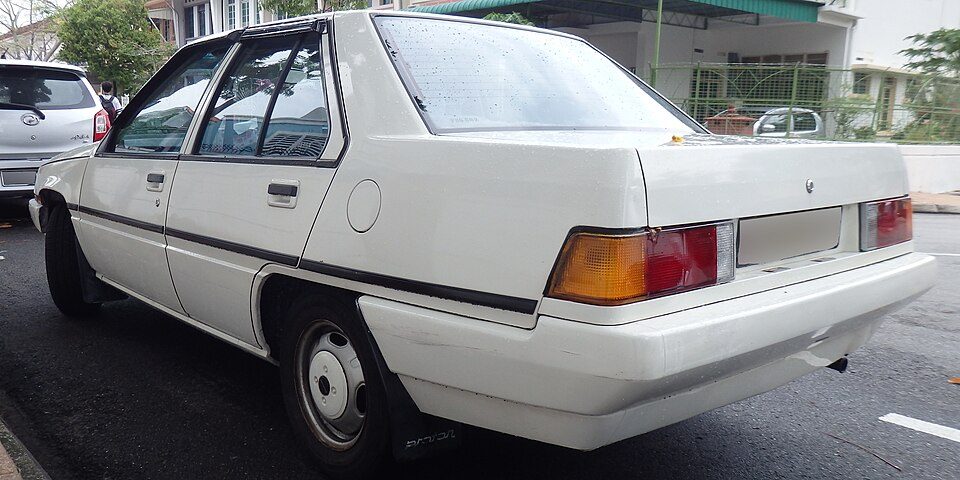
On July 9, 1985, Mahathir stood next to a new car.
On its front bore an unfamiliar name:
Proton Saga.
This was the day Malaysia's first national car was officially unveiled. For a country that had long exported rubber, tin, palm oil, and petroleum, the four-door sedan before them looked like an admission ticket to becoming an industrialized nation. It was not just meant to be driven on highways; it was to prove that Malaysia could manufacture complex machines, could train its own engineers, and could make "Made in Malaysia" no longer just printed on raw material packaging.1,2,3
However, as soon as the hood is lifted, the story immediately becomes complex.
The first-generation Saga was based on a Mitsubishi model. PROTON, which manufactured it, was a joint venture between the Malaysian government's heavy industry agency HICOM and two Japanese Mitsubishi companies. Malaysia held the majority stake, while the Japanese partners brought the vehicle model, technology, and production experience.1,2,4,3
Therefore, the real question waiting for an answer at the unveiling stage was not:
"Does Malaysia have its own car?"
But rather:
"For a car that starts with borrowed technology, how long will it take before it truly becomes its own?"
Mahathir Wanted the Whole Country to Turn Its Head#
Before the Saga appeared, Mahathir first required Malaysia to make a symbolic gesture:
Look East.
On February 8, 1982, he announced the Look East Policy at the MAJECA/JAMECA joint annual conference. The "East" here mainly referred to Japan and South Korea; what was to be looked at were not just highways, factories, and Shinkansen trains, but how these countries organized labor, trained talent, managed enterprises, and built industrial capability in a short time after the war.5,6
The reason this phrase had power was that Malaysia had historically been used to looking West.
The colonial government left behind an English administrative system, British laws, British university standards, and British commercial networks. Elites went to London for their studies, officials referenced the Whitehall system, and many important commodities were also handled by long-established British-owned companies.
Mahathir's message, however, was: the one who once ruled you is not necessarily your only teacher forever.
When the Japanese Embassy later summarized this policy, the keywords listed were not "imitating products," but labor ethics, morale, and management capability. Malaysia also began sending students and trainees to Japan, hoping what they brought back was not just a diploma, but a method for organizing an industrial society.5,6
But learning discipline is easily written into a speech.
The truly difficult part is: how do you turn it into steel, cement, machinery, factories, and products that can be sold in the market?
The State Sets Up the Gambling Table First#
Part of the answer was called HICOM.
In 1980, the Cabinet approved the establishment of the Heavy Industries Corporation of Malaysia; in November of the same year, HICOM was officially registered, owned by the Minister of Finance Incorporated. It undertook not ordinary small businesses, but heavy industrial projects with massive capital, long payback periods, and which private enterprises were unwilling to risk alone.1,4
Steel, cement, motorcycles, cars—these industries all hold the same temptation:
As long as the state is willing to invest money first, protect the market, and then invite foreign technology in, local factories might gradually learn to produce. Suppliers will follow, technicians will grow on the shop floor, and the entire economy will also transition from buying and selling raw materials to manufacturing machinery.
This line of thinking is not absurd.
The wealthy industrialized nations of today rarely grew in a vacuum devoid of state assistance, tariffs, or procurement policies. The problem has never been whether the government can support industry, but what conditions are attached to that support: what must the enterprise achieve within how many years? To what extent must technology be transferred? When will the products be able to be exported? If these targets are consistently missed, who has the right to stop the blood transfusion?4,7,8
In November 1982, the Cabinet approved the National Car Project.
On May 7, 1983, Perusahaan Otomobil Nasional was incorporated. Sixteen days later, the joint venture agreement was signed: HICOM held a 70 percent stake, while Mitsubishi Motors Corporation and Mitsubishi Corporation each held 15 percent.1,4,3
A common chronological misunderstanding must be corrected here.
What was born in 1983 was the company, not the first car.
The first Proton Saga was officially launched only on July 9, 1985.1,2,3
In two years, a company, a production system, and a car were pushed in front of the entire country.
The speed itself was part of Mahathir's political style.
Is That Car Really "National"?#
Some people look at the Saga and say:
"That's just a Mitsubishi with a Proton badge."
This statement captures the technological dependency, but misses the real changes happening inside the factory.
The first-generation Saga was indeed based on a Mitsubishi model, and the core design and technology did not start from a blank Malaysian slate. Academic research also points out that the joint venture arrangement made PROTON rely heavily on its foreign partner for vehicle models and core technology for a long time, limiting the depth of technology transfer and export cooperation.2,4,3
But "not entirely independently designed" does not equal "manufactured nothing."
A car is not just putting a few imported parts into a box. It requires stamping, welding, painting, quality control, inventory coordination, an after-sales network, and a large number of suppliers delivering on time according to uniform specifications. The establishment of PROTON indeed built local automotive production capacity, trained technical personnel, and pulled a group of component companies into a more complex manufacturing system. Later, the company gradually added capabilities for R&D, engine parts machining, and transmission assembly, showing that the learning did not stop at swapping badges.1,3,7
Therefore, "Is it a national car?" is not a question that can only be answered "Yes" or "No."
The more accurate answer is:
It is a national car spearheaded by state capital, starting with foreign platforms and technology, and having built a production and supply chain in Malaysia.
It is real.
Its dependency is also real.
The Invisible Walls on the Highway#
The Saga quickly entered Malaysian homes.
Price, maintenance networks, national identity, and the policy advantages given by the government to the national car gave it a home-field advantage that a foreign competitor would find hard to possess. After the first batches of the Saga, PROTON also began to export; entering Ireland in 1988 and appearing at the British Motor Show.1,2
However, there was another part of the national car project not in the advertisements.
It was a wall built around the domestic market.
Imported cars faced tariffs, tax differentials, and other policy restrictions, while the national car received preferential and priority treatment. Protection allowed the new factory not to have to immediately engage in head-to-head combat with mature global automakers as soon as it opened, and it allowed PROTON to secure enough sales to build up production scale.4,7,9
Enterprises inside the wall gained time.
Consumers inside the wall lost a portion of their choices.
When imported cars became expensive due to tax burdens, the national car did not have to rely entirely on quality and cost to win every customer. Consumers would not receive a bill labeled "Industrialization Fund," but they would indirectly bear the costs of the national industrial policy through car prices, choices, and the time spent waiting for the company to improve.4,8,9
Protection was originally supposed to be like fencing at a construction site.
It blocks danger, giving the unfinished structure time to stand firm.
But once the fence is left un-dismantled for a long time, the managers must answer: is construction really still going on inside, or have they simply gotten used to having no competitors approaching?
Both Looked East, Why Did Korea Go Further?#
When Malaysia looked east, South Korea also had a car carrying high national hopes.
Later, Hyundai went global; PROTON's export scale remained limited.
This was not because the Korean government did not protect its enterprises. Both countries used state intervention, and both had relied on foreign technology. The key difference was that South Korean enterprises were subjected to export targets and international market pressures earlier, and gradually invested in independent R&D; PROTON relied more on a protected domestic market and Mitsubishi licensed technology.7,8
The export market is cruel.
Domestic policies can make a car appear cheap, but they cannot order foreign customers to buy it. Once the car reaches a place with no protective walls, reliability, design, price, dealer networks, and parts supply all face scrutiny.
Economist Prema-chandra Athukorala, who studied the National Car Project, therefore argued that PROTON's export efforts were constrained by insufficient investment from its foreign partner, and also by the import substitution policy itself: since the safest profits for the enterprise came from domestic protection, it lacked a strong enough incentive to push itself to compete sustainably overseas.4,7,8
This is the sharpest twist in the Proton story.
The government built a wall so the enterprise could grow up.
The wall also allowed the enterprise to not have to rush to grow up.
The Construction Was Real, The Costs Were Also Real#
Years later, when evaluating Proton, people often stand at two extremes.
One side only sees the flag, the factory, and the first car.
The other side only sees the protection, the losses, and the Mitsubishi technology.
Both pictures are incomplete.
Without state push, Malaysia would likely not have established a national automotive production system so rapidly in the 1980s. The Saga provided a real training ground for engineers, mechanics, and parts suppliers, and allowed ordinary people to interact with a domestic industrial brand in their daily lives for the first time.1,2,3
But having a factory does not automatically equal mastering core technology.
Having local sales does not automatically equal international competitiveness.
Academic research has repeatedly pointed out that PROTON relied heavily on tariffs, tax incentives, preferential treatment, and capital support for a long time; this arrangement protected employment and production capacity, but also weakened the pressure that forces an enterprise to reduce costs, improve quality, and export.4,7,8,9
If we only say "Proton is a failure," we cannot explain those who were truly trained and the capabilities built.
If we only say "Proton is a pride," we do not have to answer who paid the cost of protection, and why, decades later, a new foreign partner was still needed.
History is not about deleting the inconvenient half of the ledger for either side.
It should lay both pages open at the same time.
The Evidence for This Article, Clearly Explained#
1983 and 1985 are two different events. PROTON was registered in May 1983; the Saga was officially launched on July 9, 1985. Corporate history, company memorial articles, and engineering papers corroborate this, and the text corrects the approach of older catalogs that conflate the two.1,2,3
"National" is not black and white. Mitsubishi provided the base model and technology, supported by corporate and academic sources; Malaysia established production, supply chains, and subsequent engineering capacity, supported by the same sources. This article does not exaggerate "local assembly" into "completely independent R&D from day one," nor does it demean technological dependency into "did nothing at all."1,2,4,3
The cost of protection only details mechanisms, without fabricating personal bills. Tariffs, tax incentives, and policy treatment are cross-confirmed by academic research and WTO Trade Policy Reviews. The text explains how consumers indirectly bore the costs of choice and price, without making up how much extra a specific car cost due to policy.4,7,9
The comparison with Hyundai is only used to explain institutional differences. IMF and Oxford studies jointly emphasize the distinctions in export discipline, independent R&D, and domestic protection incentives; this article does not compress the different market sizes, industrial histories, and corporate conditions of the two countries into a single cause.7,8
This article is sensitive: true. Before publishing, sentences involving state subsidies, consumer costs, foreign partner responsibilities, and policy success or failure must be reviewed line-by-line by Jay.
Sources 9 Every important claim here can be checked. Open it and see.
Do not trust this site. Check it — every source below is clickable.
This site is written with AI assistance. Please check us.
AI can invent citations that look completely convincing — a real author's name, a plausible title, a sensible year, for a work that does not exist. This is not a theoretical risk; it is a known failure mode. That is why every source on this site is clickable. If a reference cannot be found anywhere, it may well not exist — and we want to know.
How to check us →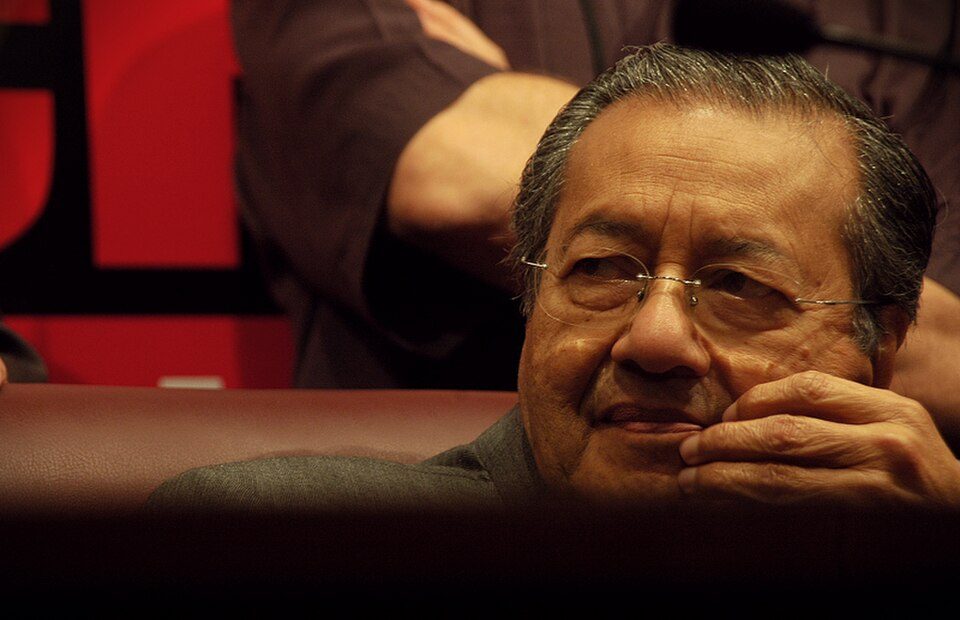

Reader Comments
Be the first to share your thoughts.