What Is Article 149 and Malaysia Security Clause?
Article 149 Is Like a Shadow: It Tells You That the Fear of the Emergency Did Not Disappear on Independence Day
The previous chapter said that the Constitution lit a lamp under a shadow.
This chapter will look at the shadow itself.
Article 149.
If you only read Part II, you see freedom.
If you keep flipping the pages, you will see the state reaching out its other hand.
That hand says:
Sometimes, I have to restrict freedom.
Because I fear the nation will be shattered.
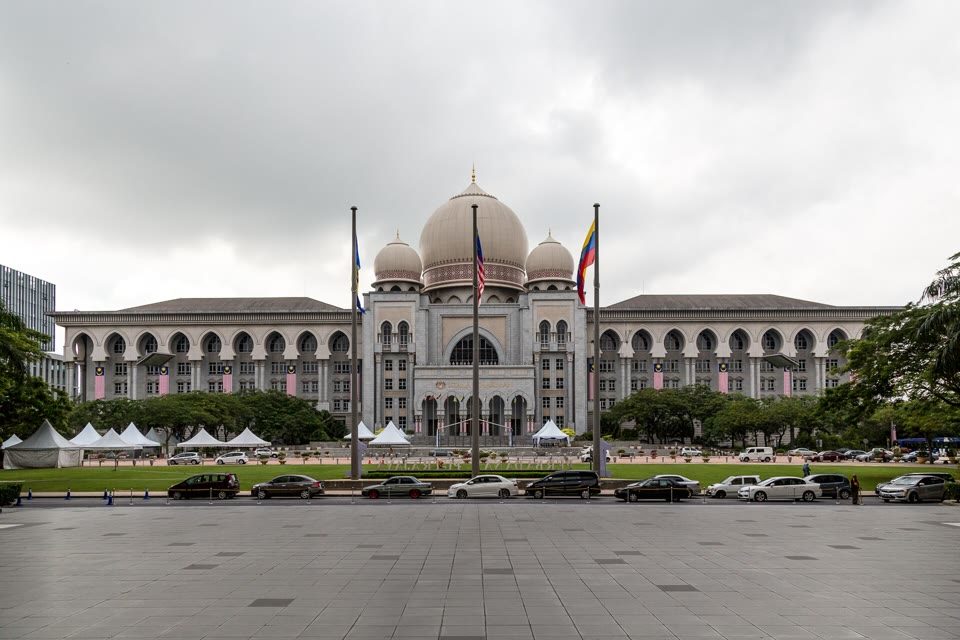
This Was Not Written in a Time of Peace#
Malaya in 1957 did not gain independence in complete peace.
The Emergency was still ongoing.
The Malayan Communist Party was still present.
The British still viewed communist expansion as a security threat in the Cold War.
The new government had to prove that it could both represent the people and suppress armed struggle and subversion risks.2,1
Therefore, right next to the clauses of freedom, security clauses inevitably had to appear.
This is not to say the security clauses are definitely right.
It is to explain why they are there.
The Constitution was not written in a clean study room.
It was written amid gunfire, detentions, village relocations, elections, negotiations, and Cold War fears.
What Article 149 Says#
Article 149 deals with special laws against subversion, action prejudicial to public order, etc.1,3
Its gist is: If an Act of Parliament recites that action has been taken or threatened by any substantial body of persons, whether inside or outside the Federation, to cause organized violence, to excite disaffection against the Yang di-Pertuan Agong or any Government in the Federation, to promote feelings of ill-will and hostility between different races or classes likely to cause violence, to procure the alteration, otherwise than by lawful means, of anything by law established, or which is prejudicial to the security of the Federation or public order, Parliament may enact related laws.1,3
The sharpest part is what follows.
Any provision of that law designed to stop or prevent that action is valid notwithstanding that it is inconsistent with certain fundamental liberties. Article 149 explicitly overrides the protections in Articles 5, 9, 10, and 13.1,3
This is why it is like a shadow.
It is not an ordinary restriction.
It is a special bypass written right next to freedom.
The State Says: I Am Afraid#
To understand Article 149, one must first admit that the state's fear is real.
After 1948, three European estate managers were killed, a state of emergency was declared, massive relocations occurred, and the armed struggle persisted. As discussed in The Malayan Emergency: Three Lives, Half a Million People, this was not an ordinary law-and-order issue, but a security crisis severe enough to alter the pace of constitutional drafting.2,1
The British were afraid Malaya would become another fallen piece on the Cold War chessboard.
The Alliance government was afraid of being seen as weak after independence.
Ordinary people were afraid of roadblocks, jungle gunfire, identity suspicions, and food rationing.
In this atmosphere, it was nearly impossible to write a chapter on freedoms with absolutely no security exceptions.
This is not a compliment.
This is an explanation.
The People Say: I Am Also Afraid#
But the state's fear is not the only fear.
The people are also afraid.
Afraid of detention without trial.
Afraid of being treated as an enemy for speaking.
Afraid of assemblies being called threats.
Afraid of property being taken away.
Afraid that the word "security" becomes a key that is never returned.
The most dangerous part of Article 149 lies exactly here.
It was originally prepared for extraordinary situations.
But once the language of the extraordinary enters everyday politics, it slowly becomes habituated.
By then, every time the state feels a little uncomfortable, it might say it is threatened.
Freedom would transform from a right into a request.
Restrictions Must Also Be Read#
Therefore, this article does not say "with Article 149, the state can do whatever it wants."
Nor does it say "with fundamental liberties, the state can never restrict them."
Both statements are wrong.
The Constitution allows for security restrictions.
But restrictions must return to the text of the Constitution, acts of Parliament, judicial interpretations, and political accountability.1,3
If restrictions stray from these boundaries, they turn into a habit of power.
If freedom entirely ignores security pressures, it also appears dishonest.
The difficulty for Malaya is that both narratives must be told simultaneously:
The state does face violence and subversion.
The people also do need protection against state abuse of power.
The Shadow Brought from the Emergency#
Article 149 connects the previous chapters back together.
The Emergency in The Malayan Emergency: Three Lives, Half a Million People is not just a historical event.
Its shadow entered the Constitution.
The drafting process in How Proposals Turned into a Constitution was not mere text editing.
It had to deal with a security issue that the British, the Alliance, the Rulers, and the communities all dared not ignore.
The fundamental liberties in Freedom Written Under the Shadow are not pure ideals.
Article 149 stands right beside them.
So, when reading the Malaysian Constitution, one cannot just read the light.
Nor can one just read the dark.
One must see how the light was lit.
And one must also see how the dark was legalized.
Evidence for This Article, Clearly Explained#
Core provisions are from the AGC Federal Constitution. This article uses Article 149 to explain the structure of security exceptions, and uses Articles 5, 9, 10, and 13 to illustrate the scope of fundamental liberties it may affect.1,3
The Emergency background is drawn from the Reid Report and previously verified materials. This article does not expand on specific security laws, detainee numbers, or individual cases, as these require separate research files.2,1
This article offers no legal evaluation of any subsequent security legislation. The ISA, SOSMA, POCA, POTA, etc., are not within the scope of this piece; if they are to be written, one must re-verify the current laws, precedents, and timelines of legal amendments.
This article is sensitive: true. It touches on national security clauses, freedom of speech/assembly/association, personal liberty, and inter-communal hostility clauses; the original draft was reviewed line by line by Jay before publication.
Next up: The security clauses explain why the state might be afraid. But the independence constitution leaves one more question: If this constitution needs to be changed in the future, who has the right to change it, and how high is the threshold?
Sources 3 Every important claim here can be checked. Open it and see.
Do not trust this site. Check it — every source below is clickable.
This site is written with AI assistance. Please check us.
AI can invent citations that look completely convincing — a real author's name, a plausible title, a sensible year, for a work that does not exist. This is not a theoretical risk; it is a known failure mode. That is why every source on this site is clickable. If a reference cannot be found anywhere, it may well not exist — and we want to know.
How to check us →

Reader Comments
Be the first to share your thoughts.