What Was a Kapitan in Colonial Melaka?
The Dutch took Malacca not to make it prosper, but to ensure it didn't. Yet in a downgraded city, people learned to survive through a system called the Kapitan.
In 1711, an Englishman passing through Malacca left a sentence in his diary.

He said the place was "healthful and pleasant".1,2
Then he added a clause: "but of no great trade."
This was not just a comment. This was a diagnosis.
Seventy years earlier, the Dutch had driven the Portuguese out with cannons, taking Malacca into their hands. But the Dutch took it not to build a new trading hub—what they wanted was naval supremacy over the strait, not the commercial lifeblood of the city. They preferred to send the cargo to Batavia.1,2
And so Malacca went from a port that merchants from all over fought to enter, to an outpost guarding the strait.
People still lived in this outpost. Many people. Their businesses, their temples, their ancestral graves were still here. They did not leave.
The question was: how did the Dutch plan to govern them?
Using an Old Method Again#
The Dutch did not bring enough manpower.1,2
To directly manage every affair of every community in an unfamiliar city—weddings and funerals, debt disputes, who officiates at the temple—the Dutch simply couldn't do it.
So they continued a method left by the Portuguese: each community elects a headman. The headman relays colonial decrees, collects taxes for the colonisers, and resolves internal disputes for his community.
This headman was called the Kapitan.
This system has an academic name: "indirect rule"—the colonisers govern the headman, the headman governs his own people, and the colonisers' hands do not need to reach every doorstep.3,4
⚠️ I must be honest here: the classification of "indirect rule" is supported by sources, but there is not yet a high-calibre academic paper specifically focused on Dutch Malacca that directly confirms this framework. There are materials describing how this system worked; the most detailed source assigning the name "indirect rule" to it is currently the English Wikipedia entry for 'Kapitan Cina', supported by an academic paper checking Hokkien steles that verifies the system's existence and continuity. No one in academia directly opposes this framework—it's just that in this round of research, I have not found a dedicated monograph for it.
Remember this gap. The gap itself is part of history.
The Names of the Kapitan Cina#
This system left behind a rare record: names.
From the beginning of the Dutch era until the British officially took over in 1824, the Chinese community in Malacca produced at least nine historically verifiable Kapitan Cina.4,5 Almost all were Hokkiens—from Zhangzhou and Quanzhou—who firmly rooted themselves in Malacca.
The first in the early Dutch era was named Tay Hong Yong (鄭芳揚). Then came the second, Li Wei King (李為經), courtesy name Jun Chang—pronounced Li Wei King in Hokkien—who, according to the Cheng Hoon Teng temple records, was born in 1614 and died in 1688; a January 2026 report by The Star also confirmed his identity and contributions. ⚠️ The birth and death years are sourced from the temple and media (secondary); no primary academic source was found for this in the sensitive section of this article.
This man, Li Wei King, holds a very important place in the memory of the Malaccan Chinese.
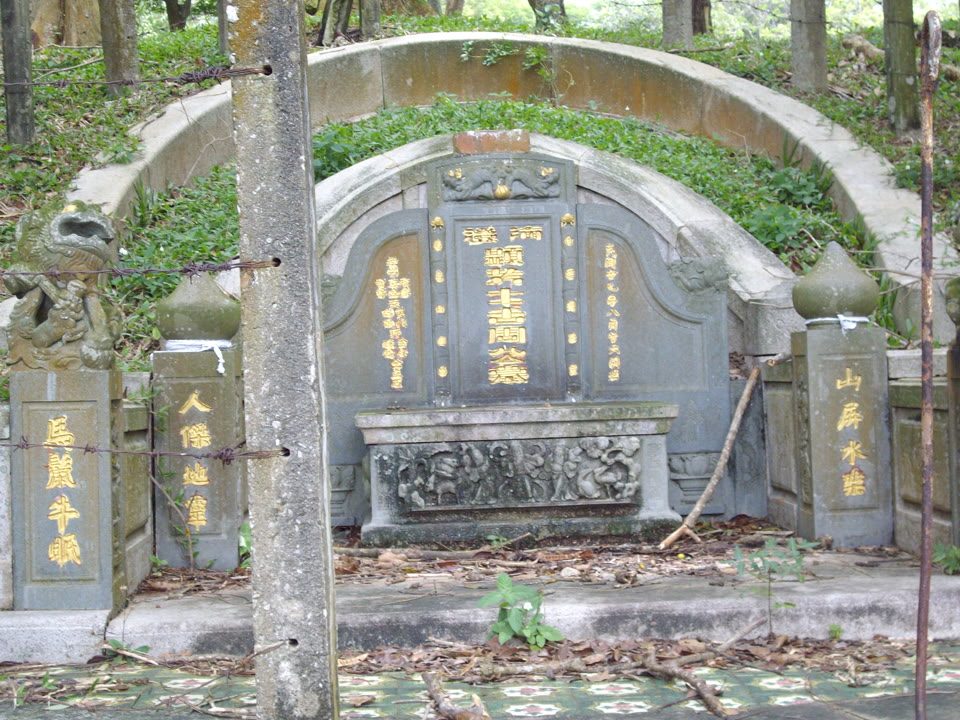
The most important thing he did was buy Bukit China (三宝山). According to the Cheng Hoon Teng temple's official website and Dr Wong Wun Bin's 2024 study (Chinese Cultural Heritage Research Centre), Li Wei King donated the hill to the Chinese community. ⚠️ Both sources are secondary; no primary academic source was found for this in the sensitive section of this article.
Bukit China is still there today, right on the edge of Malacca's old town, and is one of the largest Chinese cemeteries in Southeast Asia. Li Wei King bought this hill and donated it to the Chinese community so that the people here would have a permanent place to bury their ancestors. The Dutch ruled the city, but he secured a piece of land for his people.
There was also the fourth Kapitan, Chan Ki Lock (曾其祿) (1643–1718), traditionally associated with the 1704 restoration of the Cheng Hoon Teng temple—but current records for this come from only one source, so this article only states that he served as a headman in the system.
The nine Kapitans during the Dutch era are listed as follows (ordered by birth and death years):4,5
| No. | Name | In Office (Approx.) |
|---|---|---|
| 1 | Tay Hong Yong (鄭芳揚) | Portuguese/Dutch transition period |
| 2 | Li Wei King (李為經) | Mid-Dutch era, died 1688 |
| 3 | Lee Chiang Hou (李正壕) | Late 17th to early 18th century |
| 4 | Chan Ki Lock (曾其祿) | Early 18th century, died 1718 |
| 5 | Chan Hian Kway (曾憲魁) | Mid-18th century |
| 6 | Tan Seng Yong (陳承陽) | Mid to late 18th century |
| 7 | Tan Ki Hou (陳起厚) | Late 18th century |
| 8 | Chua Su Cheong (蔡士章) | Late 18th to early 19th century |
| 9 | Chan Yew Liang (曾有亮) | Early 19th century to 1824 |
⚠️ Note on Years: There are some overlaps in the birth and death years between the temple's records and Wikipedia, indicating that the Kapitan system might not have been strictly sequential—there could have been co-appointments, acting roles, or overlapping tenures. This table only uses "Approx.", omitting specific tenure years to prevent the numbers from being misleading.4,5
Cheng Hoon Teng: More Than Just a Temple#
During the Dutch era, the Chinese community had a core.
It wasn't a school, nor a market, but a temple: Cheng Hoon Teng (青云亭).
In 1645, four years after Malacca was captured by the Dutch, the Chinese community built this temple in the old city. It is still there today, the oldest functioning Chinese temple in Malaysia. According to Dr Wong Wun Bin's 2024 study (CCS.City) and the Chinese Wikipedia entry '青雲亭', both record this concurrently. ⚠️ Both sources are secondary; no primary or academic journal source was found in the sensitive section of this article.
But during the Dutch era, Cheng Hoon Teng was not just a place of worship.
It was the administrative centre of the Chinese community. The Kapitan's office was in the temple. Records of weddings, funerals, and civil disputes were also handled at the temple. The internal rules of the Chinese community—including the prohibition of gambling and the funding of struggling merchants—were enforced by the temple committee. According to Dr Wong Wun Bin's 2024 study and the Chinese Wikipedia entry '青雲亭', both describe this function. ⚠️ Both sources are secondary; no primary academic source for this administrative function was found in the sensitive section of this article.
One temple, simultaneously a court, an administrative office, and a community mutual-aid station. These three functions overlapped not because the Chinese particularly liked conducting official business in a temple, but because the Dutch colonial government provided no other official framework—so the community's capacity for self-governance grew out of the temple.
The Indian Merchants' Mosque#
The Kapitan system wasn't just a Chinese story.
The Dutch set up similar headman systems for other communities—South Asian Muslim merchants (then called Moors) and Hindu merchants (then called Keling, derived from Kalinga). According to the records of the Wikipedia entry 'Kapitan Cina'. ⚠️ Currently supported by only one source (secondary); no primary or academic source was found in the sensitive section of this article, stated with attribution without a citation marker.
These communities left behind something more tangible than names: buildings.
Masjid Kampung Kling (also written as Kampung Keling Mosque) still stands in Malacca's old town today. According to the Wikipedia entry for Kampung Kling Mosque, the South Asian Muslim merchant community built this mosque using wood in 1748, and it was later rebuilt with brick in 1872. ⚠️ There is currently only one source for this; a second independent source was not found in this round, so it is written with attribution without a citation marker.
As for the names of the headmen of these communities—they cannot be found in public records. The Kapitan Keling and Kapitan Moor of Dutch Malacca left no historically verifiable figures. The system existed, but the names of the headmen were not written down in the archives, or at least we cannot find them now.
This itself is a part of history: some people live on in records, while others live on only in the temples they built.
Chitty Melaka: Hindus in a Muslim City#
There is another group of people, rarely mentioned in history books, who have lived here for centuries.
They are called the Chitty Melaka, or Chetti Melaka—descendants of South Asian Hindu merchants (mostly Tamils) intermarrying with local women, having taken root here as early as the Malacca Sultanate era. According to records from the National Heritage Board of Singapore (Roots.sg), this is a mixed-race community spanning hundreds of years.
When the Dutch arrived, this community lived in the 'Kampung Keling' area near the port. According to Roots.sg, when the Dutch forces stormed the city in 1641, that settlement was destroyed, and they subsequently moved to the neighbourhood still known today as Lorong Hang Jebat. ⚠️ The above details are currently from only the Roots.sg source; a second independent source was not found in this round, so it is written with attribution without a citation marker.
They did not convert. The Dutch brought Calvinist Protestantism, but the Chitty Melaka retained their Hindu faith—surviving in this city in their own way.
The Descendants of the Portuguese: Being Catholic in a Calvinist City#
In this city, another group faced a different kind of oppression.
They were called the Kristang—descendants of Portuguese soldiers, merchants, and local women who had been in Malacca for over a hundred years and had firmly taken root. They spoke a language still used today called Papia Kristang (a Portuguese Creole). They were Catholics.
Then the Dutch came.
According to ExpatGo (2025) and the Wikipedia entry 'Kristang people', the Dutch were Calvinist Protestants and held a deep intolerance for Catholicism. After the Dutch captured Malacca in 1641, large numbers of Portuguese descendants were taken as prisoners of war to Batavia. Those who stayed were forced to change their way of worship. ⚠️ Both sources for the above two sentences are secondary (the expat magazine ExpatGo + Wikipedia); no primary or academic source for this fact was found in the sensitive section of this article, so it is written with attribution without a citation marker.
ExpatGo (2025) quotes a directive allegedly issued by Governor Balthasar Bort, ordering a total ban on Catholic worship and the expulsion of those who refused to convert. ⚠️ The specific details of this directive are currently cited only by the ExpatGo source; an academic source has not yet been independently verified. This text only writes the part that can be doubly confirmed: the Dutch authorities held strong intolerance towards Catholicism, and the Kristang community was forced to adopt secret forms of worship.
According to the records of ExpatGo (2025) and the Wikipedia entry 'Kristang people', secret masses, priests entering at night, and holy images hidden in homes—this was how the community preserved its faith under Protestant rule. ⚠️ Both sources are secondary, without citation markers.
There is another gap in the records that must be honestly stated: the specific situation of the Malays during the Dutch era was not specifically researched in this round. From Bort's 1678 population report, we know that the city had about 5,400 people at the time, and Malays numbered about 768.1,2 But their specific legal status under Dutch rule, their relationship with the Johor-Riau Sultanate, and the details of their daily lives—we could not find these in public records this time.
The Look of a Downgraded City#
Pausing here to look at the face of the city, this is Malacca in 1678.
Governor Balthasar Bort wrote a report to the Dutch East India Company (VOC).1,2 He said the entire city housed about 5,400 people. Among them were Chinese (about 716), Malays (about 768), Kristangs, South Asian merchants, slaves, and Dutch officials and garrisons.
This is not the population scale a thriving port should have.
This is the population scale an outpost should have.
Trade went to Batavia. What was left in Malacca was the skeleton of a city and the people living inside that skeleton—each community relying on its own Kapitan, its own temple or mosque, its own headman, maintaining their lives within the gaps of the Dutch system.
Nobody asked if they were willing. But they survived, and not just survived—they built things, and those things are still there today.
The Turning Point of 1795#
In January 1795, the Dutch officials in Malacca received a letter.
The letter was written by their monarch, William V. William V was no longer in the Netherlands at the time—Napoleon's army had occupied the Dutch Republic, and he had fled to Britain. He wrote the letter in Britain, ordering the governors of all colonies to temporarily hand over control to the British. According to the Wikipedia entry 'Dutch Malacca' and BiblioAsia (National Library of Singapore, 2019), this is a historically recorded event; both sources are secondary and written with attribution here, as no digitised primary document was found.
That letter became known by later generations as the "Kew Letters"—because William V was living at Kew Palace in Britain at the time.
There was only one reason: rather than let the French take it, it was better to hand it to the British for "safekeeping".
And so, in 1795, the British stepped into Malacca for the first time. But that was only for safekeeping, not a permanent occupation.
In 1815, after Napoleon was defeated, all parties sat down at the Congress of Vienna to redraw the world map. Britain and the Netherlands negotiated terms, and nominal control of Malacca was returned to the Netherlands in the 1814 negotiations—though the Dutch did not actually return to take over until 1818. Sourced from the same two (Wikipedia + BiblioAsia 2019).
The British came and went.
But when they left, the people here had already seen another possibility.
And that possibility would not truly unfold until 1824. In that year, another treaty completely rewrote Malacca's fate—this time, forever.
Sources 5 Every important claim here can be checked. Open it and see.
Do not trust this site. Check it — every source below is clickable.
-
Search for this source ⌕ no direct link — this button searches for the work 2026-07-30 Report this source
This site is written with AI assistance. Please check us.
AI can invent citations that look completely convincing — a real author's name, a plausible title, a sensible year, for a work that does not exist. This is not a theoretical risk; it is a known failure mode. That is why every source on this site is clickable. If a reference cannot be found anywhere, it may well not exist — and we want to know.
How to check us →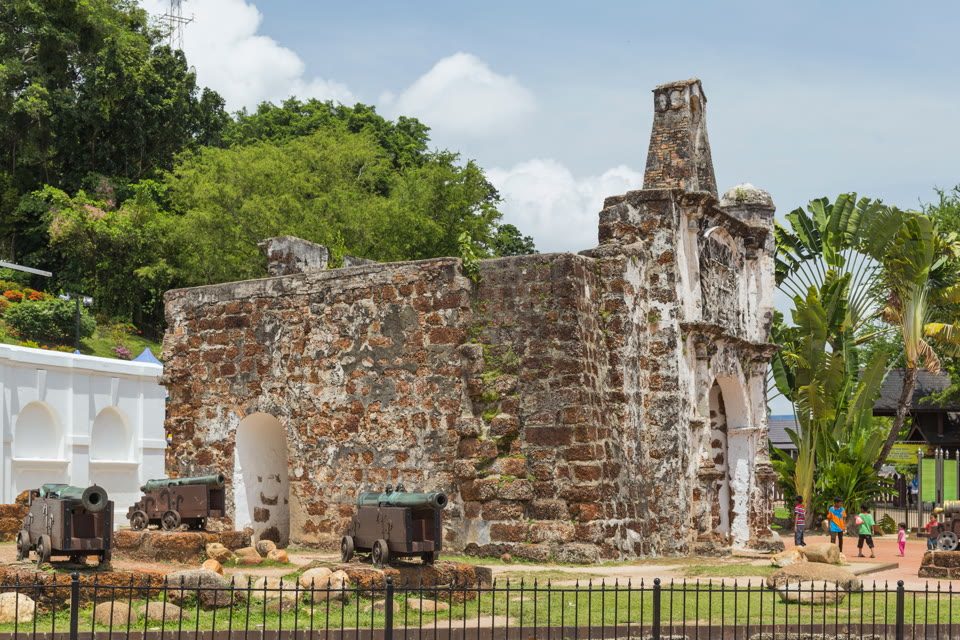
Reader Comments
Be the first to share your thoughts.