Which Early Melaka Chinese Names Can Still Be Traced?
Four hundred years in Malacca left behind a few names. Those few names tell us more than just their own stories.
After a city falls, the names of most of its people disappear.

The Portuguese marched into Malacca in 1511. Over three hundred years—first the Portuguese, then the Dutch, until the British formally took over in 1825—the number of named individuals we can trace can be counted on one hand.
This is not because people back then lacked names.
It is because records are made by those in power. Whoever the authorities choose to record, remains. If someone is recorded, it is almost certain they had some interaction with the authorities—they helped, they obstructed, or they paid. The names in the records are selected names, not a random cross-section.
The very fact of "who is remembered" is itself a piece of historical material.
Nina Chatu: The Man Who Chose a Side#
Before the Portuguese arrived, there was a merchant in Malacca from the Coromandel Coast. Various sources say he was one of the most powerful merchants of his time in Malacca.
His name, written in Portuguese documents, was Nina Chatu. He was a Hindu.
At that time, Malacca did not use the blanket term "Indians"—there was no country called India. His home was the Coromandel Coast, from the territory controlled by the Vijayanagara Empire (1336–1646); he was among the merchants managed by the second Syahbandar in the four-Syahbandar system.2,3
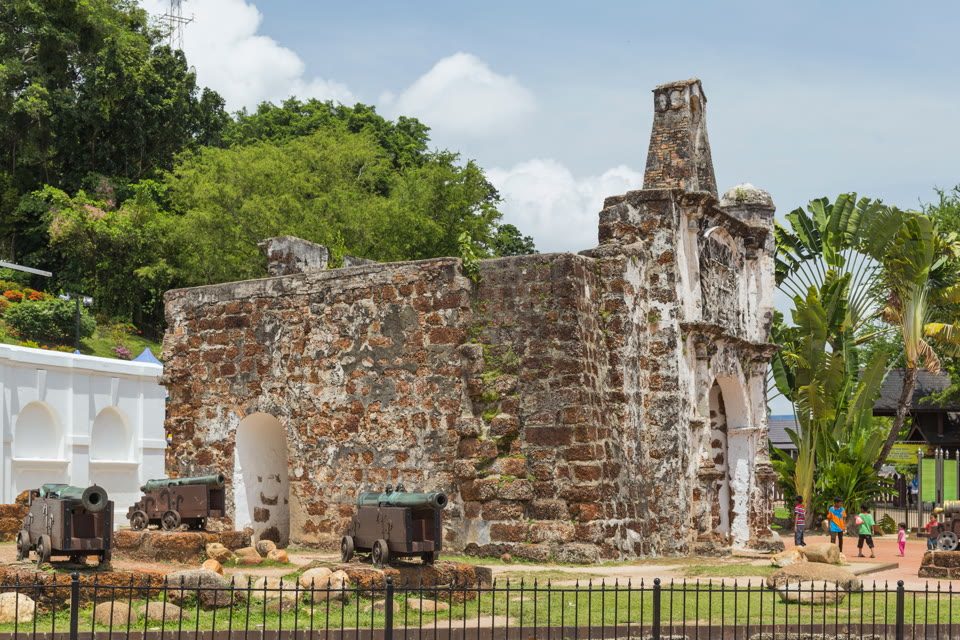
In 1511, the Portuguese general Afonso de Albuquerque led a fleet to attack Malacca.
Before the city fell, intelligence from a Portuguese merchant, Rui de Araújo, imprisoned within the city walls, was secretly delivered to Albuquerque's fleet. The middleman was Nina Chatu.2,3
After the city fell, Albuquerque appointed him as the new Bendahara—the position of chief minister from the Sultanate era. To the Portuguese, he was an indispensable middleman to connect with the local non-Muslim communities; to the remaining merchants, he was one of the few in that era who could still access power.2,3
This appointment itself is worth pondering.
The Portuguese captured a Muslim city in 1511 and immediately appointed a Hindu merchant to manage non-Muslim affairs. It wasn't because of democracy. It was because of practicality. They needed someone to maintain order, collect taxes, and coordinate the remaining communities in the city, and Nina Chatu was the man with the network and prestige.
He stayed in this position for three years.
In 1514, Nina Chatu died. His name remained in Portuguese archives, in an academic monograph featuring him as the protagonist, and in multiple historical sources about the fall of Malacca.1,2,3
He is remembered because he chose a side at the most critical moment, and he chose correctly.
There Should Be Names Here, But the Records Are Empty#
Before going further, we must pause.
During the Portuguese era (1511–1641) and the Dutch era (1641–1824), multiple communities lived in Malacca. There were Tamil merchants from the Coromandel Coast (then called "Keling", from the ancient Indian kingdom of Kalinga, a neutral term at the time), Muslim merchants (collectively referred to as "Moor" in historical materials), Malays, and the local integrated community, the Chitty (descendants of Tamil merchants intermarrying with local women).
All these communities had headmen. Both the Portuguese and the Dutch established some form of representative for each community to manage internal affairs, transmit colonial decrees, and handle community disputes.
But the result of this round of verification is: The names of these headmen are almost entirely NOT FOUND in documents that satisfy the double-source rule.
The headmen of the Indian Muslim (Moor) community: no named records found.
The headmen of the Tamil Hindu (Keling / Chitty) community: no named records found during the Portuguese and Dutch eras. The only confirmable event is that in 1748, near the end of the Dutch era, this community built a mosque in Malacca (Kampung Kling Mosque). But even for the builder, no second independent record can be found outside of a single source.
The Malay nobility during the Dutch era: similarly, no named records that meet the criteria could be found.
This is not an oversight by researchers. This is a blank space left by the recording system itself.
Colonial archives serve the colonisers. They record those who negotiated with the authorities, those who paid taxes, those who accepted appointments, those who caused trouble. For the vast majority—fishermen, weavers, spice merchants, cooks living quiet lives in the city—those archives had no reason to record them.
And the easiest way to enter the archives was to be one of the few who interacted most with those in power.
Nina Chatu is remembered because he passed intelligence on the eve of the siege and accepted an appointment after the city fell. If he had not done those two things, we probably wouldn't know his name today—just as we don't know the names of the thousands of merchants from the Coromandel Coast of that era.
The Dutch Era: The Lineage of the Kapitan Cina#
In 1641, the Dutch captured Malacca and drove out the Portuguese.
The Portuguese left, but they left one thing behind: the Kapitan system—letting each community handle internal affairs and transmit colonial decrees through a headman elected by themselves or approved by the authorities.5,6
The Dutch took over this system and continued to use it.
For the Chinese community, there are nine documented Kapitans during the Dutch era, with their tenures spanning from 1641 until the beginning of British rule in 1824. The names of these nine highly match between the Cheng Hoon Teng temple records and academic records.4,7,6
The clearest records belong to three of them.
Tay Hong Yong: The First, But the Story Isn't That Clean#
The first Kapitan Cina of the Dutch era is recorded by the temple as Tay Hong Yong (alias Tay Kie Ki, 1572–1617). A 2019 academic paper from the University of Malaya explicitly notes that Tay Hong Yong was appointed by the Dutch during the Dutch era, not a product of the Portuguese system.8,4
But there is an unavoidable problem here.
Cheng Hoon Teng—the administrative centre, the place for civil arbitration, and the Kapitan's office for the Chinese community during the Dutch era—has a traditional founding year of 1645. But Tay Hong Yong's birth and death years were 1572 to 1617.
He died in 1617. The temple was built in 1645. He could not have participated in building the temple in 1645.4,8
This contradiction currently has no source that can explain it. It is possible that later generations confused the records of two different figures, or the traditional memory of the "First Kapitan" and the temple's founding year point to two different things. No independent academic material clarifying this contradiction was found in public records.
Writing this here is not to deny the existence of Tay Hong Yong, but to state honestly: regarding this first Kapitan, the records we have contradict themselves chronologically, and this contradiction remains unresolved.
Li Wei King: The Second, The Clearest One#
The Chinese Kapitan with the most complete records during the Dutch era is the second, Li Wei King (courtesy name Jun Chang, 1614–1688).
Two independent sources record his existence. The Cheng Hoon Teng official website lists his name, life dates, and contributions to the Chinese community; a January 2026 report by The Star covered the return of his historical portrait from an exhibition in Taiwan to Malacca, stating he "shaped the early Chinese community in Malacca" and contributed to the development of Malaysia's oldest functioning temple, Cheng Hoon Teng.4,9
He remains in the records because he did two things.
The first was donating land. According to the temple's official website and the CCS.City academic platform, he purchased Bukit China and donated it to the Malaccan Chinese community as a permanent burial ground.4,10
Bukit China remains there today, one of Malacca's most important Chinese historical landmarks.
The second was repairing the temple. According to the temple's traditional records, he led a large-scale restoration of Cheng Hoon Teng in 1673, bringing building materials and craftsmen from Zhangzhou. The temple has records of this, but currently, the only document explicitly detailing the restoration is the Wikipedia entry for Cheng Hoon Teng—the official website mentions his contributions but does not independently detail the 1673 restoration.
So it must be made clear here: Li Wei King and his contribution to Bukit China are supported by double sources and are credible; the detail of importing materials from Zhangzhou in 1673 is currently explicitly stated by only one source and is treated as a temple tradition, not a verified fact.
In 1688, Li Wei King passed away. His portrait circulated for over three hundred years and finally returned to Malacca from Taiwan in 2026.
Chan Ki Lock: The Fourth, Has a Name, But Nothing More#
The fourth Kapitan Cina is recorded as Chan Ki Lock (alias Chan Luk Kwan, 1643–1718).4,7
His name appears on the temple's list and in relevant Wikipedia entries.
But there is a problem here: these two sources likely rely on the same underlying archive—the temple's own records. If the temple's record is wrong, the Wikipedia entry likely follows suit; they appear to corroborate each other, but may actually be just two recitations of the same record.
This is what researchers mean by "two sources probably deriving from the same root."
Regarding Chan Ki Lock's specific deeds—such as whether he led the rebuilding of Cheng Hoon Teng's main hall in 1704—only Wikipedia explicitly states it, and the temple's official website lacks an independent detailed description.
So all that can be written here is: he was the fourth Kapitan, his name entered the records, but as to what he did, existing independent evidence is insufficient for us to tell a complete story.
The difference in records between this fourth Kapitan and the second, Li Wei King, is itself an interesting point. Why is Li Wei King's record clearer? Perhaps because the Bukit China land left physical traces easily verified by later generations; or perhaps simply because his portrait was preserved, while Chan Ki Lock's was not.
The thickness of the archives does not necessarily reflect a person's influence at the time—sometimes, it merely reflects what happened to survive.
The Kapitan System is a Mirror#
Cheng Hoon Teng was not just a temple during the Dutch era.
According to the Chinese Wikipedia entry and the academic platform CCS.City, it was the administrative centre of the Chinese community: mediating disputes, executing customary law, and transmitting decrees between the Kapitan and the Dutch authorities; it also provided relief when community members faced difficulties.11,10
This system was used by both the Portuguese and the Dutch for very pragmatic reasons—the colonial authorities were short-handed and didn't speak the languages. To manage multiple communities in the city, the most effortless way was to let each community govern itself, while the colonial authorities only dealt with a few headmen.
This system had two consequences, moving in opposite directions.
On the one hand, it allowed each community to retain its internal order, preventing it from being directly dismantled by the colonial authorities.
On the other hand, it gave each community a headman accountable to those in power. The headman's legitimacy came not from the community's tradition, but from the colonial authority's appointment. Whoever was appointed entered the records; whoever was not part of this system vanished from the records.
So the lineage of the Kapitan Cina during the Dutch era survived not just because those men were important, but because the colonial system needed middlemen, and this need left their names in the archives.
As for the rest—the Chinese merchants not in this position, the ordinary weavers, cloth sellers, fishmongers—we don't know their names.
The Boundaries of Records#
This article is not just about these few people.
Nina Chatu is the clearest named person left from the Portuguese era because Portuguese archives and a monograph testify to him; Li Wei King is the most completely recorded from the Dutch era because the hill he donated is still there, and his portrait returned to Malacca three hundred years later.
But behind them are countless more who didn't even leave a name.
If you write "Who was the headman of the Indian Muslim community during the Portuguese era?" you find nothing.
If you write "What were the names of the Malay nobles in this city during the Dutch era?" you find nothing.
This doesn't mean the archives lacked records, or that these things didn't happen. The more likely explanation is: not everyone had the chance to enter the archives. Entering the archives required interaction with the colonial authorities, and many people's lives neither needed nor would ever have any interaction with those authorities.
The Portuguese and Dutch used three hundred years to manage this city, but they never thought to record the name of everyone who lived here. They only needed a few contacts, a few middlemen to pass down their decrees.
The names of these few middlemen are all the names we know from those three hundred years.
Then, the British came.
They brought a new method of recording—the census. This time, almost everyone would be recorded. Only the method of recording would attach a label to everyone that no one had ever attached to themselves before.
The Evidence for This Article, Explained Clearly by This Site#
For an article about people, the most deserved question is "How do you know?" So let's lay out what supports this article:
The section on Nina Chatu is the most solid. Based on a dedicated study of Portuguese archives, plus two independent encyclopedia entries, all mention his assistance to the Portuguese forces, his appointment as Bendahara after the city fell, and his death in 1514.
The section on the Kapitan Cina is a tier weaker. The list mainly comes from the Cheng Hoon Teng temple's own records and several academic papers, and the two are not necessarily truly independent—the temple's records are likely the base texts for the papers. The contradiction regarding Tay Hong Yong (lived 1572–1617, while temple tradition says he built it in 1645) is beyond this site's ability to adjudicate, so it is laid out as is, without trying to gloss over it. For Chan Ki Lock, we only write that his name appears on the list, not his deeds, because the two traceable sources likely share the same root.
For several standard academic works, this site only verified the bibliography and did not read the main text, so they count only as notes here, not evidence.
Therefore, this article is not marked with this site's highest evidence tier. The earlier articles (Srivijaya, Malacca Sultanate) had primary historical materials or peer-reviewed works behind every major assertion; this article cannot achieve that. The reason is not a lack of desire, but because the records of the Malaccan Chinese community in the 17th and 18th centuries were mostly left in temples, genealogies, and oral traditions, and did not enter academic archives—this fact itself is exactly what this article wants to convey: who is remembered depends on who does the recording.
This site would rather let you see this difference than pretend it does not exist.
Sources 11 Every important claim here can be checked. Open it and see.
Do not trust this site. Check it — every source below is clickable.
-
Search for this source ⌕ no direct link — this button searches for the work 2026-07-30 Report this source
This site is written with AI assistance. Please check us.
AI can invent citations that look completely convincing — a real author's name, a plausible title, a sensible year, for a work that does not exist. This is not a theoretical risk; it is a known failure mode. That is why every source on this site is clickable. If a reference cannot be found anywhere, it may well not exist — and we want to know.
How to check us →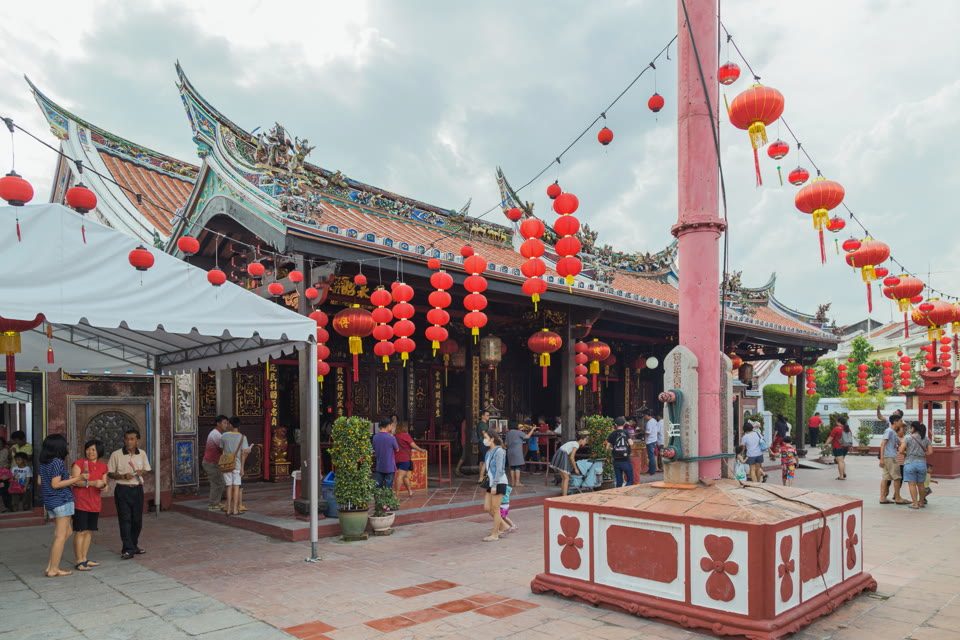
Reader Comments
Be the first to share your thoughts.