What Happened After Melaka Fell in 1511?
In 1511, what the Portuguese captured was a city, not the destiny of everyone in it
In August 1511, the winds at the port of Malacca had already changed direction.
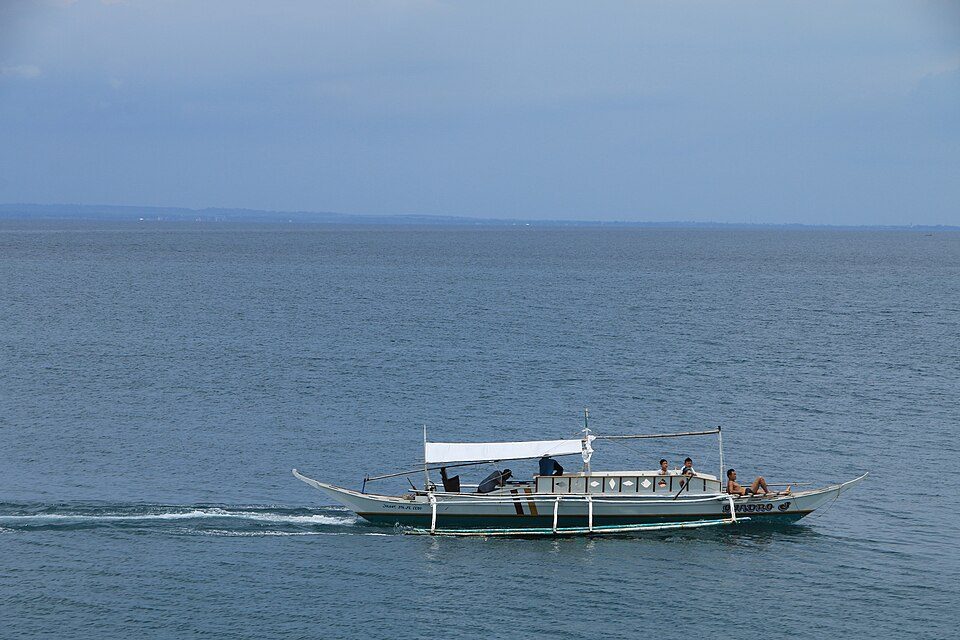
The Northeast Monsoon had not yet arrived, but a different wind came first—from Goa, bringing the smell of gunpowder.
The Portuguese general Afonso de Albuquerque took the city in less time than most expected. Sultan Mahmud Shah retreated south, and his courtiers followed. That flag came down.
But the docks remained. The warehouses remained. The people who lived on the east side of the city, in Campon Chelim (Kampung Keling), in Campon Chim (the Chinese quarter) in the north—most of them did not leave.1,4,3
This is what this article is about: the city fell, but the people remained. What happened over the next one hundred and thirty years was the real reshaping.
Some Left, Some Stayed#
During the battle for the city, an unexpected group of helpers emerged.
In the port, there were five Chinese ship captains. Before Albuquerque launched his attack, they secretly passed intelligence about Malacca's defenders to the Portuguese forces and provided naval support. Afterwards, Albuquerque ordered that their property not be plundered. (According to the Wikipedia entry 'Capture of Malacca (1511)' and World History Encyclopedia, both secondary sources)
They left no names. Historical materials merely record "five Chinese captains". Who they were, which port they came from, and why they sided with the Portuguese—public records provide no answers.
Merchants are always the first to do the maths.
The Most Powerful Merchant Was a Hindu#
Before the city fell, the most influential merchant in Malacca was not among the Sultan's Malay nobles, nor the shipowners from Zhangzhou.
His name was Nina Chatu, a Hindu, and he was one of the most powerful merchants in the city.5,2 When the Portuguese forces besieged the city, a group of Portuguese merchants was imprisoned by the Sultan. It was Nina Chatu who mediated and helped pass intelligence, allowing Albuquerque to gauge the enemy's strength.5,2
After the city was captured, Albuquerque made a decision: he appointed Nina Chatu as the new Bendahara (Prime Minister).5,2 He was neither Portuguese nor Christian, but he was the person in the city who best understood the port's operations, and he could represent the non-Muslim merchant community to help the new masters stabilize the situation.
Historian Luís Filipe Thomaz wrote a monograph about him in 1991.5,2 Three years later, in 1514, Nina Chatu passed away.
His story tells us one thing: the Portuguese came with guns, but they established a foothold in this port by dealing with the people who were already there.
Kampung Keling: A Place and an Origin#
In the southern part of the city, Portuguese records mention a neighbourhood called Campon Chelim.
Campon Chelim is the Portuguese spelling for Kampung Keling.1,3
In 15th- and 16th-century texts, the term "Keling" was a geographical origin marker, used to refer to merchants from the Coromandel Coast (in present-day southeastern India). It was neutral—like "Zhangzhou person" or "Javanese"—indicating where you came from, not an insult. It was only after the 20th century that the term gradually acquired a derogatory connotation; that came much later.1,3
Tomé Pires recorded the existence of this community during the Malacca Sultanate era, and it continued into the Portuguese period.1,3 The residents were merchants from Coromandel and their descendants. Today's Chitty Melaka community is the result of these South Asians reproducing locally over generations.
Regarding the treatment of the Chitty community during the Portuguese era, there is only one record stating that the Portuguese granted them lower tax rates because they had assisted the Portuguese during the siege. This record comes from the Singapore National Heritage Board's website, and no second independent source could be found to corroborate it—this site writes this with that level of certainty: the only extant record of this is Roots.sg (National Heritage Board Singapore), and this site failed to verify an independent second leg.
The Fate of the Mosques: Two Accounts#
What did the Sultan's mosques experience during this time?
Two things can be confirmed.
First: The building materials of the A Famosa fortress included bricks and rubble from demolished local mosques and graveyards. The fortress was completed around 1512–1513, and today only the Porta de Santiago gate remains. (These two points are recorded by Wikipedia's 'A Famosa' and a post from britishmalaya.home.blog quoting Portuguese chronicles, both secondary sources.) This fact alone shows that at least some mosques were dismantled in the early Portuguese era.
Second: The claim that "all mosques were destroyed" cannot be sufficiently supported by sources found by this site. In public records, there are no independently verifiable archival accounts detailing which mosques were demolished and which were kept.
This site's approach is: what can be written is written clearly; what cannot be written is stated as "the record gap is here." For the section on mosques, the record stops here.
The situation is the same for Hindu temples—in the historical materials consulted by this site, there is absolutely no record of whether there were Hindu temples in Malacca during the Portuguese era. Malaysia's oldest surviving Hindu temple (Sri Poyyatha Vinayagar Moorthi Temple) was built in 1781 on land granted by the Dutch, having nothing to do with the Portuguese era. For this segment, the sources are consistent, there is no controversy, and the gap in the record is the conclusion itself.
The question of Chinese temples will be detailed in the next section.
That Hill, That Stele, That Temple#
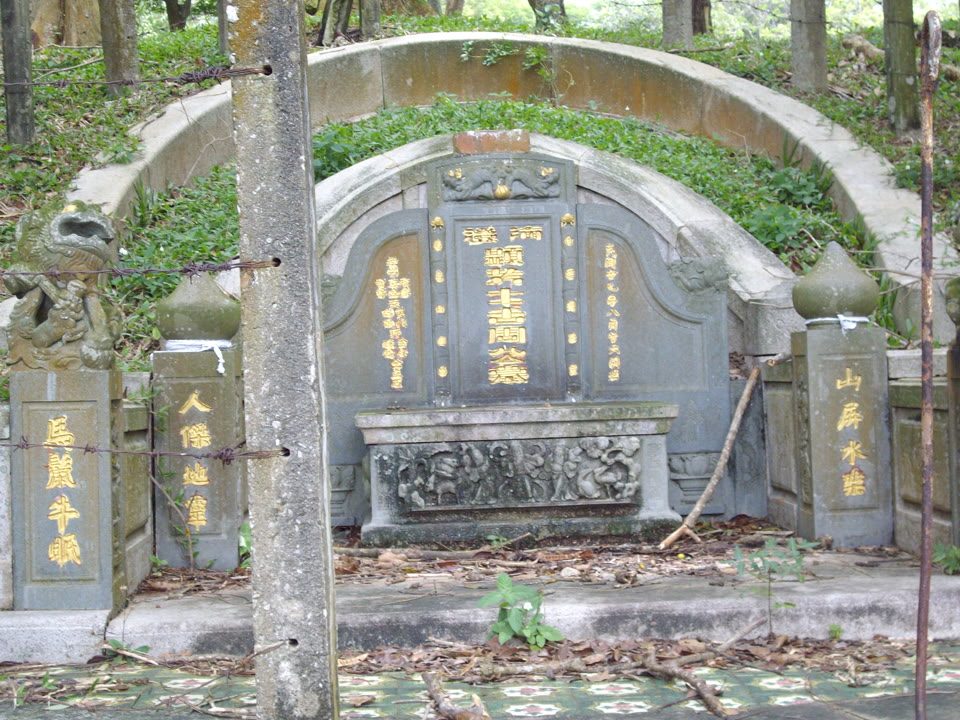
Bukit Cina (Chinese Hill) is located east of Malacca city and is one of the oldest Chinese burial grounds in Southeast Asia.
But one must be honest here—the modifier "oldest" requires a caveat.
According to studies of extant tombstones, no 15th-century gravestones have been discovered at Bukit Cina; the earliest datable gravestone belongs to the 17th century. An academic discussion cited in the Wikipedia entry for 'Portuguese Malacca' points out that during that era, the 60-year sexagenary cycle (Tiangan Dizhi) was used without an emperor's reign name for assistance, so 1514 and 1674 look exactly the same on a stele and cannot be distinguished. Researchers have used the phrase "arbitrarily equated" to describe this uncertainty.
This does not mean there was no Chinese activity at Bukit Cina during the Portuguese era. There were indeed Chinese living in Malacca during that time, and some certainly died there.5,1,3 It is just that for the statement "their graves are at Bukit Cina," there is currently no direct evidence from the 15th to 16th centuries.
The case of the Cheng Hoon Teng Temple is more direct: existing literature records that it was founded in 1645 by Kapitan Cina Tay Hong Yong, which was during the Dutch era, not the Portuguese era. Inside the temple is a stele suspected to be from the Wanli era (circa 1600). If authentic, it points to the late Portuguese period; however, academia has not reached a consensus on this. Both points are sourced from the Wikipedia 'Portuguese Malacca' entry, and this site has no independent second source to verify them.
In public records, whether there were Chinese temples in Malacca during the Portuguese period currently lacks independent sources that can be written into the main text. This "absence of records" is itself a fact—historical materials are silent on how the Chinese community maintained its religious life during those one hundred and thirty years.
The Chapel on the Hill#
After the city fell, a building appeared on the hill, eventually becoming the most recognisable landmark of Portuguese Malacca.
In 1521, Portuguese military officer Duarte Coelho built a simple chapel on the hilltop, originally named Nossa Senhora da Graca (Our Lady of Grace). Its construction was supposedly out of gratitude for escaping a naval storm while fleeing a Chinese fleet.
Later, in 1548, the chapel was handed over to the Jesuits. In 1566, the Jesuits rebuilt it on the same site, renaming it Nossa Senhora da Annunciada (Our Lady of the Annunciation) and installing a clock tower. (The timeline above is according to the Wikipedia entry 'Church of Saint Paul, Malacca', along with a 1947 JMBRAS article by Cardon & Elkins referenced within, all at the secondary level.)
The Jesuit priest St. Francis Xavier passed through Malacca multiple times during this period. He first arrived around 1545 and made several stops thereafter. He travelled widely—Japan, Goa, China—and Malacca served as a relay station for his movements in Asia. On 3 December 1552, he died of illness on Shangchuan Island, Guangdong, en route to China. His body arrived in Malacca on 22 March the following year, temporarily resting in this hilltop church before being shipped to Goa on 11 December. (These dates are according to two secondary sources: Wikipedia 'Francis Xavier' and New World Encyclopedia 'Francis Xavier'.)
The ruins you see on St. Paul's Hill today are what remains of this history. After the Dutch took over in 1641, they renamed it St. Paul's Church; in 1753, when they built the newer Christ Church at the foot of the hill, the one on top was abandoned, eventually becoming a burial ground and a powder magazine.
The building itself is not proof of religious influence, but rather illustrates a simpler fact: whichever regime was in power, its building stood at the top of the hill.
The Birth of the Casados and the Kristang#
When the Portuguese came to Malacca, they brought more than just cannons.
King Manuel I of Portugal implemented a policy: married men (casados)—that is, Portuguese men who settled in the East—who married local women could obtain "freeman" status and be exempt from royal taxes. Records from 1604 indicate that there were about two hundred such marriages recorded in Malacca. (According to Wikipedia 'Kristang people' and a report by Kreol Magazine, both secondary sources.)
Their descendants call themselves Kristang.
This term comes from the Portuguese word Cristão (Christian), but it eventually evolved into a composite identity—carrying the Portuguese Catholic faith and speaking a creole combining Portuguese, Malay, and South Asian linguistic elements, called Papiá Kristang. UNESCO today lists it as a severely endangered language. (According to Wikipedia 'Kristang people' and Kreol Magazine, both secondary sources.)
This is the most tangibly visible demographic change in the city after 1511: it created a group of people that had never existed before—neither Portuguese, nor Malay, nor anything that previously had a name. They were the product of a system and intermarriage, the crystallisation of those one hundred and thirty years.
The Malays Who Stayed in the City#
The Sultan left, the Bendahara left, the court left.
But not all Malays left.
Portuguese historical materials mention that in the Sabba (suburban) district, Malay farmers and fishermen remained, engaged in agriculture and trading nypa wine.1,4,3 As for how the Malay Muslims who stayed in the city maintained their religious life or how they dealt with Portuguese policies, the narratives in public records are exceedingly sparse. Whether the Islamic Qadi system was retained under Portuguese rule, and whether autonomous space was allowed for the Muslim community, the literature reviewed by this site found no independent academic sources detailing these.
This silence is itself information: the focus of Portuguese historical materials was not there.
There is another record stating that the majority of the Muslim merchant elite could not endure the Portuguese's heavy taxation and hostility towards Islam, and left Malacca. (Based on World History Encyclopedia and EBSCO Research Starters, both secondary sources.) Losing these people also shrank the port's commercial scale. This was not merely a political loss; it was also the commercial price the city paid.
The People of the Hinterland: The Most Silent in History#
In the hinterland surrounding Malacca, there was another group of people.
Tomé Pires, in his Suma Oriental, mentioned the Celates—a group of sea nomads (Orang Laut) active in the straits. According to Pires, they operated alongside Parameswara during the Malacca Sultanate era; they were also reportedly the ones who discovered Malacca and invited Parameswara to establish a foothold there.
But this account relies solely on Pires as a single source, which this site cannot verify independently. We treat it as a single source: the only record of this is Pires' Suma Oriental (Tomé Pires, The Suma Oriental, trans. Cortesão, Hakluyt Society, 1944).
As for the specific situation of the indigenous land-dwellers (Orang Asli) in Malacca's hinterland during the Portuguese era, they are completely absent from public records. This site has found no Portuguese archives or academic studies exclusively recording what happened between them and the Portuguese government.
The lens of history is blind to these people.
Kapitan Cina: A Clarification#
One thing needs to be specifically clarified here, as it is easily written incorrectly.
A common claim is: the Portuguese established the Kapitan Cina (Captain of the Chinese) system in Malacca.
The most relevant source found by this site is a 2019 academic journal paper from the University of Malaya, which clearly states: the formal establishment of the Kapitan system occurred during the Dutch era, and they were appointed by the Dutch. Other compilations of tourism history also point to the same period. Both sources point to Dutch rule, not Portuguese.
The claim that "the Portuguese established Kapitan Cina in Malacca" cannot find support in the independent sources searchable by this site. This site will not state it.
Then the Wind Changed Again—Just in a Different Direction#
The city spent one hundred and thirty years under Portuguese rule. It was not a peaceful one hundred and thirty years, but neither did the city turn to ashes.
The port operated, albeit with far fewer merchants.
On 3 August 1640, a fleet of the Dutch East India Company (VOC) arrived off Malacca and, alongside the forces of the Sultan of Johor, began besieging the city. The siege lasted five months, and on 14 January 1641, the Portuguese garrison surrendered. (This timeline is based on Wikipedia 'Siege of Malacca (1640–1641)' and EBSCO Research Starters, both secondary sources; a 1936 JMBRAS academic article by Leupe & Hacobian is also listed in the former's references, though unread by us.)
In the Dutch's own records, they lost about 1,000 to 1,500 men; whereas Portuguese sources claim civilian deaths numbered in the thousands. The figures from both sides must be noted with their source's perspective—this is common in military history, where the winner and loser's accounts of the same battle always differ. (According to Wikipedia 'Siege of Malacca (1640–1641)', secondary source.)
A post-siege census recorded about 2,150 people remaining in the city, less than a tenth of the roughly 20,000 population at the end of the Portuguese era. This number comes from an internal comparison of Dutch archives cited by EBSCO Research Starters; independent verification is insufficient, so this site presents it as a single-source claim.
The port, once again, changed flags.
Then, a Greater Change Arrived#
On 14 January 1641, the Dutch flag was raised over the city of Malacca.
What the Portuguese left behind was not just an abandoned church and ruined walls—but also a group of Creole-speaking descendants, Kristang families who had taken root for generations, and a city that survived regime changes and was still standing.
What the Dutch brought were new systems, new trade logic, and new demographic policies—including the Kapitan system, which was absent during the Portuguese era, and the Cheng Hoon Teng Temple built in 1645.
But that is a story for the next chapter.
Sources 5 Every important claim here can be checked. Open it and see.
Do not trust this site. Check it — every source below is clickable.
-
Search for this source ⌕ no direct link — this button searches for the work 2026-07-30 Report this source
-
Search for this source ⌕ no direct link — this button searches for the work 2026-07-30 Report this source
This site is written with AI assistance. Please check us.
AI can invent citations that look completely convincing — a real author's name, a plausible title, a sensible year, for a work that does not exist. This is not a theoretical risk; it is a known failure mode. That is why every source on this site is clickable. If a reference cannot be found anywhere, it may well not exist — and we want to know.
How to check us →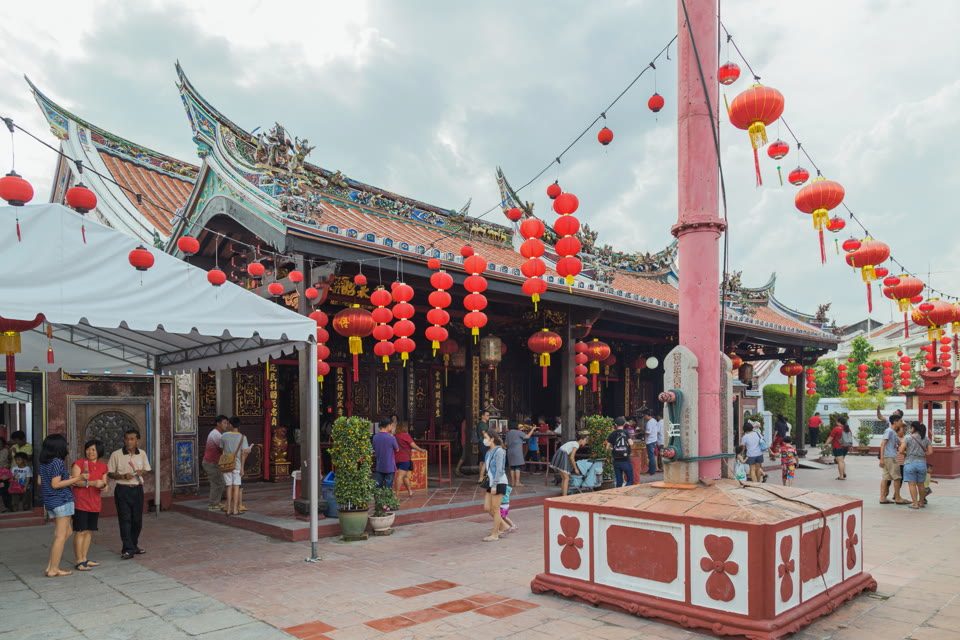
Reader Comments
Be the first to share your thoughts.