What Was Tabung Haji Financial Crisis?
Pilgrimage Savings, Red Alerts, and an Overdue Investigation Report
There was a table in the report.
No iron bars, no suitcases stuffed with cash, and no one being led away in front of cameras.
Just a few lines of numbers.
In 2014, the annual performance-based bonus for Lembaga Tabung Haji (TH) staff ranged from one to eleven months; additionally, there was a two-month special bonus. The highest tier added up to thirteen months. This bonus arrangement involved an allocation of 74 million ringgit. 1,2
Reading one line down, the story suddenly shifted.
The Royal Commission of Inquiry found that between 2014 and 2017, Tabung Haji's assets were lower than its liabilities. In such a financial position, it was inappropriate to continue issuing high bonuses. 1,2
Thirteen months.
This number is glaring not because every staff member received thirteen months. The report did not say that.
What is glaring is that when an institution entrusted with safeguarding pilgrimage savings had already heard the alarms, its reward system continued to operate as if these were prosperous years.
What is Deposited at the Counter is More Than Just Money#
Tabung Haji is not an ordinary fund.
Someone deposits 50 ringgit a month; someone else sets aside a fraction of their children's allowance. We are not recreating the experience of a specific real depositor here, but illustrating why this institution carries a trust that far exceeds interest rates.
This also explains why every question raised quickly devolves into a political quarrel.
Management supporters would argue, do not shake Muslims' confidence in the institution; critics would ask, precisely because this is a Muslim trust, shouldn't it be scrutinized more strictly?
The real danger is not that someone raises a question.
The real danger is misunderstanding "protecting confidence" as "do not open the books."
Ninety-Eight Sen Covering One Ringgit#
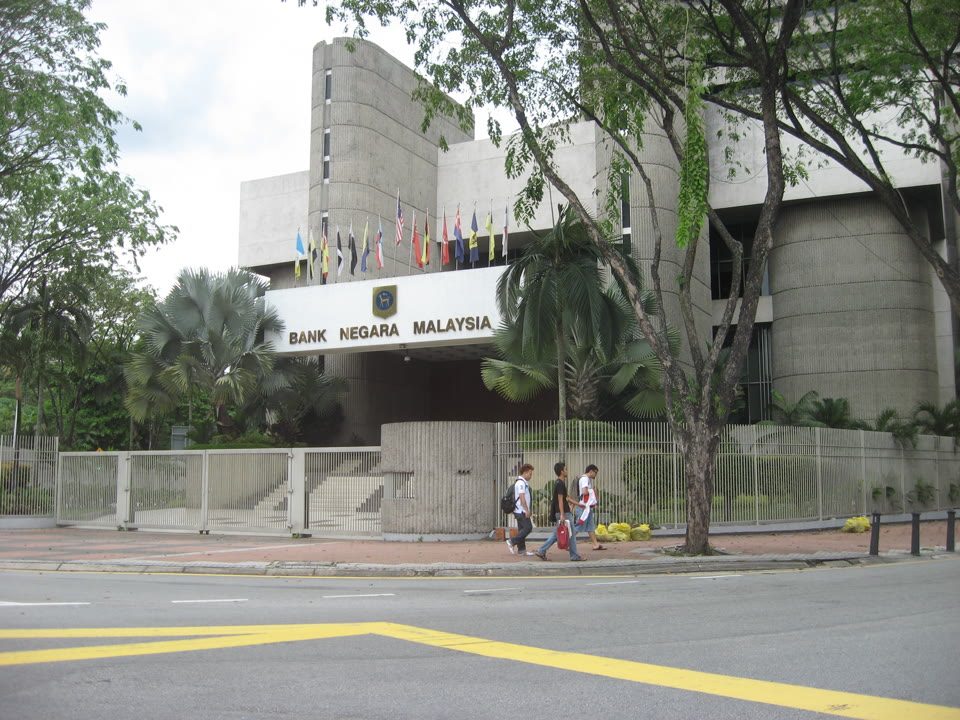
In late 2015, Bank Negara Malaysia's early warning entered the public eye: according to its metrics, for every ringgit of Tabung Haji's liabilities, there were only 98 sen in asset coverage. Tabung Haji responded that after accounting for its investment portfolio, assets still exceeded liabilities, and denied using so-called "creative accounting." 1,3
This is not a debate that can be settled in one sentence.
At what value should assets be calculated? Can unrealized investment gains support the money paid out today? When should an investment that has dropped in value recognize impairment?
Accounting policies sound distant.
But every time a loss is delayed in recognition, the same ledger looks prettier today, pushing the problem onto tomorrow's depositors and the government.
Rafizi Ramli subsequently used the public accounts from 2009 to 2015 to press further. His analysis was a politician's public assertion, not an audit report; but he grasped a question that needed answering: can a good-looking distribution rate alone prove a healthy balance sheet? Tabung Haji refuted his conclusions at the time and filed a criminal defamation case over his articles. In 2019, the prosecution withdrew the case, and the Magistrate's Court acquitted him; this procedural outcome also does not equate to a court validating every single number he wrote. 3,5,6
Stop here.
This is the responsible way to remember a whistleblower: neither erasing his inquiries because he was charged, nor turning every one of his political judgments into a court verdict because he was later acquitted.
Whose Names Were on the Warning Letters#
Bank Negara's letters were not addressed to an abstract "management."
In December 2015, then-Governor Zeti Akhtar Aziz first wrote to Tabung Haji Chairman Abdul Azeez Abdul Rahim, warning that assets were insufficient to cover liabilities; she then wrote to the Minister in the Prime Minister's Department (Religious Affairs) Jamil Khir Baharom, pointing out the risk of the fund using reserves to pay profit distributions and bonuses since 2012. 1,3,4
Abdul Azeez was not a career manager without political identity. When he took the chairmanship in 2013, he was simultaneously an UMNO Supreme Council member and a Member of Parliament. Jamil Khir was the Minister bearing the political oversight responsibility for religious affairs. 1,4,7
Therefore, the responsibility cannot simply be written as "something went wrong with Tabung Haji."
Abdul Azeez must bear the political responsibility for the board's leadership, bonus and distribution decisions, and how the institution responded after receiving Bank Negara's warning. Jamil Khir must be responsible for whether his oversight and intervention as the supervising minister were timely. The UMNO/BN government led by Najib, which appointed and maintained this leadership structure, must bear collective political responsibility. 1,3,4,7
The existence of these facts does not equate to a court ruling that Abdul Azeez, Jamil Khir, or Najib committed criminal offenses related to this financial shortfall. This article will also not borrow charges from other later cases to fill in the evidentiary blanks of this piece.
But an early warning letter that has been delivered changes the starting point of political responsibility.
From that day on, those in power could no longer say no one knocked on their door.
A Piece of Land That Brought Different Camps to the Same Table#
Alarms had sounded even earlier from another door.
In 2015, Tabung Haji purchased 1MDB's land in TRX for 188.5 million ringgit, sparking a debate over whether "this is an investment or a bailout." Tabung Haji insisted the transaction underwent professional valuation; critics asked why pilgrimage savings should take over 1MDB's land at this time. 1,8,9
Those demanding explanations did not come from a single ethnicity or political party.
ABIM Secretary-General Muhammad Faisal Abdul Aziz filed a police report demanding an investigation on behalf of depositors and Islamic youth organizations. PAS's Mahfuz Omar demanded an independent committee. DAP's Tony Pua questioned the land acquisition price and transaction risks. UMNO Youth, Muhyiddin Yassin, and other UMNO-aligned figures also publicly demanded explanations from the management. 8,9
Their assessments of the transaction were not entirely identical.
But that moment is worth remembering: guarding Muslims' savings is not something only Muslims can question, nor are non-Muslims unqualified to look at the books. Once a public institution is established by law, backed by government credit, and borne by the state when it fails, its accountability belongs to all citizens.
How a 4.1 Billion Shortfall Became a 19.9 Billion Transfer#
After the change in government in 2018, the new management commissioned an independent review, and the issue shifted from political mudslinging to a balance sheet that had to be addressed.
Tabung Haji later announced that its audited 2017 accounts showed an asset shortfall of 4.1 billion ringgit. During the restructuring, a basket of underperforming assets with a book value of 9.7 billion ringgit was transferred to the government-owned Urusharta Jamaah for 19.9 billion ringgit; the consideration was primarily sukuk (Islamic bonds). Tabung Haji also estimated that the government allocations needed to support these sukuk over ten years would be approximately 17.8 billion ringgit. 1,2
These numbers cannot be written as "all 17.8 billion was stolen by someone."
That is the estimated support cost of the restructuring, encompassing the government taking over the assets, as well as time and market risks. The assets may still recover value, and criminal liability must be investigated by enforcement agencies, proven by prosecutors, and decided by courts.
But the numbers still answered another question: when an institution that gained public trust through a religious and ethnic mission runs into trouble, what ultimately catches it is not a slogan.
It is the national balance sheet.
Who Turned on the Lights#
If we only write history as "one party created the problem, another party heroically saved it," we will fall into the same trap.
The people who truly turned on the lights came from different positions.
Professionals at Bank Negara first issued the reserve warnings. The national audit body and the subsequent RCI probed the impairment and reporting treatments. Opposition MPs translated technical problems into questions the public could understand. ABIM and PAS demanded investigations from the perspective of Muslim depositors' rights; non-Muslim MPs like Tony Pua asked questions from the angle of public funds and 1MDB transactions. The new board after 2018, external reviewers, Religious Affairs Minister Mujahid Yusof Rawa, and the team executing the restructuring bore the responsibility of exposing the shortfall and reorganizing the books. 1,2,3,8,9
No single name should monopolize the credit.
And no single identity should grant the privilege of exemption from audits.
By the 2025 financial year, Tabung Haji announced that 9.7 million depositors received a 3.50 percent profit distribution, calling it the best performance in eight years. Old crises should not be used to manufacture a bank-run panic today; and the recovery should not be used to delete yesterday's alarms. 2,10
This Report Has Not Pronounced Sentences in Place of a Court#
A Royal Commission of Inquiry can determine governance failures, procedural improprieties, and the need for further investigation, but it cannot replace a criminal court in finding someone guilty. Every mention of personal criminal liability in this article stops at the point where the public record actually stands. 1,6
Abdul Azeez, Jamil Khir, and Najib are named in this article regarding political responsibility. The recipients of Bank Negara's warnings, the chairmanship appointment, and political identities are on the public record; this information does not constitute a criminal conviction for the three men. 1,3,4,7
The "thirteen months" refers to the highest tier of the annual bonus (11 months) plus a special bonus (2 months), and does not mean all staff uniformly received thirteen months. The 74 million ringgit was the allocation for that bonus arrangement in 2014. 1,2
The 17.8 billion ringgit is the government's estimated 10-year support for the restructuring sukuk, not the total cash proven to have been stolen. 1,2
Rafizi was acquitted and discharged because the prosecution withdrew the case after accepting representations; this article does not frame the withdrawal as a court's validation of all his analyses. 5,6
Tabung Haji is still operating and has restored profit distributions. The purpose of revisiting old accounts is to protect depositors and improve the system, not to manufacture panic. 2,10
Sources 10 Every important claim here can be checked. Open it and see.
Do not trust this site. Check it — every source below is clickable.
This site is written with AI assistance. Please check us.
AI can invent citations that look completely convincing — a real author's name, a plausible title, a sensible year, for a work that does not exist. This is not a theoretical risk; it is a known failure mode. That is why every source on this site is clickable. If a reference cannot be found anywhere, it may well not exist — and we want to know.
How to check us →
Reader Comments
Be the first to share your thoughts.