Bumiputra Finance Scandal (BMF): The Money Lost in Hong Kong
Only after a bank employee was murdered did Malaysia clearly see the black hole in BMF's ledgers
On July 18, 1983, Jalil Ibrahim did not return to the bank.
He was murdered in a hotel in Kowloon, Hong Kong.
His body was later stuffed into a suitcase and dumped in a banana plantation in the New Territories.1,2
Jalil was an employee of Malaysia's Bank Bumiputra system. At the time, he was caught in an increasingly dangerous loan storm: the bank's subsidiary in Hong Kong, Bumiputra Malaysia Finance, or BMF, had extended massive funds to Carrian and other real estate groups. After the Hong Kong property market slumped, borrowers began to collapse, and the numbers in the ledgers were no longer as easy to hide as they were during the boom times.2,3,4
A man named Mak Foon Than was later convicted of murdering Jalil.
During the trial, the motive presented by the prosecution was related to a $4 million loan proposed to a Carrian-linked company: Jalil refused to approve it. Mak had implicated higher-level figures in his testimony, but the court's conviction of him for murder did not mean those allegations of masterminds behind the scenes were also proven.1,5
Therefore, this story must begin from a clear boundary:
We know who was convicted of murdering Jalil.
We do not know the answer to every "why" that everyone wants to know.
And outside the murder case, another batch of evidence was horrifying enough.
Money was indeed lent out in massive quantities.
A lot of money could not be recovered.
A Bank Established to Support Bumiputeras#
Bank Bumiputra was no ordinary commercial bank.
It carried the mission of the New Economic Policy, aiming to expand opportunities for Bumiputeras to enter credit, business, and the modern economy. Later, it owned BMF in Hong Kong, which originally could have leveraged the international financial center to expand its business, learn cross-border financing, and bring a Malaysian bank to a larger market.7,4,9
However, BMF's loans became increasingly concentrated in the hands of a few Hong Kong real estate developers.
Carrian was the most dazzling among them.
It expanded rapidly during the Hong Kong asset boom, making massive transactions with astonishing momentum. As long as property prices kept rising, a loan that seemed risky today might be covered by a higher collateral value tomorrow.
Prosperity makes caution look sluggish.
It also makes a banker mistake "prices will keep rising" for a guarantee.
Around 1983, BMF's overall loan exposure to the Carrian, Eda Investments, and Kevin Hsu groups was estimated by contemporary reports to have reached about one billion US dollars; many of these loans lacked sufficient collateral, were overly concentrated, or did not comply with proper approval and evaluation procedures.2,3,4
It is inappropriate here to pretend there is an undisputed "total missing amount."
The criminal charges later listed by the Hong Kong Independent Commission Against Corruption (ICAC) involved loans of $137 million, $238 million, or $292 million, depending on different defendants and timeframes; these figures overlap and represent the scope of different conspiracy charges, and cannot be simply added together. The approximately one billion US dollars cited by investigative reports encompassed a broader range of borrowers and overall loan exposure.6,2,5
Although the figures vary, the direction is consistent:
An overseas subsidiary of limited size staked too much money on a small number of interconnected borrowers reliant on property prices.
This was not a stroke of bad luck.
This was risk concentrated to the point of threatening the parent bank.
After the Bubble Bursts, Collateral Does Not Plead for Mercy#
Carrian's ascent relied on continuous financing, acquisitions, and rising asset prices.
When the Hong Kong property market turned sour, the valuations that originally supported the loans began to shrink. It was only when borrowers could no longer make their payments that BMF discovered a growing hole between the asset values on the books and the cash that could actually be recovered.2,4,5
The danger in banking operations is often not the first mistake.
But rather lending a second time in order not to admit the first mistake.
As long as financing continues, the borrower does not collapse immediately; as long as they do not collapse, the old loans do not have to be immediately classified as losses. The new money thus temporarily sustains the old story, buying management more time, but also making the ultimate hole deeper.
The Committee of Enquiry later pointed out that regulators had detected the problems earlier. If Bank Negara had taken proactive action after inspecting BMF's accounts in 1982, at least a portion of the subsequent losses might have been avoided; contemporary reports, quoting the committee's estimates, stated that the avoidable losses amounted to at least $150 million.3,4
This statement changes the nature of the case.
If all the losses resulted from a sudden collapse of the Hong Kong property market, it was a severe misjudgment.
If the alarms had already sounded, yet the loans continued to expand, then it was a failure of governance.
What Exactly Did Jalil Block?#
Jalil's death turned a banking scandal into an unavoidable national tragedy.
Court records show he was murdered at the Regent Hotel on July 18; the case posited that he refused to agree to a $4 million loan. Mak was convicted of murder and subsequently applied for leave to appeal.1,5
The verifiable facts stop here.
Later circulated versions often portrayed Jalil as a lone-wolf auditor who already possessed all the secrets and was about to expose all the high-level figures; other parties involved denied such a direct connection between his investigation and his death.
This site will not write chapters for either side that evidence has not proven.
A safer statement is:
Jalil was caught in the middle of the BMF loan crisis.
He became a target in the prosecution's case for refusing or obstructing a loan related to Carrian.
The murderer was convicted.
As for whether there was another mastermind or who gave the orders, publicly verifiable judicial outcomes have not traced the answers any further.1,5
Admitting we do not know does not diminish his death.
Instead, it prevents the true victim from being used again by unverified political rumors.
The People the Hong Kong Courts Caught#
Following Carrian's collapse, the Hong Kong ICAC launched a massive investigation that lasted for years.
More than one person was ultimately convicted.
Carrian's former chairman was jailed for conspiracy to defraud BMF and facilitating massive loans; BMF's former chairman, a director, and an alternate director were also respectively convicted of permitting loans without adequate security, conspiracy to defraud, or accepting advantages. Another former BMF director was found to have received over HK$15 million in bribes from Carrian's former chairman to assist related companies in obtaining funds.6,5
These convictions answer part of the question:
The loans were not simply because everyone was overly optimistic.
The courts confirmed that fraud and exchange of favors were involved.
However, criminal judgments hold specific defendants accountable based on specific charges; they do not automatically explain the responsibilities at all levels among the parent bank's board of directors, regulatory bodies, and political supervisors.
Hong Kong can try fraud and bribery that occurred in Hong Kong.
Malaysia still had to answer: Why was risk of this magnitude allowed to continuously flow out of a state banking system?
A Belated Report#
On the government's advice, Bank Bumiputra established a three-member independent Committee of Enquiry, chaired by former Auditor-General Ahmad Noordin.
The committee investigated BMF's management, controls, loans, and the responsibilities of those involved. The final report was completed in December 1985; in 1986, the government submitted a White Paper along with the full report for public and parliamentary discussion.7,8,3
The importance of the report lay not just in reconstructing individual transactions.
It pushed the narrative of an "overseas subsidiary making its own trouble" back to the parent bank and the supervisory system: over-concentration of loans, inadequate documentation and evaluation, and warnings not translated into action in a timely manner.3,4,9
However, the publication of the report did not mean accountability had fully landed.
A national-level financial disaster requires three different types of accountability:
First, whether the perpetrators were prosecuted.
Second, whether the derelict directors and management paid the price.
Third, whether institutional and political supervisors explained why the alarms failed.
The Hong Kong cases left multiple convictions for the first item.
The latter two became part of Malaysia's long-running subsequent debates.6,7,4,9
Who Sits in the Chair of Political Accountability?#
Now, let's write the ministers' names in.
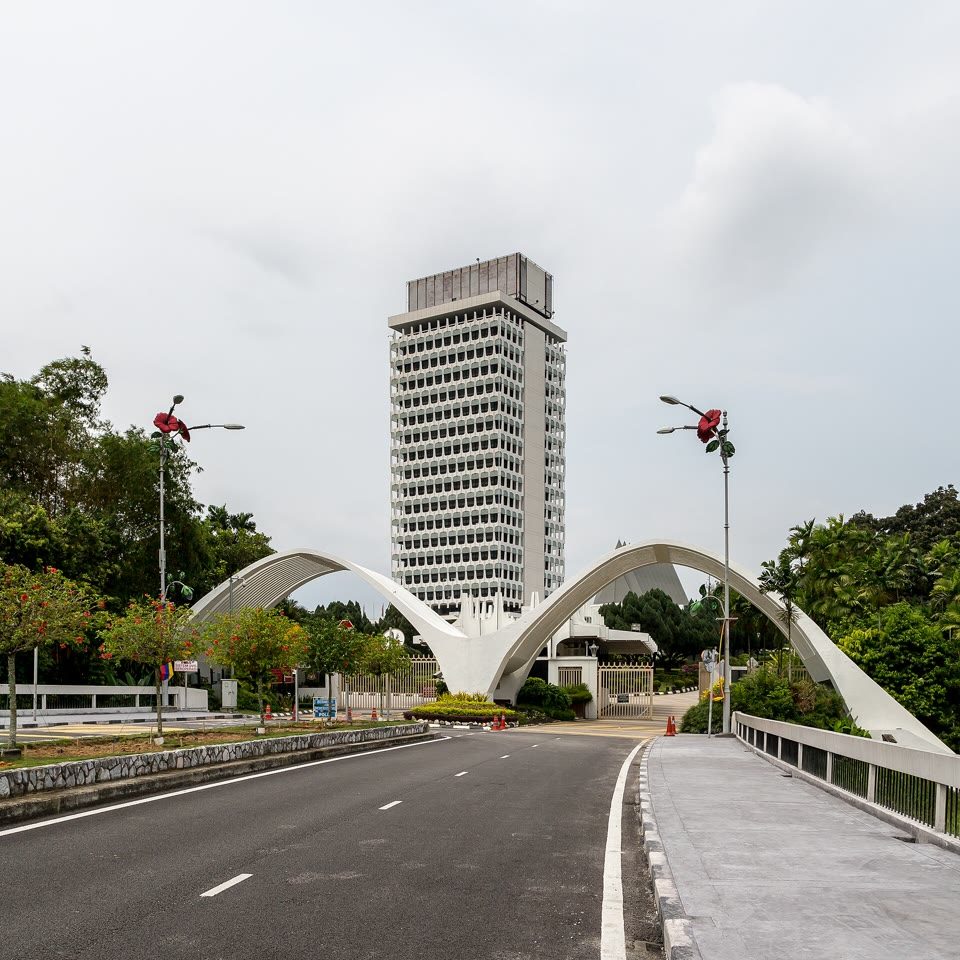
When BMF's loan exposure rapidly expanded from the late 1970s to around 1984, the Minister of Finance was Tengku Razaleigh Hamzah. He headed the Ministry of Finance from 1976 to 1984; Mahathir had served as Prime Minister since 1981. By the time the government presented the Committee of Enquiry report and White Paper to Parliament in 1986, it was the Mahathir administration that presided over the response.7,8,4,11
This set of tenure facts does not prove that Tengku Razaleigh approved a specific fraudulent loan, nor does it prove that Mahathir knew every illegal transaction in Hong Kong.
But political accountability does not have to wait until a criminal court proves a minister personally signed off on a bad debt to begin.
Tengku Razaleigh must bear ministerial-level political accountability for why, during his tenure as Minister of Finance, a bank bearing a national policy mission could allow an overseas subsidiary to expand its risk to the point of threatening the parent bank. Mahathir must bear the highest executive and political accountability for how alarms were handled during his tenure as Prime Minister, why the investigation was delayed, and ultimately how national assets were mobilized for the bailout.7,8,4,9,11
One level up was the Barisan Nasional, which controlled the federal government at the time. Bank Bumiputra was not a private bank without political backing; since the government entrusted it with a national development mission, it could not simply leave the blame to a few bankers in Hong Kong when it failed. The BN government published the report, restructured the bank, and managed the crisis; that same government must also face voters' judgments on the previous lack of oversight and whether subsequent accountability was complete.
This is not a criminal verdict.
This is a political ledger.
Who Plugged the Hole?#
A bank cannot simply collapse the way an ordinary real estate company does.
It holds deposits and connects other enterprises and financial institutions. If Bank Bumiputra collapsed due to BMF's losses, those injured would not only be the ones who approved the bad loans, but also depositors, employees, and borrowing enterprises who had no part in the decision-making.
Therefore, the government's choice to save the bank had reasons grounded in financial stability.
The problem lies in where the money came from, and what accountability the bailout came with.
Around 1986, Petronas participated in a restructuring and capital injection arrangement of approximately RM 2.49 billion to RM 2.5 billion, taking over the heavily damaged Bank Bumiputra, enabling the bank to absorb the losses caused by BMF. Different sources have slight variations in the terminology used for the transaction structure—whether "injection," "takeover," or "bailout"—but the scale and Petronas's critical role can be cross-confirmed.9,10
This meant that the hole in the Hong Kong ledgers was ultimately plugged by Malaysian national assets.
Petronas's money did not appear out of thin air.
It came from revenues generated by national petroleum resources. Using it to stabilize the bank might have been a necessary choice at the time to avoid a larger financial shock; but for every ringgit taken to patch an old mistake, there is one ringgit less available for other public investments.
Saving the bank and saving those who made mistakes are not the same thing.
A responsible state can protect depositors while simultaneously removing management, recovering assets, publishing reports, and reforming oversight.
The real danger is mixing the two, allowing "the bank is too important to fail" to slowly morph into "the people responsible are too important to pursue."
The Evidence for This Article, Clearly Explained#
The Jalil Ibrahim murder case only writes what is judicially verifiable. Hong Kong appeal records and legal data confirm the date and location of the murder, Mak's murder conviction, and the facts of the $4 million loan. Mak's allegations against others are not treated by this article as proven orders from behind the scenes.1,5
Loan figures are not conflated. The amounts for the ICAC's various charges have overlapping timeframes and defendants; the approximately $1 billion figure is the estimate from contemporary reports of BMF's overall exposure to multiple real estate groups. The text explicitly distinguishes these to avoid creating a falsely precise total.6,2,3
The judgment of "avoidable" is attributed to the Committee of Enquiry. The figure of at least $150 million comes from contemporary reports recounting the committee's conclusions, supported by organizational governance research regarding the early regulatory warning context; this site did not calculate it itself.3,4
Criminal conviction and political accountability are separated. ICAC data can confirm the fraud and bribery convictions of several individuals from Carrian and BMF; it cannot single-handedly prove that every level of politicians in Malaysia was aware. This article does not use "not convicted" as a substitute for institutional accountability, nor does it use institutional failure as a substitute for personal criminal evidence.6,7,4
Tengku Razaleigh and Mahathir bear political accountability in this article, rather than being declared guilty by it. The Ministry of Finance's official list confirms Tengku Razaleigh's tenure; parliamentary records, government public responses, and organizational research support the questioning of the Ministry of Finance, the Cabinet, and the regulatory chain. Existing data is insufficient to write that they personally approved any specific fraudulent loan in Hong Kong.7,8,4,11
The Petronas arrangement uses ranges and neutral phrasing. Synthesizing historical research and recent academic reviews, the text states approximately RM 2.49 billion to RM 2.5 billion, and explains that sources use different terms for the transaction structure, rather than simply calling the entire amount vanished cash.9,10
This article is sensitive: true. Before publishing, sentences involving murder motives, fraud, bribery, regulatory failure, Petronas, and political accountability must be reviewed line-by-line by Jay.
Sources 11 Every important claim here can be checked. Open it and see.
Do not trust this site. Check it — every source below is clickable.
This site is written with AI assistance. Please check us.
AI can invent citations that look completely convincing — a real author's name, a plausible title, a sensible year, for a work that does not exist. This is not a theoretical risk; it is a known failure mode. That is why every source on this site is clickable. If a reference cannot be found anywhere, it may well not exist — and we want to know.
How to check us →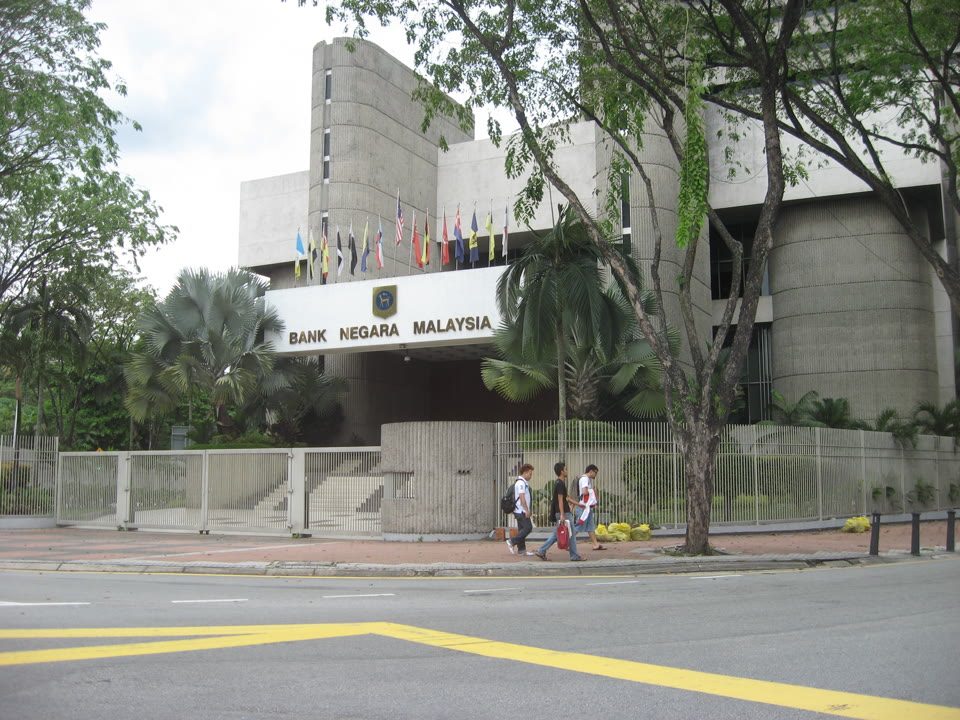
Reader Comments
Be the first to share your thoughts.