Why Was Melaka Rich?
Malacca's wealth was built on a system, not luck. And that system did not measure people by race
On a winter's day in the early fifteenth century, a ship left Zhangzhou, China, heading south.
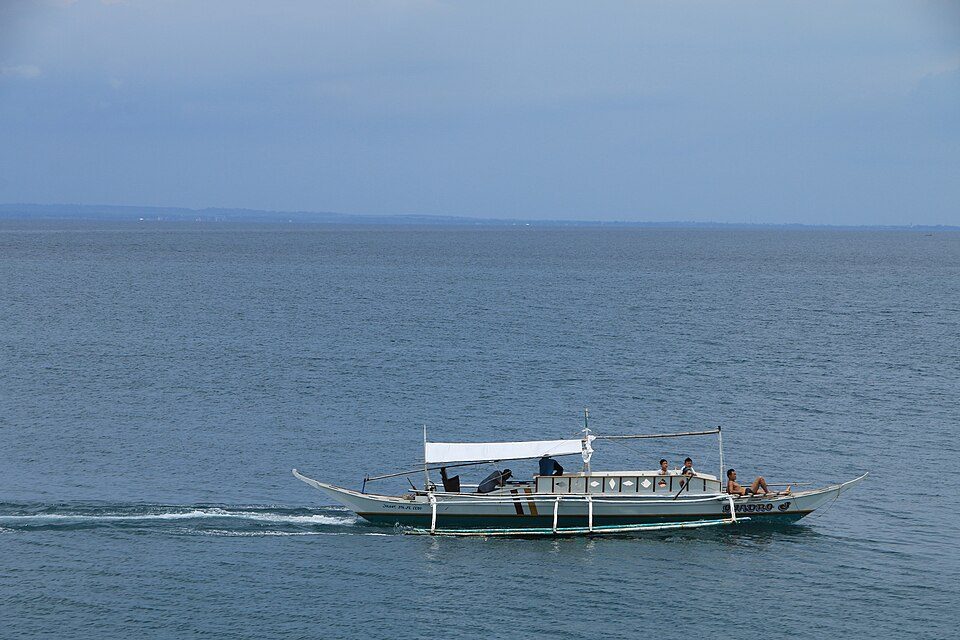
The crew had been to their destination many times. They could navigate that route with their eyes closed—waiting for the Northeast Monsoon, sailing south with the wind, entering the Malacca Strait, and docking.
When they arrived at the pier, someone was waiting for them.
Not the Sultan's men, nor the customs officers—it was the Syahbandar (harbourmaster). The one in charge of the Chinese merchants.
Only upon entering his jurisdiction were they considered truly to have arrived.
A Table#
At its peak, the port of Malacca had a total of four Syahbandars.1,4
This was not a coincidence, nor a custom. It was a system—approved by the Sultan, ensuring that merchants from different regions each had their respective authorities and representatives.
Tomé Pires, an apothecary sent by the Portuguese to Malacca who later served as an envoy, witnessed the operation of this system firsthand between 1512 and 1515 and recorded it in his writings. He wrote:
Malacca has four Xabandares [Syahbandars], which are the grandest men... The Gujaratis have one, who is the most important; the Coromandel coast men, Bengalis, Peguans and Pase men have one; the Javanese, Moluccans, Banda men, Palembang men, Tamjompura men and Lugoes men have one; the Chinese, Lequeos [Ryukyuans], Chancheo [Zhangzhou] men and Champa men have one.
Four Syahbandars, four directions, four groups of merchants. Displayed in a table:
| # | Merchant Groups Managed |
|---|---|
| ① | Gujaratis (Pires explicitly states "the most important one") |
| ② | Coromandel Coast · Bengalis · Peguans (Myanmar) · Pase (Pasai) |
| ③ | Javanese · Moluccans · Banda · Palembang · Tamjompura · Lugoes |
| ④ | Chinese · Ryukyuans · Zhangzhou · Champa |
Keep this table in mind, then look at the following block.
This Block Pierces All Excuses#
There is a name in group ②—Pase (Pasai).
Pasai was a port on the northwestern tip of Sumatra, a Malay-speaking Muslim polity. If this grouping was based on bloodline, language, or religion, then Pasai should have been placed with its brothers on the same island.
It was not. The second Syahbandar managed the Coromandel coast men, Bengalis, Peguans—and the Pase men.1,4
Another port on the same island—Palembang—was in group ③.
Sumatra, one island. Pasai in ②, Palembang in ③.
Two ports on the same island were assigned to two different Syahbandars.
Here we must clarify the strength of the evidence, as this is the most important block in this article:
- Group ② includes Pasai—aside from Pires' primary account, another independent academic study on the evolution of the customs system records the same grouping.1,4
- Palembang belongs to Group ③—this is solely from Pires' account. No second independent source was found in the literature reviewed by this site.
In other words, one end of this argument has two supporting legs, while the other has only one. Pires wrote between 1512 and 1515, as someone who witnessed the system in operation—for the administrative details of a port 500 years ago to be recorded by a contemporary observer is already a stroke of historiographical fortune. But one leg is just one leg, and this site will not claim it as two.
This classification could not have been geographical, nor could it be based on bloodline. So what was it based on?
Monsoons and shipping routes.
Pasai is located at the northwestern end of Sumatra, facing the Bay of Bengal, accommodating ships arriving via the Northwest Monsoon. The Coromandel coast, Bengal, Pegu—they all arrived from this direction. Therefore, they belonged to ②.
Palembang is at the southeastern end of Sumatra, accommodating ships crossing the Java Sea, sharing the same route as the Javanese and Moluccans. Therefore, it belonged to ③.
Which group you belonged to did not depend on your blood or the language you spoke, but on the direction and season from which you entered the port.
This was Malacca's answer to "who is who"—an administrative question of where to report, not an identity question of where you innately belonged.
Anyone trying to argue that this classification was based on race must first explain why Pasai and Palembang were not in the same group.
The Monsoon is the Engine of This Business#
To understand why this system was designed this way, one must first understand how Malacca made a living.
It relied on time differences.
Ships from the east—China, Java, the Moluccas—rode the Northeast Monsoon southward. Ships from the west—Gujarat, Coromandel, Bengal—waited for the Southwest Monsoon.1,3 The two groups arrived at different times, brought different goods, and sought to buy different items.
(The original draft on this site noted specific months here, but upon review, the cited sources did not provide those months, so they were deleted. The monsoon directions have sources; the months do not.)
Malacca sat right between these two groups, receiving the goods they each brought and exchanging them for the other's.
Ships could not return in the same season—because they had to wait half a year for the wind direction to change. During the months of waiting for the wind, merchants lived in Malacca, bought goods, and waited for the next season's wind to carry them away.
Thus, the design of the four Syahbandars was not a diplomatic protocol, but a logistics system. Depending on the direction you came from, you reported to a specific officer who understood your habits, spoke your language, and knew who you had business disputes with; he would mediate for you and advocate on your behalf before the Sultan.
Pires wrote that the Sultan, the Bendahara, the Temenggung, and your respective Syahbandar would each receive a gift—roughly one to two percent of the cargo's value. This was not a tariff in the modern sense, but more like a relationship facilitation fee to ensure you had protection in this city.
This percentage was also recorded only by Pires; this site has found no second independent record. It is an observation written by an eyewitness, not a figure copied from a ledger—read it as an order of magnitude, not a tax rate precise to decimal points.
This City Also Prepared a Rulebook#
Malacca did not rely solely on connections; it also had laws.
The Laws of Malacca (Undang-Undang Melaka)—according to research, was first codified during the reign of Sultan Muhammad Shah (1424–1444), subsequently expanded by successive Sultans, and largely took shape during the era of Muzaffar Shah (1445–1458).2,3 Today, fifty surviving manuscript copies are known to exist.2,3
The laws covered a broad scope: marriage, trade, debt, criminal offenses, maritime affairs—all had provisions. How to adjudicate disputes between foreign merchants, what to do if debts were unpaid; these matters had written records and were not left to the whim of the officials on any given day.
There was also a specific law for maritime affairs, the Maritime Laws of Malacca (Undang-Undang Laut Melaka). Rules for rewards and punishments on ships, taxation, standards for weights and measures—all were written within.
As for its origins, legend has it that it was drafted by a group of Javanese shipowners, presented to the Bendahara, and then approved by the Sultan. This detail is found in Liaw Yock Fang's edited version, but this site has found no second independent source to verify this drafting process—read it at the level of legend.
What did this mean for the merchants of the time? It meant that when you arrived in a foreign city, there were laws you could cite; you did not have to rely entirely on personal connections.
The Bendahara in the Court Was the Son of an Indian Muslim#
The people behind this system are also worth a look.
The Malaccan court had four principal ministers: the Bendahara (Prime Minister, the highest position attainable by a non-royal), the Laksamana (Admiral of the fleet, also in charge of the Sultan's security), the Temenggung (Chief of Police), and the Penghulu Bendahari (Chief Treasurer).
The fourth Bendahara was named Tun Ali. His father, recorded in the Malay Annals (Sejarah Melayu) as Mani Purindam, was described as a "wealthy merchant from India." According to research by scholar Sinnappah Arasaratnam (cited by later writers; the original page numbers have not yet been directly verified by this site), Tun Ali and his son, the seventh Bendahara Tun Mutahir, may have had a Tamil Muslim background.
In other words: the position of Prime Minister in Malacca was once held by a family of Indian Muslim descent for two generations.
At the time, nobody probably thought this was strange. It was the result of the system's normal operation—those who could hold this position relied on their talent and networks, not their origins.
Eighty-Four Languages#
Pires recorded another thing in his book.
He wrote: the people in the port themselves said that eighty-four languages could be heard here.
The layers of this sentence must be seen clearly—Pires was recounting, not counting it himself. He wrote, "as the inhabitants of Malacca affirm." Eighty-four was the city's own description of itself, not a statistical census taken by Pires.
There is another layer, which this site must proactively state: this number was recorded only by Pires.
The rule of this site is that every important piece of information must have two independent sources. This cannot be done here, and the reason is not hard to guess—how many languages could be heard in a port five hundred years ago was not the kind of thing that would be separately recorded by two different groups of people. Later secondary literature even varied when recounting this, some writing "eighty types," which is mostly a distortion from repeated copying, not another independent record.
So how should this sentence be read: it is a local claim about their own city, recounted by an eyewitness. Three layers of transfer—the people of the city told Pires, Pires wrote it in his book, and we read it from the book. Every layer could be distorted.
Then why keep it? Because what it supports is not a number, but a picture, and that picture has other hard evidence: the division of labour among the four Syahbandars existed, the laws existed, the timetable of the monsoons existed. The number eighty-four can be debated, but the fact that a city housed people of dozens of languages simultaneously does not need this number to stand.
Regardless of the exact figure, this picture is real: at the same pier, in the same row of warehouses, in a single day you could hear Gujarati, Tamil, Bengali, Javanese, Malay, Cantonese, Zhangzhou dialect, Ryukyuan... Behind each was a merchant community, each with its own temples, its own rules, and its own Syahbandar.
They didn't live together because they liked each other; they lived together because this system made living together profitable.
Then the Wind Changed#
When that ship from Zhangzhou docked, the Syahbandar was waiting at the pier.
One hundred years later, in 1511, Portuguese cannons echoed over the same sea.
Sultan Mahmud Shah retreated southward. The four Syahbandars, the eighty-four languages, that set of laws—all this did not vanish with the fall of the city. They followed the retreating people, hiding into the southern jungles and rivers.
And the national border that separates Malaysia and Indonesia today—that was drawn three hundred years later.
Sources 4 Every important claim here can be checked. Open it and see.
Do not trust this site. Check it — every source below is clickable.
-
Search for this source ⌕ no direct link — this button searches for the work 2026-07-30 Report this source
-
Search for this source ⌕ no direct link — this button searches for the work 2026-07-30 Report this source
This site is written with AI assistance. Please check us.
AI can invent citations that look completely convincing — a real author's name, a plausible title, a sensible year, for a work that does not exist. This is not a theoretical risk; it is a known failure mode. That is why every source on this site is clickable. If a reference cannot be found anywhere, it may well not exist — and we want to know.
How to check us →
Reader Comments
Be the first to share your thoughts.