What Was Malaysia Co-operative Crisis?
The passbooks clearly showed money, yet over 520,000 accounts had to wait for the government to decide their actual worth
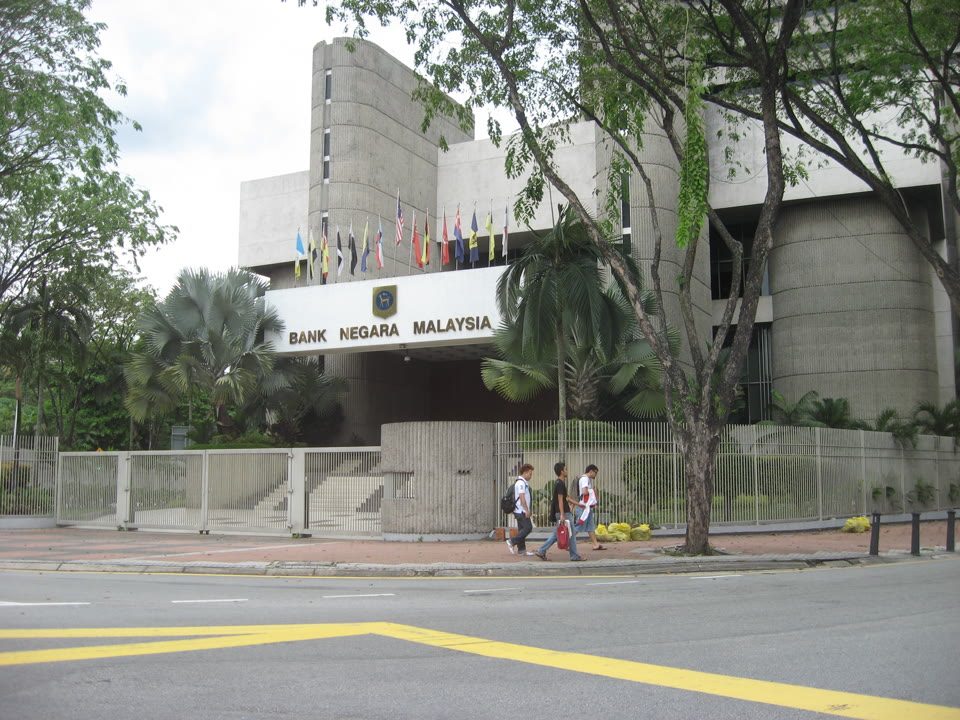
In the history gallery of Bank Negara, there are two photographs carefully preserved.
The first was taken around November 1986.
The depositors of Sakapp and Kosatu stood outside the central bank headquarters, demanding their money back.
The second was taken slightly later.
People were lining up, waiting for their refunds.1,2
Walking from the first photo to the second seemed like taking only a few steps.
In reality, some people walked for years.
The passbooks in their hands did not become waste paper. The principal and interest were still written on them. But the counter could no longer hand out cash according to that number.
In 1986, 24 deposit-taking co-operatives were frozen. About 588,000 members, over 520,000 deposit accounts, and roughly RM1.5 billion were swept into the crisis. The "members" and "accounts" are two different statistical measures and should not be conflated to mean 588,000 depositors.3,4,5
For the government, this was a financial restructuring.
For the depositors, there was only one question:
Why does the money I put in suddenly no longer belong to me today?
Prosperity Retreated from House Prices First#
Before the crisis occurred, the Malaysian economy had already begun to stall.
Prices for oil and other export commodities dropped, external demand weakened, investment shrank, and the property market also fell from its peak. In 1985, real GDP contracted by about one per cent, a rare full-year economic regression since independence.4,7,8
During times of prosperity, many problems do not immediately show up.
Rising land values can mask overpriced purchases.
New depositors constantly coming in can pay for the interest and withdrawals of old depositors.
Borrowers only pay interest for the time being, and loans will not immediately be classified as bad debts.
But the recession was like seawater suddenly retreating.
Those who locked short-term deposits into long-term real estate, those who lent money to people who could not afford it, those whose assets were only valuable on paper—all were exposed at once.
Commercial banks were subjected to stricter supervision by Bank Negara and still experienced serious bad debts in this recession. The co-operatives, however, stood within a looser legal and regulatory framework. The proportion of losses relative to their deposits later proved to be much higher than the strictly regulated banking sector.3,4,7
The risk did not become smaller just because the word "co-operative" was in the institution's name.
It was merely seen later.
Co-operatives Did Not Originally Grow Like This#
Early co-operatives in Malaya had simple goals.
Farmers and low-income earners found it difficult to access services from commercial banks, so co-operatives allowed members to help each other, save, and borrow. The law permitted co-operatives that complied with their constitutions and were approved by the Registrar-General of Co-operative Societies to absorb funds from members and even non-members; in the legal text, these funds were sometimes called "borrowings," but to the people handing their life savings across the counter, it looked exactly like a deposit.1,3
After the 1970s, the deposit-taking business expanded rapidly.
Businessmen and political figures initiated co-operatives, and branches turned into deposit-taking centres. They used higher interest rates, community relationships, and personalised services to attract depositors. In the eyes of some Chinese families, these institutions were not just financial products, but also carried the meaning of mutual aid and collective capital accumulation. The development of Koperasi Serbaguna Malaysia (KSM), for instance, was closely tied to the mobilisation of the MCA Youth wing, reaching a peak membership of over 160,000.1,4,9
Trust thus came from both sides.
One side was the interest rate promised at the counter.
The other side was the familiar associations, leaders, and the narrative of "let's grow big together."
The problems lay hidden in the legal loopholes.
Historical records from Bank Negara point out that when a co-operative lent money to a subsidiary, it did not need prior approval from the Registrar-General of Co-operative Societies; it only had to notify them. Inspections were also not stringent enough. Money could flow from the co-operative into layer upon layer of affiliated companies, while the depositors only saw the headquarters, branches, and ever-increasing interest.1,3,4
The rules that governed banks did not fully come along with the bank-like business.
The First Door Closes#
In July 1986, Koperasi Belia Bersatu Berhad, or KOSATU for short, could not meet depositors' withdrawal demands.
At the time, it had absorbed about RM156 million in deposits, involving some 53,000 depositors and 67 branches. Once one large co-operative stopped payments, the same thought appeared outside the doors of other co-operatives:
"Will the co-operative where I keep my money be the next?"3,2,5
Withdrawals began to accelerate.
This is exactly the most dangerous part of a financial run.
Even if an institution holds land, buildings, and loans, assets cannot all turn into cash on the same day. As long as enough people demand withdrawals at the same time, a liquidity problem will immediately occur; if those assets were originally bought too expensively, were unrecoverable, or had been moved to affiliated companies, the liquidity crisis would quickly uncover insolvency.
On 23 July, the government gazetted the Essential (Protection of Depositors) Regulations 1986, authorising Bank Negara to freeze the assets of KOSATU and its key management personnel, and launch an investigation.
On 8 August, the business and assets of 23 other co-operatives were also frozen. Seventeen accounting firms were appointed to assist with the checks.3,10,4,2
The government stated the freeze was to protect depositors.
What the depositors experienced, however, was the complete closure of the withdrawal window.
The policy was trying to stop the remaining assets from bleeding out.
But life does not pause for it: school fees, medical bills, weddings, housing down payments, and retirement expenses still arrive on schedule according to the calendar.
Seventeen Accounting Firms Open the Books#
Investigators soon discovered that these were not 24 identical holes.
Some co-operatives still had assets close enough to repay deposits.
For some, behind every ringgit of deposit, very little net asset was left.
Overall, the 24 co-operatives had a book asset value of about RM1.762 billion and an estimated loss of about RM683 million, which is nearly 40 per cent of the book asset value. When the White Paper used figures from an earlier adjustment phase, it also featured a provision and net asset figure of about RM673 million; both stem from differences in valuation phases and should not be pretended to be exactly the same.3,4,2
The biggest wound was in loans.
Book loans stood at about RM948 million, with estimated losses of roughly RM533 million. Land, housing projects, and stock investments also suffered impairment after the market fell. The investigation concluded that nearly half of the assets involved connected lending, subsidiaries, related companies, or other stock investments; at the time of the freeze, cash and liquid assets accounted for only about nine per cent.3,4
Some transactions were harder to explain than "errors in judgment."
When the Consumers Association of Penang summarised the investigation findings, it pointed out that co-operative directors had allowed the co-operatives to purchase land owned or controlled by themselves at prices above market rates, acquired shares of private companies held by themselves, and provided large unsecured loans to directors, relatives, or related companies. The White Paper, meanwhile, categorised the problems as a lack of professional competence, imprudent management, and in some cases, dishonesty.3,2
This is why the list of directors is important.
Not because every director is automatically guilty.
But because "everyone's money" in the co-operative might lose its protection when a director is also standing on the other side of a transaction.
Ultimately, 22 directors from eight co-operatives were charged. By the time of the working paper's summary in 1988, four had been convicted and jailed, while the remaining cases were still awaiting trial. This figure recorded the progress at the time, not the final outcome of all the cases that followed.4,11
Accountability Cannot Keep Hiding Behind "Poor Management"#
Now, write out the names.
The chairman of KOSATU was Tee An Chuan, also written in Chinese records as 郑安泉.11,12
This was not a case that could vaguely be termed "management error". Hansard records from the same period and the UNODC report which quotes the judgment both show that he, in his capacity as chairman, was entrusted with RM603,700 belonging to KOSATU but dishonestly diverted the money for his own use, and pleaded guilty to criminal breach of trust.11,13
Tee An Chuan must be held responsible for this crime confirmed by the courts.
But the conviction of one chairman cannot close the case for two other layers of responsibility.
The first layer lies with the co-operatives' own boards of directors and management. The connected lending, overpriced assets, unsecured loans, and funding gaps of every co-operative were different; who approved, who benefited, and who concealed them must be individually pursued based on the investigations and judgments of each co-operative. Tee An Chuan's name cannot be used to whitewash the rest of the directors, nor can all directors of the 24 co-operatives be blanketed as criminals.3,4,2
The second layer lies with the political parties.
The history of KSM itself is written very clearly: in 1968, the then MCA Youth Chief Lee San Choon initiated KSM; MCA Youth leaders called on the Chinese community nationwide to pool the "capital of ordinary citizens" to consolidate Chinese economic strength.9,6
The MCA itself later referred to KOJADI as one of the party's co-operatives; Yeoh's research traced several institutions on the frozen list back to the MCA, MCA Youth, Chinese associations, and trade guild networks.6,14
This does not mean Lee San Choon or the MCA automatically bear criminal liability for every breach of trust.
It signifies another kind of responsibility that cannot be shirked: When political parties and leaders use their names, organisational networks, and promises of ethnic empowerment to build credibility for financial institutions, they cannot suddenly portray it as a private investment failure unrelated to politics once a crisis erupts.
The third layer lies with the ruling government and regulatory agencies.
The then Barisan Nasional federal government, and the Department of Co-operative Development which oversaw co-operatives, allowed these institutions to run deposit-taking businesses that increasingly resembled banks, but failed to simultaneously subject them to bank-grade prudential supervision. Parliament had already seen severe questioning during the year of the crisis; later financial restructuring studies also noted that early warnings had appeared, but action came too late.4,11,6
Therefore, the order of accountability must be stated clearly: Crimes are the responsibility of the criminals, bad transactions are the responsibility of the directors and management who approved them, political credibility is the responsibility of the political parties that endorsed and mobilised it, and regulatory failure is the responsibility of the government agencies holding legal and administrative powers.
One Ringgit, How Much is it Still Worth?#
Initially, depositors demanded that the government fully guarantee their deposits.
They argued that since the government allowed these co-operatives to absorb public funds and failed to plug regulatory loopholes in time, it bore legal and moral responsibility. They also strongly opposed converting deposits into shares and demanded the prosecution of management personnel involved in negligence, fraud, and breach of trust.4,11
The government faced the ledger from the other side.
A full cash guarantee meant potentially injecting RM1.5 billion, with the public purse bearing nearly RM700 million in losses. At the time, the country was still in a recession and cutting spending, and the government refused to let taxpayers directly bear all the losses caused by bad management.3,4
The earliest leaked proposal was known as "twenty-five, twenty-five, fifty":
A maximum of one-quarter paid in cash immediately, one-quarter turning into a two-year deposit, and the rest converted into equity.
After opposition from depositors, this framework was not adopted.4,11
The final rescue was split into three groups.
For 11 co-operatives with healthier assets, banks or finance companies took over their assets and liabilities. About 85,000 depositors could retrieve their full cash amounts, but they had to wait for up to five years, and without interest.4,5
For 12 co-operatives with heavier losses, they were taken over by KUMB, which was controlled by Bank Negara. Depositors nominally received a one-ringgit-to-one-ringgit return, but at least half of it was in instalment cash, with the remainder becoming KUMB shares.4,5
KSM, the largest in size, had separate arrangements. Half of the depositors' funds were repaid in instalment cash from 1987 to 1989, and the other half was first converted into Magnum's unsecured convertible loan stocks, which could later be converted into ordinary shares under certain conditions.4,9
So, "full retrieval" needs explanation.
It does not necessarily mean getting all the cash back today.
It could mean years of waiting, no interest, and then accepting a portion of securities that were never intended to be purchased in the first place.
Among the Three Major Ethnic Groups, Who Hurt the Deepest?#
In this instance, it can be stated explicitly: The Chinese community suffered a particularly heavy blow.
The reason is not the surnames on the depositor lists.
The reason is how these co-operatives built trust. KSM publicly called for the consolidation of Chinese economic power; multiple large co-operatives grew out of the networks of MCA, MCA Youth, Chinese associations, clan associations, trade guilds, and Chinese school alumni. Yeoh Kok-Kheng, a scholar who studied this movement, thus described the crisis as a devastating blow to the broad masses of lower-to-middle-class Chinese depositors.9,6
This also explains a layer of loss unseen outside the photographs.
What was frozen was not just retirement funds and school fees, but also a collective imagination that "if everyone pools their small money together, we can stand firm in the new economic order." When the counters closed, personal wallets were hurt; the promises of community empowerment once made by political leaders went bankrupt alongside them.
But here, we must pause for a step.
The White Paper, restructuring studies, and subsequent statistics read on this site list members, accounts, deposits, and assets, without providing a complete percentage breakdown of Malay, Chinese, and Indian depositors. KSM's membership was also open to all Malaysian citizens. Therefore, this article will not write that "all victims were Chinese," nor will it fabricate an ethnic percentage. Malay and Indian depositors may equally have suffered losses in the 24 co-operatives.3,4,5,9
The only conclusion that can be supported by data is this sentence: Among the three major ethnic groups, the Chinese community was the most obvious and concentrated victim group in this crisis; there are insufficient existing public statistics to prove whether other ethnic groups suffered damage on a similar scale.
Who Paid the Rescue Money?#
To make the plan work, Bank Negara eventually arranged about RM720 million in soft loans at one per cent annual interest, and about RM280 million in commercial loans at four per cent annual interest. Professional fees for investigation and takeover cost another RM23.4 million.4,5
These loans should not all be written off as "permanent national losses."
With the disposal of assets, the recovery of the property market, and improved operations by the takeover agencies, a portion of them stood a chance of being recovered. The central bank's working paper also explicitly reminded that rescue loans and equity do not equal losses of the same amount.4,7
But they are still time and credit provided by public power.
Ordinary depositors could not take their frozen passbooks to the central bank and borrow money at a one per cent interest rate to tide over their livelihoods.
The takeover agencies could.
This is not to say the rescue should not have been done.
It shows that financial bailouts are never just an accounting problem. The government's decision on who gets cash first, who waits, who takes shares, and who bears the interest loss, is also distributing the pain of the crisis.
The Evidence for This Article, This Site Needs to Explain to You#
588,000 and 520,000 are not contradictory. The White Paper recorded about 588,000 members and 520,000 deposit accounts; later working papers often simplified this to over 520,000 depositors. The main text retains both measures and explains the difference.3,4,5
Loss figures vary with valuation phases. The White Paper's early measure was about RM673 million, while the final table estimated about RM683.1 million. This article does not treat hundred-thousand-tier valuation adjustments as another missing sum.3,4,2
Connected transactions only list patterns specified in the investigation data. Buying and selling land and shares controlled by directors, and lending to directors' relatives or related companies, comes from CAP's compilation of the investigation results, cross-supported by the White Paper's conclusions on connected investments, poor management, and dishonesty. This article does not baselessly slap criminal labels on unconvicted individuals.3,2
Tee An Chuan is the only individual explicitly named for criminal conviction in this article. The case summary of Public Prosecutor v Tee An Chuan cited in the UNODC report and contemporary parliamentary records both point to KOSATU's RM603,700 criminal breach of trust case; if other directors were only arrested, charged, or accused by Members of Parliament, this article does not rewrite the allegations into convictions.11,13
Political party responsibility is separated from criminal responsibility. The founding and mobilisation relationship of KSM and MCA/MCA Youth is cross-supported by KSM's own history and academic research from the University of Malaya; this is sufficient to discuss political endorsement and community trust, but not enough to assert that a particular party leader participated in a specific bad debt.9,6
Ethnic harm is stated as a bounded conclusion. The organisational origins and mobilisation language of the co-operatives show that the Chinese community was hit with particular concentration; however, official statistics lack a complete ethnic breakdown of depositors, and some co-operatives were open to all citizens, so this article does not fabricate fictitious ratios or classify every victim as Chinese.3,4,5,9,6
"Full repayment" does not equate to full immediate cash. Eleven co-operatives had interest-free cash repayments taking up to five years; the remaining plans included instalment cash, shares, or convertible loan securities. The text explains the three-phase plan item by item based on Bank Negara materials.4,5,9
Rescue loans do not all equal final financial losses. Bank Negara provided about RM1 billion in loans at different interest rates, but the taken-over assets and equity still held recovery value; this article states both the scale of aid and the possibility of recovery.4,7
This article is marked sensitive: true. Before going online, sentences involving political party relations, director transactions, fraud, convictions, regulatory responsibilities, and rescue costs must be reviewed sentence-by-sentence by Jay.
Sources 14 Every important claim here can be checked. Open it and see.
Do not trust this site. Check it — every source below is clickable.
This site is written with AI assistance. Please check us.
AI can invent citations that look completely convincing — a real author's name, a plausible title, a sensible year, for a work that does not exist. This is not a theoretical risk; it is a known failure mode. That is why every source on this site is clickable. If a reference cannot be found anywhere, it may well not exist — and we want to know.
How to check us →
Reader Comments
Be the first to share your thoughts.