Why Did the 2008 Political Tsunami Matter?
140 seats, four states changing hands, and a wave that did not evenly cross the South China Sea
The threshold for a two-thirds majority consists of three digits: one, four, eight.
Late at night on 8 March 2008, Barisan Nasional's number stopped at 140. 1,2
It was still more than the combined 82 seats of the three opposition parties, and still enough to form the federal government, but it was short by eight seats—losing the two-thirds parliamentary majority for the first time since 1969. 1,2
The entire wall did not collapse.
Only the top layer fell first.
What is the Most Accurate Way to Describe "Five States Falling"#
Common headlines stated that the opposition "captured five states." What actually happened was that four state governments changed hands: Kedah, Penang, Perak, and Selangor; Kelantan was already governed by PAS, and this time they retained it. 1,2,3,4
Moreover, on polling day, PKR, DAP, and PAS were merely coordinating constituencies; the official name Pakatan Rakyat was only formed post-election. We cannot retrospectively apply a later-formed coalition onto the ballot paper. 2,3
The tsunami also did not sweep across the country evenly.
BN won 24 out of 25 parliamentary seats in Sabah, and 30 out of 31 seats in Sarawak. Together, the two states contributed 54 seats, becoming the crucial factor for BN to retain its central majority. 1,2
Therefore, this was not a "uniform nationwide change of government." Urban, multi-ethnic constituencies on the west coast of the Peninsula and some northern states swung violently, while the majority of seats in East Malaysia remained in BN's hands.

Who Pushed the Wave Cannot Be Answered with a Single Choice#
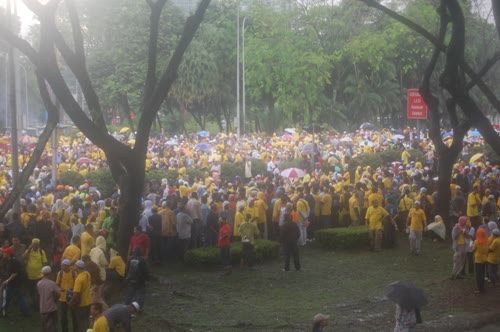
BERSIH and HINDRAF made accumulated grievances visible, but there is no evidence proving that either rally alone caused the tsunami.
The cost of living, Abdullah's unmet reform promises, the Lingam judicial video clip, the expansion of online media, the opposition's avoidance of multi-cornered fights, Anwar's renewed coordination among parties, as well as local candidates and state political structures, all functioned at the same time. 2,3
Ethnic voting shifts were also uneven. MIC, MCA, and Gerakan suffered particularly severe blows in multi-ethnic urban constituencies, while UMNO proved more resilient; HINDRAF's mobilization was highly correlated with the swing of Indian voters, but it cannot be written off as "all Indians voted for the opposition." 2,3
The numbers only tell us that the old order cracked.
They have not yet proven that three political parties with vastly different values could govern together.
The first to take the test was the nation's wealthiest, most urbanized state, and the one hardest to explain using a single-ethnic narrative: Selangor.
Sources 4 Every important claim here can be checked. Open it and see.
Do not trust this site. Check it — every source below is clickable.
This site is written with AI assistance. Please check us.
AI can invent citations that look completely convincing — a real author's name, a plausible title, a sensible year, for a work that does not exist. This is not a theoretical risk; it is a known failure mode. That is why every source on this site is clickable. If a reference cannot be found anywhere, it may well not exist — and we want to know.
How to check us →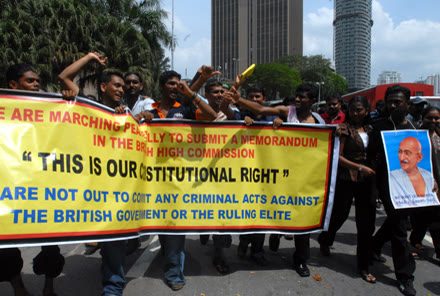
Reader Comments
Be the first to share your thoughts.